
What Temperature Does Steel Melt?
Steel melts between roughly 1,370°C and 1,540°C (2,500°F to 2,800°F). Steel is an alloy, not a pure metal, so it does not have one fixed melting point. Carbon content, alloying elements, and trace impurities all shift that range up or down.
This guide was prepared by a technical team with over 40 years of experience in steel supply and grade specification. It explains why steel melts across a range, lists melting temperatures for carbon, stainless, alloy, and tool steel grades, shows what changes those numbers, covers the furnace temperatures needed to melt steel, and compares steel with other common metals.
What Temperature Does Steel Melt? The Direct Answer
Most steel melts between 1,370°C and 1,540°C (2,500°F to 2,800°F). No single number fits every grade, because each grade has its own chemistry.
The table below gives the melting temperature of the two steel families buyers ask about most often.
| Steel Family | Melting Temperature (°C) | Melting Temperature (°F) |
| Carbon steel | 1,425 – 1,540 | 2,600 – 2,800 |
| Stainless steel | 1,375 – 1,530 | 2,500 – 2,790 |
Carbon steel sits at the top of the range. Stainless steel usually sits lower, because nickel and other additions pull the range down. Both figures are much higher than everyday heat sources. A wood fire or a home oven cannot come close to melting steel.
Why Steel Melts Over a Temperature Range, Not at One Exact Temperature
Pure iron melts at a fixed point of 1,538°C (2,800°F). Steel behaves differently. Steel is iron mixed with carbon and other elements, and those extra atoms break up the neat pattern of the iron crystal. Parts of the metal then start to melt before the rest does.
Engineers describe this with two temperature points:
- Solidus — the temperature at which steel first begins to melt. Below this point, the steel is fully solid.
- Liquidus — the temperature at which steel becomes fully liquid. Above this point, no solid is left.
Between the solidus and the liquidus, steel is neither solid nor liquid. It is a soft, pasty mix of both. This gap is called the melting range. A wider gap means the steel takes longer to fully melt, which matters during casting and welding.
This is why any melting temperature quoted for steel is a range rather than an exact figure. The precise value for one batch depends on its certified chemical composition, which is recorded on the mill test certificate.
What Temperature Does Each Type of Steel Melt At?
Different steel families melt at different temperatures because they contain different amounts of carbon and alloying elements. The three groups below cover most industrial orders. Each table lists typical ranges, and buyers should always confirm the exact figure against the mill certificate for the heat they receive.
Carbon Steel Melting Temperature (Low, Medium, High Carbon)
Carbon steel melts between about 1,370°C and 1,540°C (2,500°F to 2,800°F). Carbon is the main variable here. As carbon content rises, the melting range drops. The figures below are typical mid-range values, so some low carbon grades reach the top of the wider band.
The table below shows how the melting temperature falls as carbon content increases.
| Carbon Steel Type | Melting Temperature (°C) | Melting Temperature (°F) |
| Low carbon steel | 1,410 – 1,530 | 2,570 – 2,790 |
| Medium carbon steel | 1,400 – 1,500 | 2,550 – 2,730 |
| High carbon steel | 1,370 – 1,520 | 2,500 – 2,770 |
Low carbon grades melt at the highest temperatures of the three. High carbon grades melt at the lowest. This spread matters when carbon steel products are cast or welded, since a lower melting range shifts the working temperature for the whole process.
Stainless Steel Melting Temperature by Grade
Stainless steel melts between about 1,375°C and 1,530°C (2,500°F to 2,790°F). The grade matters a great deal, since chromium and nickel levels differ widely from one family to another.
The table below lists melting temperatures for the stainless grades most often specified.
| Stainless Grade | Melting Temperature (°C) | Melting Temperature (°F) |
| 304 | 1,400 – 1,450 | 2,550 – 2,640 |
| 316 | 1,375 – 1,400 | 2,500 – 2,550 |
| 410 | 1,480 – 1,530 | 2,700 – 2,790 |
| 430 | 1,425 – 1,510 | 2,600 – 2,750 |
| Duplex 2205 | 1,350 – 1,420 | 2,460 – 2,590 |
Grades 410 and 430 melt at higher temperatures than 304 and 316. They hold less nickel, so their chemistry stays closer to plain carbon steel. Duplex 2205 sits at the bottom of the list because it carries the highest alloy load. Anyone comparing stainless steel products should check the melting range by grade rather than assume all stainless behaves alike.
Alloy Steel and Tool Steel Melting Temperature
Alloy steel and tool steel melt between about 1,415°C and 1,460°C (2,580°F to 2,660°F). Their ranges are narrower than those of carbon steel, because their chemistry is controlled more tightly.
The table below compares two common groups.
| Steel Type | Melting Temperature (°C) | Melting Temperature (°F) |
| Alloy steel (for example, 4140, 4340) | 1,415 – 1,432 | 2,580 – 2,610 |
| Tool steel (for example, D2, H13) | 1,420 – 1,460 | 2,590 – 2,660 |
Tool steel contains strong carbide formers such as chromium, molybdenum, and vanadium. These elements hold the melting range within a narrow band, but they also make the exact figure depend heavily on the specific grade. Two tool steels can differ by 40°C.
What Changes the Temperature at Which Steel Melts?
Four factors decide where a grade sits inside the 1,370°C to 1,540°C band. Each one either raises or lowers the melting range in a predictable way.
The list below explains how each factor works.
- Carbon content. Carbon lowers the melting temperature. Steel with 0.5% carbon melts near 1,400°C, while steel with 0.7% carbon melts closer to 1,350°C. More carbon also widens the melting range.
- Alloying elements. Chromium raises the melting temperature slightly. Nickel lowers it. Molybdenum, manganese, and silicon each shift the range by a small amount. Grades with heavy alloy loads, such as duplex stainless, melt at the low end.
- Impurities. Sulfur, phosphorus, and oxygen weaken the crystal structure and lower the melting temperature. Cleaner steel melts at a slightly higher, more predictable temperature.
- Pressure. Higher pressure raises the melting temperature. Lower pressure reduces it. In normal workshop conditions this effect is very small and can be ignored.
Carbon and alloy content do the most work. Impurities and pressure play a minor role for most industrial orders.
What Temperature Is Needed to Actually Melt Steel?
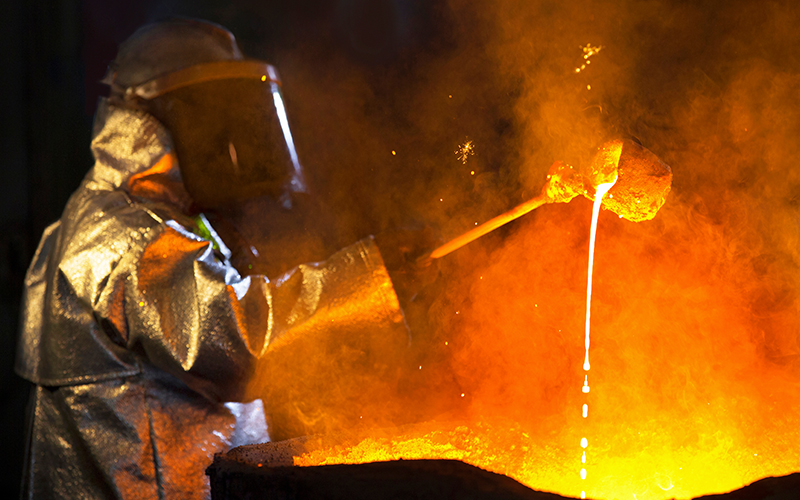
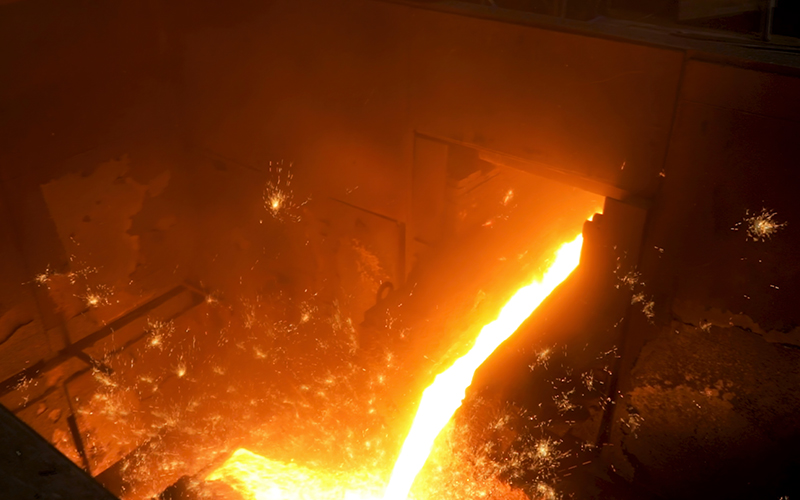
Melting steel in production needs far more heat than the melting range alone. Steel mills tap liquid steel at roughly 1,600°C to 1,650°C (2,910°F to 3,000°F). The extra heat keeps the steel fully liquid while it moves from furnace to ladle to caster.
Two main routes reach these temperatures:
- Electric arc furnace (EAF). An electric arc melts scrap and pig iron directly. The arc itself runs far hotter than the steel bath, which allows fast melting.
- Blast furnace and basic oxygen furnace (BOF). A blast furnace produces molten iron. Oxygen is then blown through that iron in the BOF, which refines it into steel and holds it above 1,600°C.
Cutting equipment reaches even higher temperatures. A plasma arc runs well above 3,000°C and melts a narrow line through the plate. An oxy-fuel torch works differently. Its flame preheats the steel, then an oxygen jet burns the metal away rather than melting it.
How Does the Melting Temperature of Steel Compare to Other Metals?
Steel sits in the upper middle of the metal range. It melts far above aluminum and copper, but well below titanium and tungsten.
The table below places steel next to other common industrial metals.
| Metal | Melting Temperature (°C) | Melting Temperature (°F) |
| Zinc | 420 | 787 |
| Aluminum | 660 | 1,220 |
| Copper | 1,084 | 1,983 |
| Cast iron | 1,127 – 1,204 | 2,060 – 2,200 |
| Steel | 1,370 – 1,540 | 2,500 – 2,800 |
| Nickel | 1,453 | 2,647 |
| Titanium | 1,668 | 3,034 |
| Tungsten | 3,422 | 6,192 |
Cast iron melts below steel because it holds more carbon. Tungsten holds the highest melting temperature of any metal, which is why it appears in extreme heat applications.
FAQs
Does steel melt at 1,000°C?
No. Steel melts between 1,370°C and 1,540°C. At 1,000°C steel glows bright and becomes much softer, but it stays solid and holds its shape.
Is the melting temperature of stainless steel higher than carbon steel?
It is usually lower. Common grades such as 304 and 316 melt between 1,375°C and 1,450°C, below the 1,425°C to 1,540°C range of carbon steel, mainly because of nickel.
At what temperature does steel glow red?
Steel begins to glow a dull red at around 460°C (900°F). The color shifts from red to orange, then yellow, then white as the temperature climbs.
Does steel melt at the same temperature as iron?
No. Pure iron melts at a fixed 1,538°C. Most steel melts a little lower, because carbon and alloying elements break up the iron crystal structure.
Why do two batches of the same grade melt at slightly different temperatures?
Because chemistry varies within the limits a specification allows. Two compliant batches can hold different carbon or nickel levels, which shifts the melting range by a few degrees.
Conclusion
Steel melts between 1,370°C and 1,540°C (2,500°F to 2,800°F), and the exact figure depends on grade. Carbon steel melts at the high end, standard stainless grades lower, and heavily alloyed grades lower still. Steel melts across a range rather than at one point, because carbon and alloying elements create a gap between the solidus and the liquidus. Mills tap liquid steel near 1,600°C to keep it flowing through casting.
Buyers who need certified chemistry and confirmed melting data for a specific heat can contact the SUMEC Metal team for grade selection support and a quotation.
Learn More About Our Products?
Contact Now