
How Long Does Steel Last?
Steel lasts anywhere from 5 years to more than 100 years. The exact figure depends on the steel type, the environment, and the level of maintenance. Bare carbon steel in a wet coastal site may fail in under a decade, while galvanized or stainless steel in a mild setting can serve well past 50 years.
This guide was prepared by a technical team with over 40 years of experience in steel supply and material selection. It draws on ISO 9223 corrosion data and explains what ends the service life of steel, how long each steel type lasts, how the environment changes those numbers, and what extends them.
How Long Does Steel Last? The Direct Answer
Steel has no single lifespan. In dry indoor conditions, most steel lasts 50 to 100 years or more. In wet or salty outdoor conditions without protection, the same steel may last less than 10 years.
The table below shows typical service life for the three main steel groups.
| Steel Type | Typical Service Life | Main Limit |
| Bare carbon steel | 5 – 30 years | Rust |
| Galvanized or coated steel | 20 – 100+ years | Coating loss |
| Stainless steel | 50 – 100+ years | Pitting in harsh sites |
Three things decide where a project lands in these ranges: the steel type, the environment around it, and how well it is maintained. The rest of this guide covers each one.
What Actually Ends the Service Life of Steel?
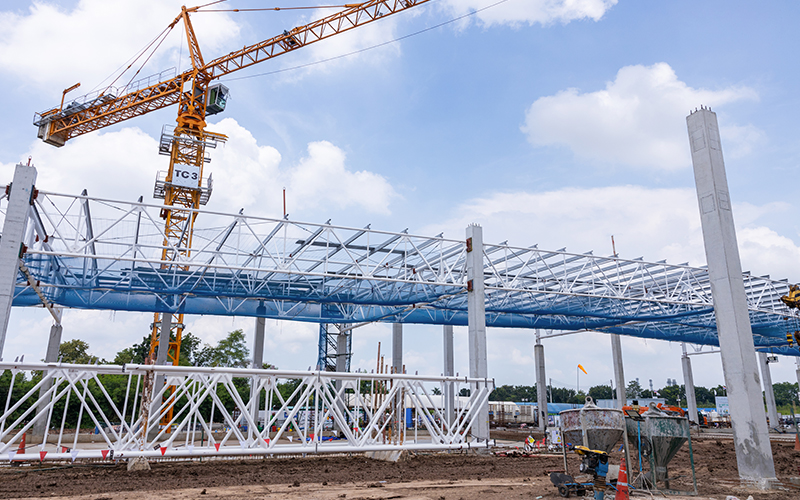
Steel rarely wears out all at once. Its service life ends when the metal can no longer carry its load safely, and four mechanisms drive that.
The list below explains the four main ways steel reaches the end of its service life.
- Corrosion. Rust is the leading cause. Moisture and oxygen eat into the surface and thin the section. This is the limit for most outdoor and buried steel.
- Fatigue. Repeated loading creates small cracks that grow over time. Bridges, cranes, and machine parts are limited by load cycles, not by rust.
- Wear. Surfaces that slide, grind, or carry moving material lose thickness through abrasion. Chutes, liners, and rollers fail this way.
- Creep. Steel held at high temperature slowly stretches under load. This limits boiler and furnace parts long before rust does.
One point matters for reading any lifespan figure. In the steel industry, “service life” for coated products often means time to first maintenance, not total failure. That is the point when about 5% of the base steel shows rust and a repair coat is due. The steel itself still has years of use left. This guide uses that definition for coated products.
Steel Service Life by Type: How Long Does Each Type of Steel Last?
Service life varies widely between steel types. The difference comes from chemistry and from whether the surface carries a protective layer. The three groups below cover most industrial orders.
How Long Does Carbon Steel Last?
Bare carbon steel lasts 5 to 30 years outdoors, and much longer indoors. It has no built-in corrosion resistance, so its lifespan depends almost entirely on how dry the site is and whether a coating is applied.
The table below shows typical service life for bare carbon steel by setting.
| Setting | Typical Service Life |
| Dry indoor | 50 – 100+ years |
| Rural outdoor | 20 – 30 years |
| Urban or industrial outdoor | 8 – 20 years |
| Coastal or marine | 3 – 10 years |
Carbon steel embedded in sound concrete is a special case. The concrete is highly alkaline, which passivates the steel surface and can protect it for the full life of the structure. This is why carbon steel products used as concrete reinforcement can outlast the same steel left exposed to open air.
How Long Does Galvanized and Coated Steel Last?
Galvanized steel lasts 20 to more than 100 years before first maintenance. A zinc coating protects the steel in two ways. It acts as a barrier, and it corrodes in place of the steel where the surface is scratched.
Coating life follows a simple rule: the thicker the zinc, and the milder the site, the longer the service life. A typical hot-dip coating of 100 µm in a moderate environment gives roughly 50 years before first maintenance.
The table below compares the two common galvanizing methods.
| Coating Method | Typical Coating Thickness | Typical Service Life |
| Hot-dip galvanizing | 45 – 100+ µm | 20 – 100+ years |
| Electro-galvanizing | 3 – 15 µm | 3 – 12 years |
Hot-dip coatings last far longer because they are much thicker. Electro-galvanized steel suits indoor parts where a smooth finish matters more than long outdoor life. Buyers comparing coated and plated steel products should confirm the coating route, since the two differ by a wide margin in service life.
How Long Does Stainless Steel Last?
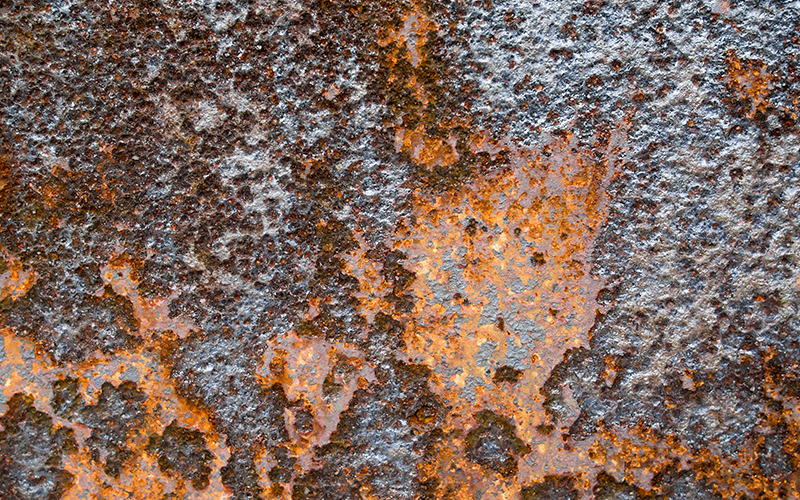
Stainless steel lasts 50 to more than 100 years in most settings. It contains at least 10.5% chromium, which forms a thin passive film on the surface. That film repairs itself when scratched, so stainless steel does not depend on a separate coating.
Grade choice still matters. The table below compares common grades.
| Grade | Typical Service Life | Best Suited To |
| 430 | 20 – 50 years | Dry indoor use |
| 304 | 50 – 100 years | General outdoor and industrial |
| 316 | 60 – 100+ years | Coastal and chemical exposure |
Grade 316 contains molybdenum, which resists chloride pitting. This is why it outlasts 304 near salt water. In very mild conditions, stainless steel can serve far beyond 100 years.
How Long Does Steel Last in Different Environments?
Environment often matters more than steel type. The international standard ISO 9223 sorts atmospheres into corrosivity categories from C1 to CX, based on moisture, pollution, and salt levels.
The table below shows how service life shifts across these categories.
| ISO Category | Example Setting | Bare Carbon Steel | Galvanized Steel (100 µm) |
| C1 – very low | Heated indoor | 100+ years | 100+ years |
| C2 – low | Dry rural | 30 – 50 years | 80 – 100+ years |
| C3 – medium | Urban, mild coastal | 15 – 25 years | 45 – 80 years |
| C4 – high | Industrial, coastal | 8 – 15 years | 20 – 40 years |
| C5 – very high | Heavy industrial, marine | 3 – 8 years | 10 – 20 years |
Most sites in normal climates fall into C2 or C3. Truly severe C5 conditions are limited to heavy industrial zones and locations with constant salt spray.
One detail is often missed. Corrosion is not steady over time. The rate is highest in the first few years, then slows as a stable oxide or zinc patina builds up. Rates become roughly linear only after about 20 years of exposure.
What Factors Shorten or Extend the Service Life of Steel?
The four mechanisms above set the limits. What buyers and designers control is how fast steel reaches those limits. Most of these decisions are made at the specification stage, long before the steel arrives on site.
The list below covers the controllable factors that move service life the most.
- Coating thickness. This is the single strongest lever for coated steel. Doubling zinc thickness roughly doubles the years to first maintenance. Specifying coating weight to a recognized standard, rather than leaving it open, protects the outcome.
- Design details. Ledges that hold water, tight crevices, and unsealed joints trap moisture and cause early local rust. Sloping surfaces, adding drain holes, and sealing gaps remove these traps.
- Section thickness. Corrosion removes a similar depth each year no matter how thick the steel is. A heavier section keeps a safe load-bearing thickness for more years, which is why a corrosion allowance is often added at design stage.
- Surface preparation. Coatings fail early when applied over mill scale, rust, or oil. Proper blast cleaning before coating often matters more to the final result than the coating product itself.
- Installation damage. Handling, cutting, and welding on site break the coating at the worst possible moment. Touching up damaged areas before the structure goes into service prevents rust from starting under the coating edge.
- Inspection and repair. Small coating damage spreads if ignored. Regular inspection with prompt touch-up keeps a coating system near its design life.
Choosing the right material for the environment usually gives the largest gain. A grade that costs more upfront often removes several recoating cycles over a 30-year perioda.
FAQs About How Long Steel Lasts
How long does steel last outside?
Bare carbon steel lasts 5 to 30 years outdoors, depending on moisture and salt. Galvanized steel lasts 20 to over 100 years, and stainless steel commonly exceeds 50 years.
Can steel really last 100 years?
Yes. Many steel bridges and buildings over a century old remain in service. Long life requires suitable grade selection, protective coatings, good drainage design, and regular inspection.
Does painted steel last as long as galvanized steel?
Usually not on its own. Paint forms a barrier but offers no sacrificial protection when scratched. Galvanizing plus paint, known as a duplex system, outlasts either one used alone.
How long does steel last underground?
Buried steel life varies from 10 to 50 years. Soil moisture, salt content, and acidity drive the rate. Coatings and cathodic protection extend it considerably.
Does stainless steel ever rust?
Yes, in harsh conditions. Chlorides can break through the passive film and cause pitting. Grade 316 resists this better than 304 because it contains molybdenum.
Conclusion
Steel service life ranges from under 10 years to well past 100 years. Bare carbon steel is limited by rust, galvanized steel by the life of its zinc coating, and stainless steel by pitting in the harshest sites only. Environment often outweighs steel type, and ISO 9223 categories give a practical way to estimate service life before ordering. Coating thickness, drainage design, and routine inspection remain the most effective levers.
Buyers who need help matching a grade or coating to a specific service environment can contact the SUMEC Metal team for material selection support and a quotation.
Learn More About Our Products?
Contact Now