

Sheet Metal Gauge and Conversion Chart For Steel and Iron (with MM & Inches)
Sheet metal gauge is a number that shows how thick a steel or iron sheet is. A gauge number is not a unit of length, and no formula turns it into millimeters. It only works with a chart. For example, 18-gauge standard steel is 1.214 mm (0.0478 in), while 18-gauge galvanized iron is 1.311 mm (0.0516 in).
This guide was prepared by the technical team at SUMEC Metal, a state-owned Chinese steel supplier founded in 1978 that moves over 3 million tons of steel each year. It covers the full gauge conversion chart for steel and iron, the MSG and SWG gauge systems, the effect of zinc coating, the conversion steps, and mill thickness tolerances.
Sheet Metal Gauge Conversion Chart for Steel and Iron (MM & Inches)
The chart below gives the nominal thickness for each gauge number in both millimeters and inches. Three material groups are listed side by side, because a single gauge number does not mean one fixed thickness. Standard steel covers hot-rolled and cold-rolled carbon sheet. Galvanized iron, also sold as galvanized steel or GI, covers zinc-coated sheet. Stainless steel follows its own separate table.
Buyers should read across the row, not down the column. The most commonly ordered gauges are marked in bold.
| Gauge | Standard Steel (in / mm) | Galvanized Iron / GI (in / mm) | Stainless Steel (in / mm) |
| 7 | 0.1793 / 4.554 | — | 0.1875 / 4.763 |
| 8 | 0.1644 / 4.176 | 0.1681 / 4.269 | 0.1719 / 4.365 |
| 10 | 0.1345 / 3.416 | 0.1382 / 3.510 | 0.1406 / 3.571 |
| 11 | 0.1196 / 3.038 | 0.1233 / 3.132 | 0.1250 / 3.175 |
| 12 | 0.1046 / 2.657 | 0.1084 / 2.753 | 0.1094 / 2.778 |
| 14 | 0.0747 / 1.897 | 0.0785 / 1.994 | 0.0781 / 1.984 |
| 16 | 0.0598 / 1.519 | 0.0635 / 1.613 | 0.0625 / 1.588 |
| 18 | 0.0478 / 1.214 | 0.0516 / 1.311 | 0.0500 / 1.270 |
| 20 | 0.0359 / 0.912 | 0.0396 / 1.006 | 0.0375 / 0.953 |
| 22 | 0.0299 / 0.759 | 0.0336 / 0.853 | 0.0312 / 0.794 |
| 24 | 0.0239 / 0.607 | 0.0276 / 0.701 | 0.0250 / 0.635 |
| 26 | 0.0179 / 0.455 | 0.0217 / 0.551 | 0.0187 / 0.476 |
| 28 | 0.0149 / 0.378 | 0.0187 / 0.474 | 0.0156 / 0.396 |
These values are nominal. Real mill output sits inside a tolerance band, which is explained further below. A dash means that gauge is not commonly produced in that material.
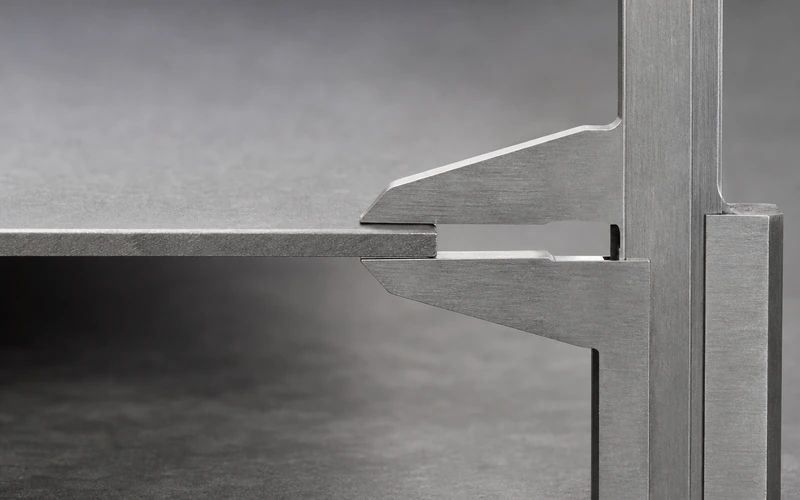
What Sheet Metal Gauge Means for Steel and Iron
Sheet metal gauge is a legacy code number, not a measurement. The system is traced back to the British wire trade, where the number described the size of drawn wire. Wire was pulled through a die again and again, and each pass made it thinner, so larger numbers came to mean thinner material. That history explains the rule that confuses most first-time buyers: a higher gauge number means a thinner sheet.
So 14-gauge steel at 1.897 mm is much thicker than 24-gauge steel at 0.607 mm. The scale is also not even. The step from 10 to 12 gauge removes about 0.76 mm, while the step from 22 to 24 gauge removes only about 0.15 mm.
One more limit matters in trade. Steel above 6 mm is normally called plate, not sheet, and it is quoted in millimeters instead of gauge. Below that line, gauge stays common in North America, the Middle East, and parts of South Asia.
Why the Same Gauge Is a Different Thickness in Steel and Iron
The same gauge number gives different thicknesses because more than one gauge system is in use. Steel mills in North America follow the Manufacturers’ Standard Gauge (MSG). Many British-legacy markets follow the Standard Wire Gauge (SWG). Stainless steel uses a third table based on fractions of an inch. Galvanized iron adds zinc on top of the base steel, so its total thickness is higher again.
The gap is easy to see when one gauge number is checked against all four references.
| Reference for 16 Gauge | Thickness (mm) | Thickness (in) |
| Standard steel (MSG) | 1.519 | 0.0598 |
| Galvanized iron | 1.613 | 0.0635 |
| Stainless steel | 1.588 | 0.0625 |
| SWG (British system) | 1.626 | 0.0640 |
The spread here is about 0.11 mm, or roughly 7 percent. On a large coil order, that difference changes both the strength of the part and the total shipped weight.
Zinc coating deserves a separate note. A galvanized sheet is base steel plus a zinc layer on both faces. The US galvanized gauge table is built on a fixed zinc allowance of about 0.094 mm (0.0037 in), which is why 16-gauge galvanized reads thicker than 16-gauge standard steel. Real coating weights vary, and a Z275 layer adds only about 0.04 mm. Design teams should use the base steel thickness for strength math and the measured total thickness for fit and clearance.
A final warning applies outside steel and iron. Non-ferrous metals follow a separate Brown & Sharpe gauge system, so their gauge numbers do not line up with any column above. The tables in this guide apply to steel and iron sheet only.
How to Convert Sheet Metal Gauge to MM and Inches (and Back)
Converting a gauge number takes three steps, and the first step matters most. Skipping it is the single most common source of ordering errors.
- Confirm the material. Standard steel, galvanized iron, and stainless steel each have their own table.
- Confirm the gauge system. MSG is normal for United States enquiries. SWG appears in Indian, British, and Gulf enquiries. Asking the customer which one applies takes one email and prevents a rejected shipment.
- Read the chart, then check the math. Inches convert to millimeters by multiplying by 25.4. So 0.0598 in × 25.4 = 1.519 mm.
Working backwards, from millimeters to gauge, needs care. Metric thickness rarely lands on an exact gauge value. A 1.5 mm cold-rolled sheet, for instance, is close to 16 gauge but is not identical to it. The safest practice is to treat the gauge number as a label and the millimeter value as the contract term. Purchase orders, drawings, and mill certificates should all state the thickness in millimeters, with the gauge number added in brackets only as a reference.
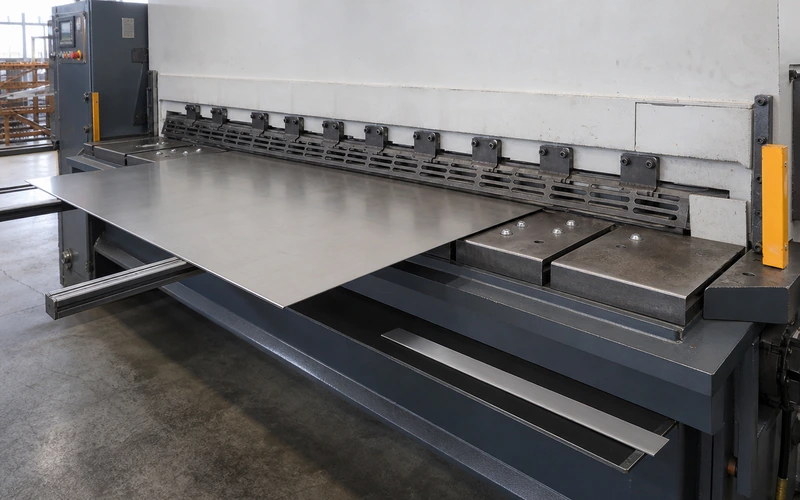
Gauge Charts Show Nominal Thickness: Tolerances for Steel and Iron Sheet
Every gauge chart shows a nominal value, not a guaranteed measurement. Rolled steel always varies a little across the width and along the length of a coil. International standards accept this and set an allowed range for each thickness and width.
Several standards govern that range, e.g., ASTM A568 for hot-rolled and cold-rolled carbon sheet, ASTM A924 for coated steel sheet, EN 10143 for continuously coated sheet, and JIS G3141 and JIS G3302 for Japanese cold-rolled and zinc-coated sheet. Each one sets its own band, and the band widens as the sheet gets wider.
A practical example helps. A 16-gauge steel sheet is listed at 1.519 mm, but a mill working to a common band of about ±0.05 mm may ship material between roughly 1.47 mm and 1.57 mm. That sheet is still fully on-spec. Buyers who assume an exact 1.519 mm can wrongly reject good steel, and buyers who ignore tolerance completely can end up with parts that will not nest or fold as drawn.
Two habits solve this. First, the purchase order should name the governing standard, not just the thickness. Second, the mill test certificate should be checked on arrival, since it records the actual measured values for the heat supplied.
Order Steel and Iron Sheet by Gauge or MM with SUMEC Metal
SUMEC Metal supplies steel sheet and coil to either a gauge number or a millimeter thickness, and it lists both on the specification sheet. Established in 1978, it is the steel and metal trading division of SUMEC Group, which is listed on the Shanghai Stock Exchange (SHA:600710). An annual volume of more than 3 million tons lets it match mill capability to the standard a customer works under.
Its range covers the full sheet and coil chain for buyers in construction, machinery, automotive, and appliance manufacturing. Hot-rolled and cold-rolled steel coils and sheets cover the standard-steel column of the chart above, coated and plated products cover galvanized requirements, and stainless coils, sheets, and plates cover the stainless column. The wider carbon steel product range adds plates, bars, and pipes for projects that need more than flat products.
Orders are supplied with a mill test certificate, so the measured thickness can be checked against the tolerance band before the material enters production.

FAQs
What is 18 gauge steel in mm and inches?
18-gauge standard steel is 1.214 mm, or 0.0478 inches. The same gauge number is 1.311 mm for galvanized iron and 1.270 mm for stainless steel, so the material must be confirmed first.
Is 16 gauge steel thicker than 18 gauge steel?
Yes. 16-gauge steel is 1.519 mm and 18-gauge steel is 1.214 mm. A lower gauge number always means a thicker sheet, because the scale runs in reverse.
What is 22 gauge galvanized iron sheet in mm?
22-gauge galvanized iron is 0.853 mm, or 0.0336 inches. This figure includes the standard zinc allowance. The bare steel underneath is thinner, so structural calculations should use the base thickness.
Is there a formula to convert sheet metal gauge to mm?
No. Gauge numbers are set by lookup tables, not by a formula. Each material and each gauge system has its own table, so conversion must always be read from a chart.
Conclusion
Gauge is a useful shorthand for steel and iron sheet, but it is only reliable when the material and the gauge system are both stated. The charts above give the nominal thickness in millimeters and inches, explain why the same number shifts between standard steel, galvanized iron, and stainless steel, and show why mill tolerance must be checked against the governing standard. Buyers who quote thickness in millimeters and keep the gauge number as a reference avoid almost every common ordering error. For sheet, coil, and full supply chain support, visit SUMEC Metal to discuss a specification.
Learn More About Our Products?
Contact Now