

Special Steel Market Gains Momentum as SSAB Announces Major Investment and AI Drives New Demand
The global special steel industry is seeing real momentum right now. Just last week, Swedish steelmaker SSAB gave the green light to a big investment at its Oxelösund facility. The company is putting in about 3.51 billion US dollars over the next four years to build a new quenching and tempering line. Production is set to start in 2030. This is not a small upgrade. It is a strategic move to lock in SSAB’s position in the high-end special steel market.
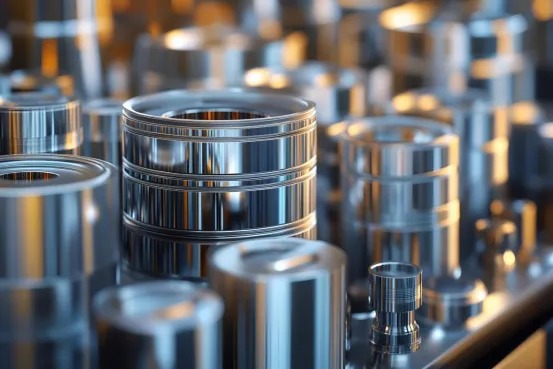
What is driving this kind of investment? Demand for special steel is rising across several sectors at once. Defense is a big one. SSAB’s own numbers show that global demand for protection steel is climbing steadily. Their Armox brand is used in military vehicles and protective structures. Hardox, another flagship product, goes into heavy machinery and mining equipment. Both are seeing strong order books. The new quenching line will add roughly 100,000 metric tons of capacity. That gives SSAB room to grow in the most profitable corners of the special steel market.
The automotive sector also keeps pulling in more special steel. Lightweighting is still a priority for carmakers, and high-strength special steel allows them to cut weight without cutting safety. According to industry data, SUVs made up around half of global car sales in 2023. That kind of vehicle needs more high-grade steel per unit than smaller cars. Then there is the shift toward electric vehicles, which brings its own set of material requirements.
But here is where the market gets interesting. The AI boom is creating a whole new source of special steel demand. Massive data centers need electrical steel for transformers and backup power systems. The power grid itself is being upgraded across many countries to handle higher loads. South Korean steelmakers like POSCO and Hyundai Steel are already pivoting toward this market. They see the energy infrastructure space as a high-value segment where Chinese low-cost steel cannot easily compete because of quality certifications and trade barriers.
POSCO has been developing specialized steel grades for high-voltage direct current transmission towers in partnership with Korea Electric Power Corporation. They are also pushing their high-corrosion-resistant coated steel for solar panel supports and energy storage system components. For AI data centers, which have very specific space and cooling constraints, POSCO is offering custom structural beams. It is a classic special steel strategy: go after the applications where generic material simply will not work.
Hyundai Steel launched a dedicated task force this month focused on next-generation power infrastructure. Their target is ambitious. They want to grow their energy storage system cabinet steel business from around ten thousand tons last year to over fifty thousand tons this year. They are also targeting the nuclear sector. Last year they became the first Korean steelmaker to receive ASME nuclear quality certification. That opens the door to supplying materials for small modular reactors, a market that is expected to take off in the coming years.
India is another bright spot for special steel. Ramsarup Industries just signed a deal with Danieli to build a new special bar quality steel mill in West Bengal. The plant will have annual capacity of 600,000 tons and is scheduled to start up in early 2027. This will be Danieli’s ninth SBQ installation in India. That is a sign of sustained demand growth in the Indian manufacturing sector, which is pulling in more special steel for automotive components, fasteners, and engineering parts.
On the environmental front, the rules are changing. The European Union’s Carbon Border Adjustment Mechanism became fully operational in January 2026. That means special steel imported into the EU now carries a carbon cost. For European producers like SSAB and Voestalpine, this is actually a competitive advantage. They have been investing in low-emission production methods for years. SSAB even launched the world’s first emission-free steel powder for commercial use. That product allows customers to 3D-print parts using steel made without fossil carbon emissions. For buyers who care about their supply chain carbon footprint, that is a real differentiator.
Acquisition activity is also picking up. Aperam, a Luxembourg-based specialty steel producer, bought Universal Stainless & Alloy Products earlier this year. The deal strengthens Aperam’s presence in North America and expands its portfolio of high-value alloys for aerospace and energy applications.
Looking at the overall numbers, the special steel market was valued at roughly 200 to 210 billion US dollars in 2025, depending on which source you use. The consensus is that growth will continue at around 4 to 5 percent annually through 2030. That is steady, not explosive. But the more important story is what is happening inside those numbers. Low-margin, commodity-grade steel is under pressure. High-value special steel for defense, energy infrastructure, EVs, and AI data centers is the real growth engine.
A steel industry executive put it this way recently. For a long time, the game was about volume. Who could make the most tons the cheapest. That game is over for producers in high-cost regions. The new game is about specialization. Can you make a steel that a data center operator needs but cannot get from a standard catalog? Can you certify it for a nuclear reactor? Can you deliver it with a verified low carbon footprint? Those are the questions that separate the winners from the losers in the special steel market right now.
For buyers, the message is pretty clear. The days of treating special steel as a spot commodity are fading. Lead times are getting longer for premium grades. Certification requirements are getting stricter. And the best suppliers are becoming more selective about who they sell to. Building long-term relationships with specialized mills is starting to look like a smarter strategy than shopping around for the lowest price on every order.
The SSAB investment in Oxelösund is just one piece of a bigger picture. Across the industry, capital is flowing toward higher margins, tighter specifications, and cleaner production. That is where the future of special steel is being built.