

Four Major Characteristics Facing the Rebar Market Amid Slowing Demand
Currently, China’s steel industry has entered a new phase featuring output reduction, stock optimization and quality improvement, bringing profound changes to the rebar market. Overall, the market is marked by four key characteristics: slowing total demand growth, accelerated product upgrading, faster green transition and intensifying industry competition. According to Zhang Longqiang, Deputy Secretary‑General of the China Iron and Steel Association and Secretary of the Party Committee & President of the China Steel Information & Standardization Research Institute, as a core basic material for the steel industry to serve the construction sector, rebar acts as the “skeleton” of construction projects. The industry has shifted entirely from past‑scale expansion to quality‑oriented efficiency gains and green upgrading.
As the most widely used and largest‑volume single type of construction steel in China, rebar is witnessing stabilizing yet declining total consumption and ongoing structural divergence in consumption patterns. On May 11, at the 2026 (7th) Symposium on Key Technological Innovation and Application of Rebar, Zhang Longqiang put forward four proposals to boost high‑quality development of the rebar industry through key technological innovation: first, strengthen core technological research and development; second, deepen standards system development; third, advance collaborative innovation between supply and demand; fourth, accelerate green and low‑carbon transition.
China’s rebar industry has maintained steady growth with expanding scale and rising annual output, ranking first globally. In 2025, following the roll‑out of a series of macroeconomic policies, tentative signs of steel demand recovery have emerged in China. Among them, the “Two Renewals” policies (equipment upgrading and consumer goods trade‑in incentives) will stimulate consumption in automotive, home appliance, energy and machinery sectors, driving notable growth in demand for high‑quality special steel products including stainless steel sheets, non‑oriented silicon steel and automotive steel sheets. Meanwhile, faster implementation of the “Two Major Projects” (major infrastructure and industrial construction projects) will underpin steel demand. Nevertheless, steel demand from the real estate sector will edge down, while steel exports will decline.
Rebar production is a high‑energy‑consuming and high‑polluting industry that exerts certain pressure on the environment. According to the 2025‑2030 Report on Development Trend Analysis and Investment Prospect Outlook of China’s Rebar Industry released by Zhongyan Puhua Industry Research Institute, amid increasingly stringent environmental regulations, rebar enterprises must increase environmental investment, upgrade production processes and cut pollutant emissions to meet environmental requirements. Notably, China’s steel demand structure has undergone marked shifts: demand for construction steel has dropped significantly, whereas demand for steel used in manufacturing has risen sharply.
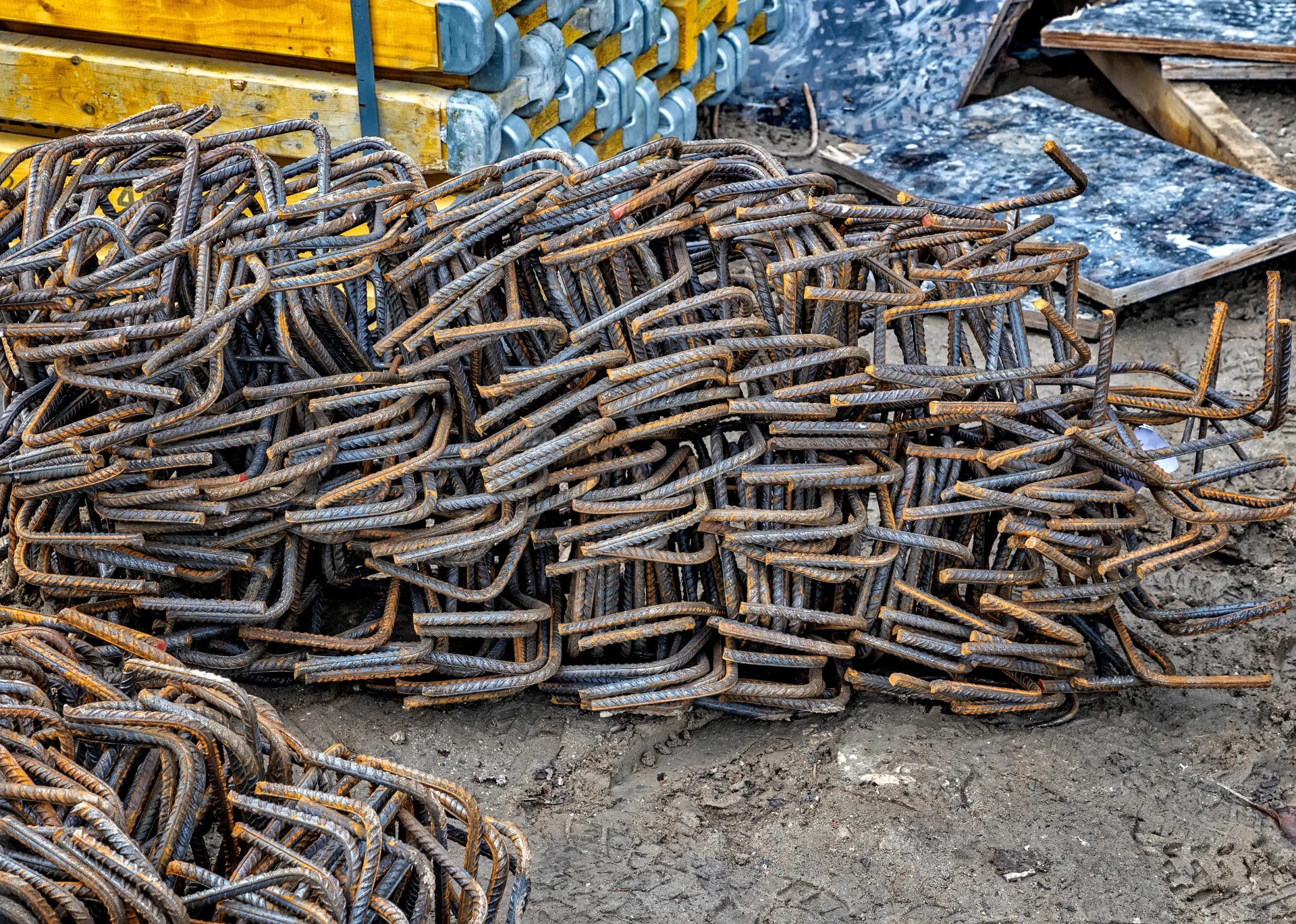
Serving as the “framework” of concrete structures, rebar plays a vital role in constructing infrastructure such as buildings, bridges, tunnels and highways. However, intensified market competition and stricter environmental policies pose transformation and upgrading challenges to the rebar industry. The above‑mentioned report indicates that China’s rebar industry has achieved remarkable progress in technological innovation, energy conservation, emission reduction and industrial upgrading in recent years. The introduction of advanced foreign technologies and equipment has comprehensively improved domestic rebar production capacity. Positive advances have also been made in environmental protection, energy conservation and low‑carbon development, contributing greatly to the sustainable growth of China’s construction sector.
Lin Tao, Chairman and President of Jiangsu Binxin Iron & Steel Group Co., Ltd., stated that rebar forms the “backbone” of the national economy. At the critical start‑up stage of the 15th Five‑Year Plan, the rebar industry must align with national strategies and speed up transformation and upgrading. Looking ahead, the industry will embrace broader market demand and growth drivers. On one hand, rebar demand will keep rising with the development of new‑type urbanization, infrastructure construction and real estate. On the other hand, demand for high‑quality, high‑performance rebar will grow alongside manufacturing transformation and upgrading and rapid expansion of emerging industries.
As projected in the 2025‑2030 Report on Development Trend Analysis and Investment Prospect Outlook of China’s Rebar Industry, China’s rebar output and market size will grow at 5%‑7% annually in the coming years, making greater contributions to national economic growth. Zhang Longqiang suggested that the short‑term imbalance between ample supply and shrinking demand in China’s steel industry will be hard to ease. Steel enterprises should focus on cost reduction, carbon emission cuts, quality improvement and industrial upgrading, and accelerate transformation toward high‑quality development guided by four development priorities: high‑end positioning, intelligent manufacturing, green production and high efficiency.