

Impacts of Special Rectification Campaign by Seven Government Departments on End-of-Life Vehicles on the Scrap Steel Market
Recently, seven central authorities including the Ministry of Commerce, National Development and Reform Commission, Ministry of Industry and Information Technology, Ministry of Public Security, Ministry of Ecology and Environment, Ministry of Transport and State Administration for Market Regulation jointly issued the Action Plan for Special Rectification of Illegal Recycling and Dismantling of End-of-Life Vehicles (ELVs).
The rectification targets focus on cracking down on illegal recycling and dismantling operations, unlicensed business activities, illegal sales of ELV spare parts, fraudulent vehicle deregistration, and non-standard disposal of hazardous waste.
It should be noted that this special campaign does not introduce new industrial regulatory systems. In recent years, a relatively complete regulatory framework has been established covering ELV recycling administration, enterprise qualification standards, environmental compliance requirements and dismantling operation specifications. The biggest highlight of this campaign lies in nationwide coordinated law enforcement across multiple departments, which will deliver stronger deterrence against violations and ensure full implementation of existing policies.
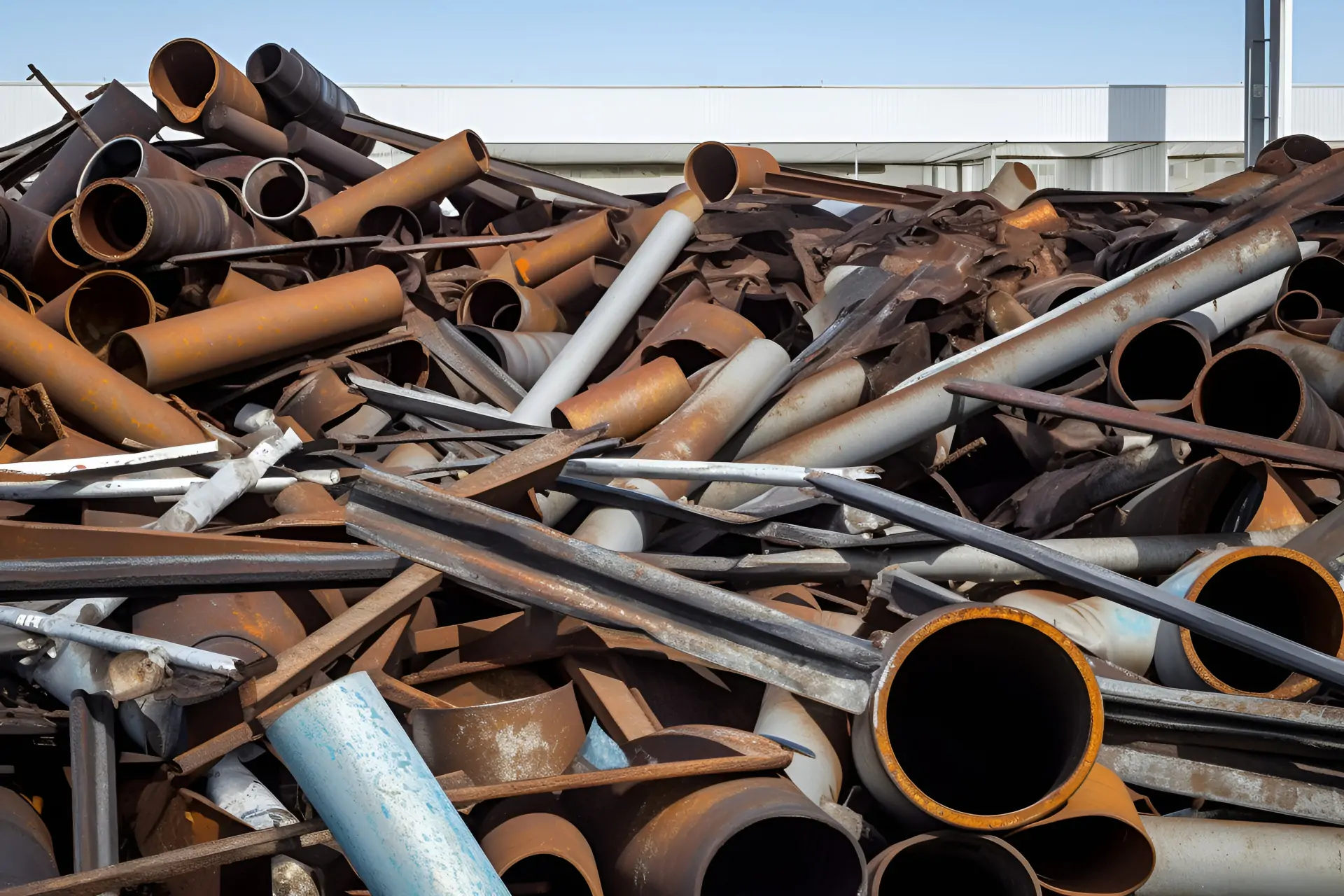
Illegal Channels to Be Curbed; More ELV Resources to Flow to Licensed Formal Enterprises
Driven by the rollout of policies for new energy vehicles and new replacement schemes in recent years, the scale of ELV dismantling has kept expanding. In 2025, China’s dismantling volume of ELVs hit 9.801 million units, a year-on-year increase of 24.5% and 4.7 times the figure recorded in 2020. This volume is expected to maintain growth in the coming years, ushering in a period of rapid expansion for the ELV dismantling industry.
For the scrap steel sector, the most direct effect of this special rectification will be more standardized circulation of ELV resources. For a long time, illegal recycling, unlicensed dismantling and unqualified operators have persisted in some regions. Many end-of-life vehicles bypass formal dismantling systems and enter the market through unregulated channels, disrupting market order and hindering the growth of compliant enterprises. For instance, unlicensed clandestine dismantling workshops operate without environmental protection facilities at lower costs while causing severe pollution, creating a market dynamic where inferior players crowd out compliant ones. This campaign identifies such violations as top crackdown targets. As illegal channels shrink, more ELVs will be diverted to qualified formal dismantling firms. Compliant dismantlers will gain access to more vehicle recycling resources, and industrial resources will further concentrate on leading enterprises.
Limited Impact on Total Scrap Steel Supply; Mainly Adjusting Supply Rhythm
Many market participants worry whether the rectification will trigger a sharp drop in scrap steel supply. Current analysis suggests this scenario is unlikely. During the campaign, enterprises reliant on unregulated channels may suspend vehicle acquisition or slow down operations. The recycling, transportation and dismantling of ELVs in certain regions may face temporary delays, leading to short-term fluctuations in ELV-derived scrap steel supply in local markets.
Nevertheless, ELV scrap steel only accounts for a portion of total scrap steel resources. Market supply is mainly sourced from social scrap steel, industrial scrap steel and processing-generated scrap steel. Therefore, the rectification primarily alters the release rhythm of resources in specific regions and periods, rather than the national total scrap steel supply. In other words, it will shift market supply timelines yet barely reshape the overall supply-demand balance of the scrap steel market.
Industrial Competition to Center More Heavily on Compliance
Compared with short-term market volatility, the long-term impacts of this rectification on industrial development merit greater attention. Successive regulatory tightening measures – ranging from tax standardization and environmental oversight to the ongoing ELV special rectification – reflect intensified industrial supervision. For example, the Specifications for Construction and Administration of Renewable Resource Recycling Sites, which took effect this month, has raised market entry thresholds and standardized front-end recycling links. Beyond mandating legal ELV recycling and dismantling, the campaign tightens controls over vehicle information management, recycling certification, full-process dismantling supervision, standardized hazardous waste disposal, and power battery recycling for new energy vehicles.
This signals that future industrial competition will hinge not only on resource volume and pricing, but also on standardized operation capabilities. Fully regulated, compliant enterprises will consolidate their development advantages, while operators relying on grey-market channels and non-compliant practices will face shrinking survival space.
Marginal Overall Impacts on Scrap Steel Market; Accelerated Industrial Standardization
In summary, this special rectification mainly rectifies industrial market order rather than altering the fundamental supply-demand dynamics of the scrap steel market.
In the short run, the circulation rhythm of ELV resources in some regions may be disrupted alongside volatile market sentiment. However, the campaign will hardly exert decisive influence on national scrap steel supply and price trends, which remain primarily driven by fundamental factors including steel mill profit margins and hot metal costs.
In the long term, intensified crackdowns on illegal recycling and dismantling will channel more ELVs into formal recycling and dismantling systems, lifting industrial concentration and standardization levels. This will facilitate sound development of the ELV recycling sector and underpin long-term stability of the scrap steel resource supply system.