

The Heart of Motors: How Silicon Steel (Magnetic Steel) Reduces Energy Loss
Silicon steel is a special metal alloy. People also call it magnetic steel or electrical steel. This material is used inside almost all electric motors, transformers, and generators. It has special magnetic abilities that normal steel does not have. For electric cars, factory machines, home appliances, and power systems, silicon steel stops energy from being wasted. It also stops parts from getting too hot and makes machines work better.
At SUMEC Metal, we supply high-performance silicon steel (electrical steel) as part of our comprehensive Specialty Steel product line. With a one-stop steel supply chain and a global network covering over 120 countries, we help manufacturers around the world source the right magnetic steel for their motors and transformers.
In this article, you will learn exactly what silicon steel is, how it works, and what special properties it has. You will also learn why it is so important for cutting down energy loss. We will explain its two main types, where people use it, and answer common questions. This will help you understand why silicon steel is called the heart of modern motors.
What Is Silicon Steel (Magnetic Steel)?
Silicon steel is an iron-based alloy with a carefully controlled silicon content ranging from 0.5% to 4.5% by weight (per ASTM A677/A683 standards). The addition of silicon modifies the metal’s response to magnetic fields in two critical ways: it increases electrical resistivity and reduces magnetic hysteresis.
Unlike ordinary carbon steel, silicon steel can be magnetized and demagnetized rapidly with very little energy converted into heat. This property, known as low core loss, makes it the global standard for motor laminations and transformer cores. Typical core loss values for high-grade non-grain oriented silicon steel can be as low as 2.1 W/kg at 1.5 T and 50 Hz (P1.5/50) , compared to over 10 W/kg for common steel.
How Silicon Steel Reduces Energy Loss
All energy losses in motors and transformers fall into two categories: hysteresis loss and eddy current loss. Silicon steel is specifically engineered to minimize both.
Hysteresis Loss
Hysteresis loss occurs when a metal’s magnetic domains resist reversal during alternating current (AC) cycles — energy that is dissipated as heat. The silicon content in electrical steel reduces magnetic anisotropy and lowers coercivity, meaning the material offers less resistance to changing magnetic fields. A typical silicon steel has a coercivity of under 100 A/m, compared to over 500 A/m for low-carbon steel (Source: Electrical Steel Handbook, Cardiff University). Lower coercivity directly translates to lower hysteresis loss.
Eddy Current Loss
Eddy currents are localized circulating currents induced within a conductor by a changing magnetic field. These currents generate heat without contributing to useful work. Silicon increases the metal’s electrical resistivity — from approximately 0.1 μΩ·m for plain steel to over 0.45 μΩ·m for 3% silicon steel — which suppresses eddy current formation.
Furthermore, silicon steel cores are manufactured as thin laminations (typically 0.35 mm, 0.50 mm, or 0.65 mm thick), each coated with an insulating layer. This laminated structure forces eddy currents to remain within individual sheets, drastically reducing overall losses. Standard insulation coatings include C-3 (organic) and C-5 (inorganic phosphate-based) per IEC 60404-13.
Key Properties of Silicon Steel
Silicon steel is distinguished by the following quantifiable properties:
| Property | Typical Value / Description | Benefit |
| High Magnetic Permeability | μr up to 10,000+ | Magnetic fields move easily with low energy input |
| Low Hysteresis Loss | Coercivity < 100 A/m | Magnetizes and demagnetizes without wasting energy |
| High Electrical Resistivity | > 0.45 μΩ·m (at 3% Si) | Suppresses eddy currents |
| Low Core Loss | As low as 2.1 W/kg (P1.5/50) | Minimizes total energy dissipation |
| Good Mechanical Strength | Tensile strength ~ 350-450 MPa | Can be stamped, cut, and stacked into laminations |
| Low Magnetostriction | < 10 ppm | Reduces vibration and audible noise in motors |
| Thin Laminate Capability | 0.35 mm, 0.50 mm, 0.65 mm | Allows high-efficiency stacked cores |
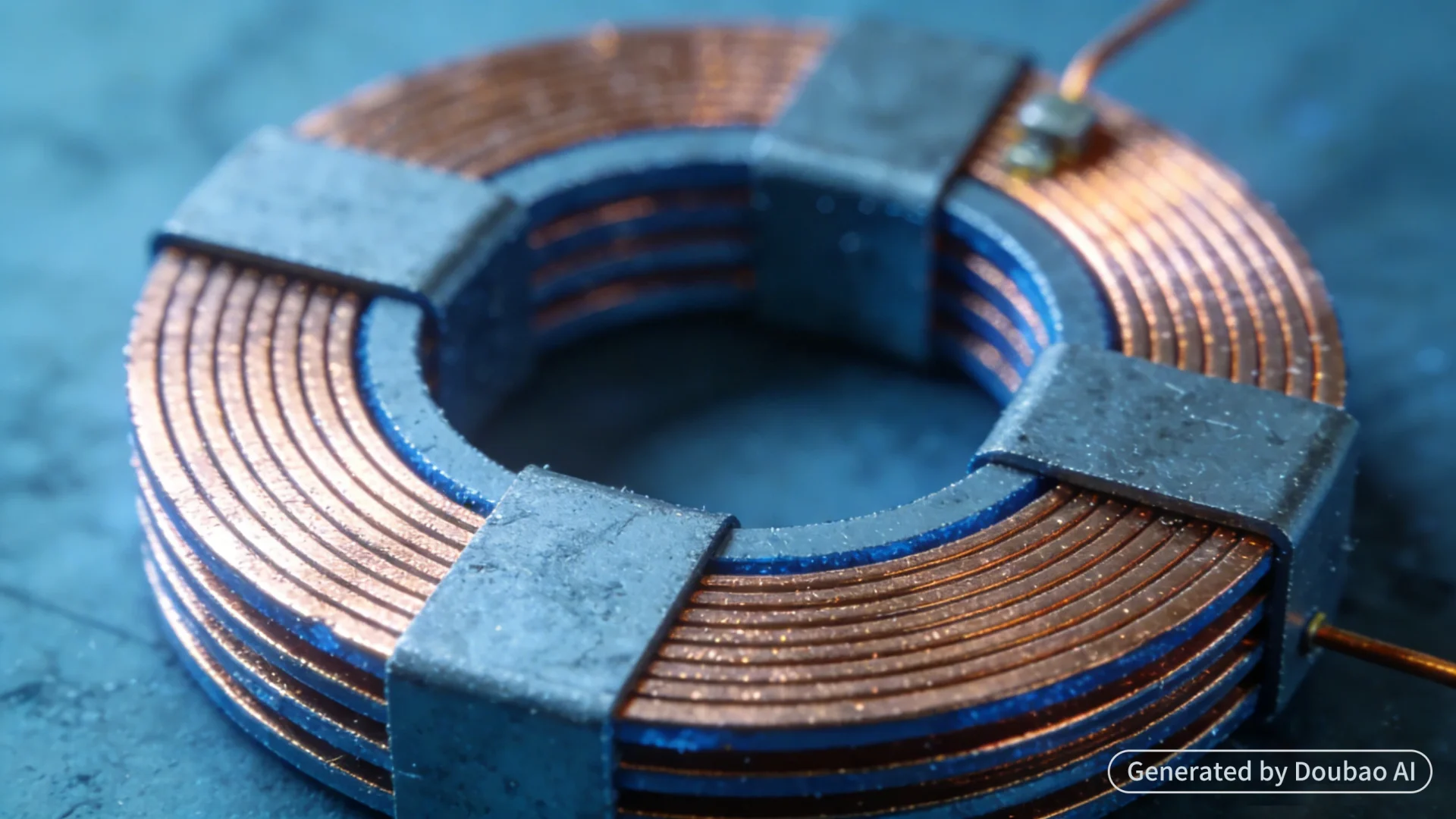
Main Types of Silicon Steel
There are two primary types of silicon steel, each serving distinct applications. SUMEC Metal supplies both types through our Specialty Steel / Electrical Steel product line.
1. Non-Grain Oriented (NGO) Silicon SteelNon-Grain Oriented silicon steel is designed for rotating machinery, where magnetic flux changes direction continuously. Its properties are isotropic (uniform in all directions).
| Parameter | Specification |
| Silicon Content | 0.5%–3.0% (Source: WESA) |
| Typical Core Loss (P1.5/50) | 2.1–6.5 W/kg (depending on grade) |
| Magnetic Induction (B50) | 1.62–1.75 T |
| Thickness | 0.35 mm, 0.50 mm, 0.65 mm |
| Key Trait | Uniform magnetic properties in all directions |
| Common Uses | EV motors, industrial motors, fans, pumps, home appliances (washing machines, refrigerators, HVAC) |
| Formability | Excellent for stamping complex rotor/stator shapes |
2. Grain Oriented (GO) Silicon Steel
Grain Oriented silicon steel is processed to develop a sharp crystallographic texture (Goss texture), making magnetic properties exceptionally strong in the rolling direction. It is used almost exclusively in stationary transformers.
| Parameter | Specification |
| Silicon Content | 3.0%–4.5% (Source: WESA) |
| Typical Core Loss (P1.7/50) | 0.8–1.5 W/kg |
| Magnetic Induction (B8) | 1.88–1.93 T |
| Thickness | 0.23 mm, 0.27 mm, 0.30 mm, 0.35 mm |
| Key Trait | High permeability and low loss in rolling direction |
| Common Uses | Power transformers, distribution transformers, large reactors |
| Efficiency | Maximum possible efficiency for unidirectional flux |
Looking for non-grain oriented or grain oriented silicon steel for your motor or transformer production? Explore SUMEC Metal’s Specialty Steel products here: https://www.sumecmetal.com/steel-products/
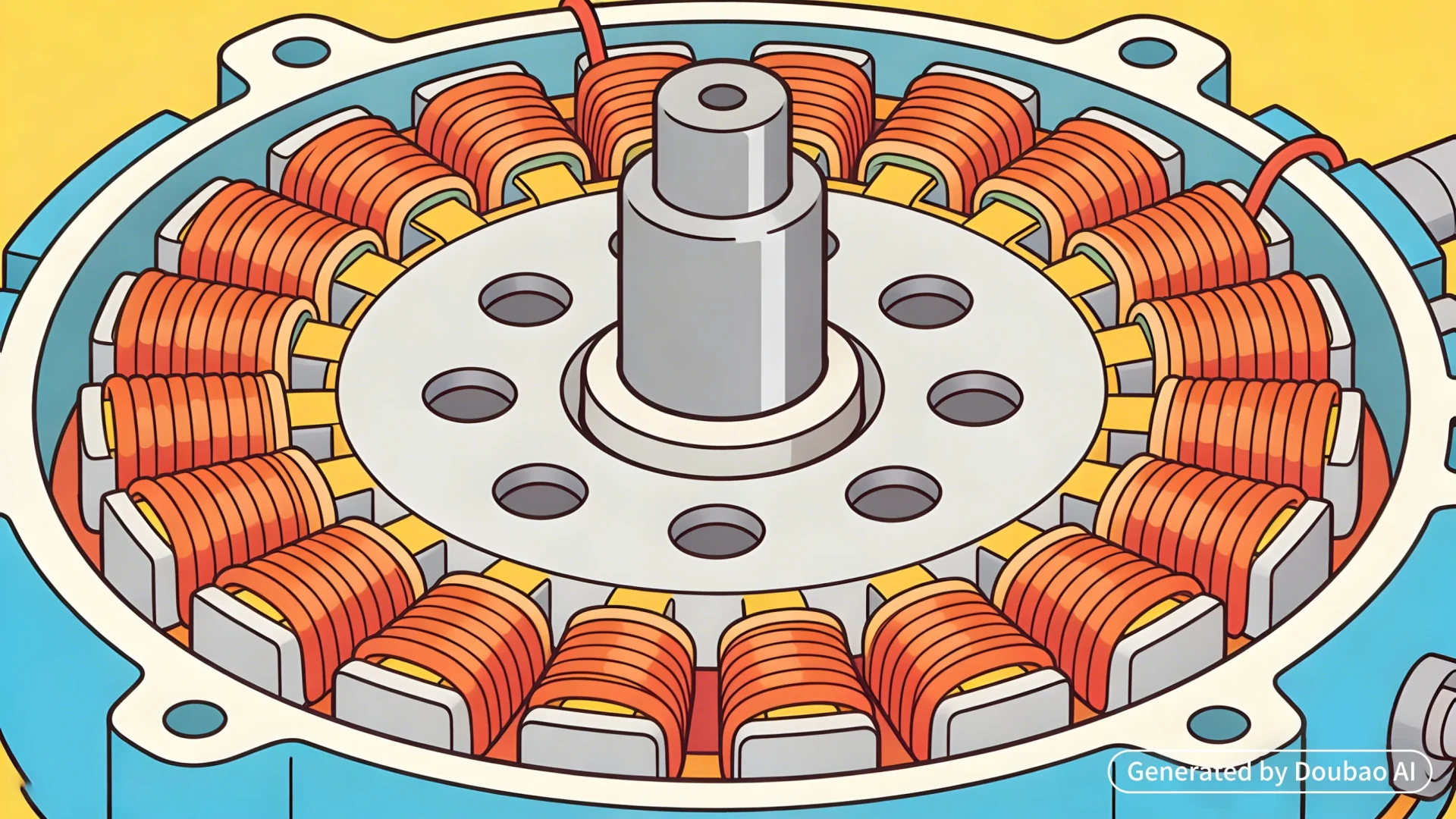
Why Silicon Steel Is Necessary for Motors
Electric motors rely on rapidly changing magnetic fields to generate rotation. If a motor core were made of common carbon steel, the result would be excessive heat, poor efficiency, and massive energy waste — up to 5-10 times higher core loss compared to silicon steel.
The quantifiable benefits of silicon steel in motors include:
- Reduced energy consumption — Lower operating costs, especially for continuous-duty motors.
- Lower temperature rise — Improved reliability and reduced cooling requirements.
- Higher power density — Smaller, lighter motors for the same output power (critical for EV applications).
- Extended motor life — Less thermal stress on windings and bearings.
- Lower noise — Reduced magnetostriction and vibration.
For electric vehicles, every 1% improvement in motor efficiency translates directly to increased driving range. High-grade non-grain oriented silicon steel with core loss below 3.0 W/kg (P1.5/50) is now standard in premium EV motors (Source: IEA EV Motor Efficiency Report).
Common Applications of Silicon Steel
Silicon steel is necessary in the following electrical products:
- Electric vehicle motors and driving systems
- Home appliances such as washing machines, refrigerators, and air conditioners
- Industrial motors, fans, compressors, and pumps
- Power transformers and electrical grid equipment
- Generators and wind turbine systems
- Power tools and small electrical devices
FAQs
Why is silicon steel made in thin layers?
Thin laminations (0.23–0.65 mm) break the path of eddy currents, forcing them to remain within individual sheets. Combined with insulating coatings, this reduces eddy current loss by over 90% compared to a solid core (Source: Standard Motor Design Principles).
Can motors work without silicon steel?
A motor can technically operate with a common steel core, but it will overheat rapidly, waste 5–10 times more energy, and fail prematurely. Silicon steel is not optional for any serious motor design.
Is silicon steel magnetic?
Yes. Silicon steel is a soft magnetic material — it magnetizes easily under an applied field and demagnetizes almost completely when the field is removed (very low remanence).
Does silicon steel increase electric car driving range?
Absolutely. Lower core loss means less battery energy is wasted as heat. For example, upgrading from a standard 6.5 W/kg grade to a premium 2.1 W/kg grade in an EV motor can improve driving range by approximately 3–5% under typical driving cycles (Source: IEA EV Motor Efficiency Report)..
Final Thoughts
Silicon steel — magnetic steel, electrical steel — is truly the heart of every modern electric motor and transformer. Its ability to reduce both hysteresis and eddy current losses while maintaining strong magnetic flux makes it irreplaceable in applications ranging from home appliances to electric vehicles and power grids.
As global demand for energy efficiency continues to rise, choosing the right electrical steel grade becomes increasingly critical. SUMEC Metal offers a complete range of non-grain oriented and grain oriented silicon steel, backed by our one-stop supply chain and global service network covering over 120 countries.
Whether you are manufacturing EV motors, industrial machinery, or distribution transformers, our Specialty Steel team can help you select the optimal grade — and deliver it anywhere in the world.
Learn more about SUMEC Metal’s Specialty Steel / Electrical Steel products: https://www.sumecmetal.com/steel-products/
Learn More About Our Products?
Contact Now