

Types of Metal Tubing and Their Uses: Seamless, ERW, LSAW, SSAW Explained
The four main types of steel tubing are seamless (SMLS), electric resistance welded (ERW), longitudinal submerged arc welded (LSAW), and spiral submerged arc welded (SSAW), each manufactured through distinct processes that determine their strength, cost, and applications.
This guide explains how each tubing type is made, where each performs best, and how to select the right option for a project. It covers size ranges, strength ratings, cost differences, and industry applications across all four types.
What Is Metal Tubing?
Metal tubing is a hollow cylinder made from steel or other metals used to transport fluids or provide structural support. Manufacturers produce tubing through different processes that affect its strength, cost, and performance.
The manufacturing process determines whether tubing is seamless or welded. Seamless tubing starts with a solid steel billet that gets heated and pierced to create a hollow shape. This process uses hot rolling or cold drawing to reach the final size.
Welded tubing begins with flat steel. Steel plates or steel coils get formed into a cylinder shape and joined along a seam. The two main welding methods are electric resistance welding (ERW) and submerged arc welding (SAW), with SAW further divided into longitudinal (LSAW) and spiral (SSAW) sub-types.
ERW tubing uses steel coils that roll into shape and weld using electrical current. This method works well for sizes up to 24 inches in diameter. Submerged arc welding uses steel plates and creates larger diameter pipes through longitudinal or spiral welding patterns.
Key Manufacturing Methods:
| Method | Starting Material | Process Type | Typical Sizes |
| Seamless | Steel billet | Hot rolling or cold drawing | 1/8″ to 24″ |
| ERW | Steel coil | Electric resistance welding | 1/2″ to 24″ |
| LSAW | Steel plate | Submerged arc welding (straight seam) | Large diameter |
| SSAW | Steel plate | Submerged arc welding (spiral seam) | Large diameter |
Metal tubing serves industries including construction, oil and gas, automotive, and infrastructure. Each manufacturing method produces tubing suited for specific pressure levels, temperatures, and applications.
What Is Seamless Steel Tubing?
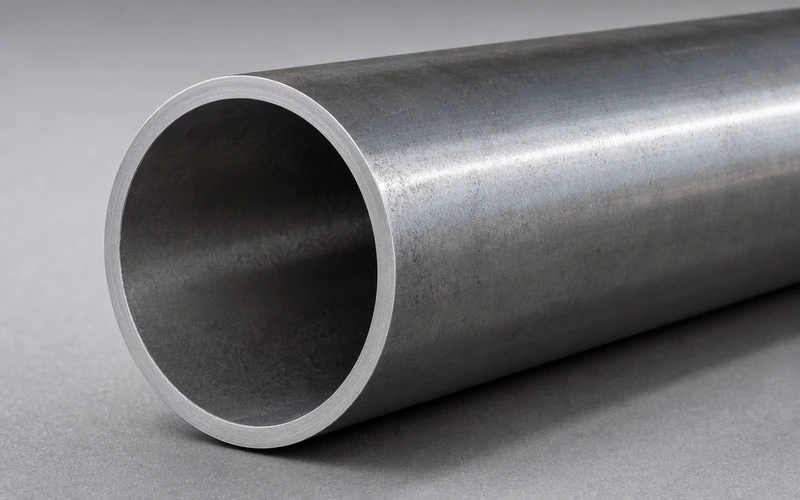
Seamless steel tubing is a hollow tube manufactured from a solid steel billet with no welded seam running along its length. The billet is heated above 1,200°C and pushed through a rotary piercing mill, which hollows out the center to form a single, continuous tube. Because no two edges are ever joined, there is no weld line anywhere in the finished product.
Because seamless tubing removes the weak point that exists where ERW pipe’s coil edges are fused together, engineers specify it for high-pressure hydraulic systems, boiler tubes, and oil-and-gas downhole applications. It also holds tighter dimensional accuracy and a smoother surface finish than low-frequency ERW processes, which suits precision mechanical components and structural tubing as well.
Quality and sizing are governed by a handful of standards, most commonly:
- ASTM A53 Type S (seamless)
- ASTM A106 for high-temperature pressure service
- API 5L for line pipe
These differ from ERW pipe standards in chemical composition limits and testing procedures, and every seamless tube undergoes a hydrostatic test to confirm pressure integrity before shipment. The trade-off is cost — seamless carbon steel pipe runs more expensive than welded alternatives — but that premium buys freedom from weld-zone failure risk in critical service. Seamless pipe is typically available from 1/8-inch to 24-inch NPS, with wall thicknesses ranging from Schedule 10 to Schedule 160.
What Is ERW Steel Tubing?
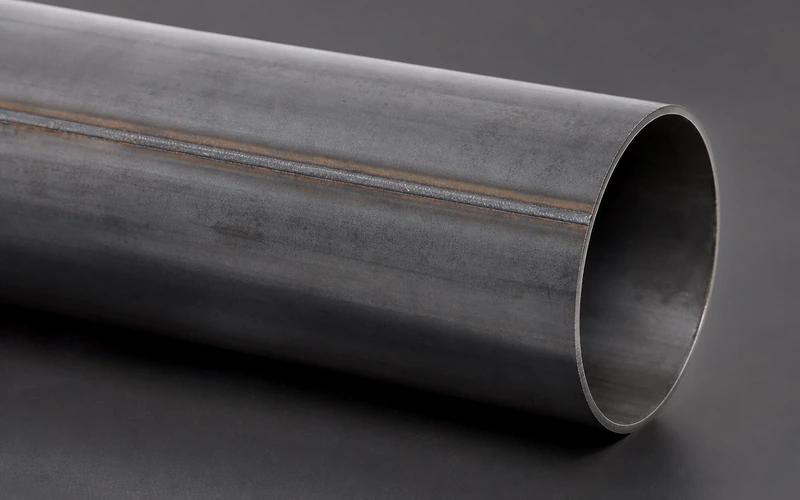
ERW steel tubing is pipe made by rolling flat steel plates into a cylindrical shape and joining the edges with electric resistance welding. The process uses electrical current to heat the steel edges, then presses them together under force to create a longitudinal weld seam along the pipe’s length.
No filler material is added during ERW welding. The steel edges bond directly through heat and pressure.
Manufacturing Process:
- Steel coil is unrolled and flattened
- Strip is formed into a tube through rollers
- Edges are heated with electrical resistance
- Heated edges are pressed together to form the weld
- Weld seam is trimmed and smoothed
- Pipe is sized and cut to length
ERW tubing works well for low to medium pressure applications. Common standards include API 5L for oil and gas pipelines and ASTM A252 for foundation piling.
Key Characteristics:
| Feature | Description |
| Diameter Range | Up to 24 inches |
| Wall Thickness | Thin to medium |
| Weld Type | Longitudinal seam |
| Surface Finish | Smooth, consistent |
| Production Speed | Fast, continuous |
ERW differs from LSAW (longitudinal submerged arc welding) and SSAW (spiral submerged arc welding) pipes. LSAW pipes use submerged arc welding for thicker walls and larger diameters. SSAW pipes feature a spiral weld seam instead of a straight longitudinal seam.
The heat-affected zone in ERW tubing is smaller than in SAW pipes. This creates a cleaner weld appearance but limits wall thickness options compared to LSAW or SSAW methods.
What Is LSAW Steel Tubing?
LSAW steel tubing is made by bending steel plates into a cylindrical shape and joining the edges with longitudinal submerged arc welding. The welding process occurs underwater beneath a layer of flux, which protects the weld from contamination and produces a strong, high-quality seam.
Manufacturers start with flat steel plates. They roll these plates into a pipe shape and weld them along the length of the pipe. The submerged arc welding method creates pipes with superior dimensional accuracy and consistent wall thickness compared to other welded pipe types.
Key Specifications:
- Diameter range: 16 inches to 60 inches (406mm–1524mm)
- Common standards: API 5L, ASTM A53, ASTM A106, EN 10217
- Materials: Carbon steel pipes and alloy steel
LSAW pipes undergo rigorous quality control. Each pipe must pass a hydrostatic test to verify its strength and detect any defects. The process also produces excellent surface finish and weld uniformity.
The manufacturing method gives LSAW pipes better ductility and weld toughness than ERW pipes. Pipe suppliers recommend LSAW for projects that need larger nominal pipe sizes and higher pressure ratings. The process costs more than ERW but delivers carbon steel pipes with consistent quality for demanding applications.
What Is SSAW Steel Tubing?
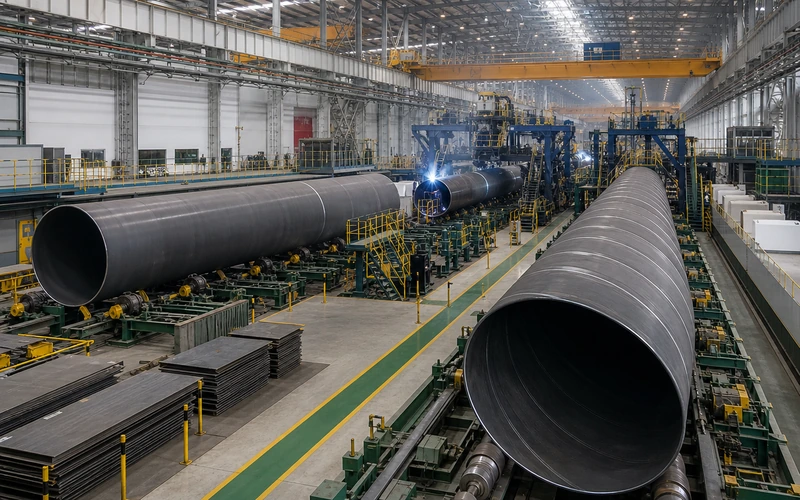
SSAW steel tubing is made by spiral-welding steel coils using submerged arc welding. The steel coil forms into a pipe shape while a helical seam welds along the spiral edge.
The manufacturing process allows SSAW pipes to reach large diameters that range from 20 inches to 100 inches. Wall thickness can go up to 25 millimeters. This makes SSAW ideal for projects that need wide pipes but don’t require the highest pressure ratings.
Key specifications for SSAW tubing include:
- API 5L for oil and gas pipeline projects
- ASTM A252 for structural tubing and piling applications
- ISO 3183 and SY/T 5037 for various industrial uses
The spiral welding method creates a longer weld seam compared to straight-seam pipes. This affects the pipe’s pressure tolerance. SSAW pipes handle medium-pressure applications well but may not meet strict offshore requirements.
Manufacturers produce SSAW carbon steel pipes with good dimensional accuracy and surface finish. Each pipe undergoes a hydrostatic test to verify its strength and detect defects. The continuous production method allows pipe suppliers to fulfill large orders faster than LSAW alternatives.
Common applications include:
- Water pipeline systems for municipal and irrigation projects
- Medium-pressure oil and gas pipeline networks
- Culverts and foundation piling
- Structural tubing for construction
The cost per foot stays lower than LSAW pipes of similar nominal pipe size. This makes SSAW carbon steel pipe a practical choice for large-diameter projects with moderate pressure requirements.
What Are The Application Of The Four The Metal Tubing Types?
Each metal tubing type serves specific industrial needs based on its manufacturing method and structural properties.
Seamless Tubing Applications:
- High-pressure hydraulic systems that require superior strength
- Oil and gas pipeline systems where wall thickness consistency matters
- Boiler tubes and heat exchangers in power plants
- Mechanical shafts and precision engineering components
- Applications meeting ASTM A106 and API 5CT standards for critical service
ERW (Electric Resistance Welded) Tubing Applications:
- Structural tubing for construction and building frameworks
- Water pipeline systems with standard nominal pipe size requirements
- Low to medium-pressure gas distribution networks
- Automotive components and exhaust systems
- Projects following ASTM A53 specifications for general purpose piping
LSAW (Longitudinal Submerged Arc Welded) Tubing Applications:
- Large-diameter oil and gas pipeline construction
- Offshore drilling platforms and subsea applications
- Water transmission lines for municipal systems
- Projects requiring API 5L certification and hydrostatic test validation
- Piling pipes meeting ASTM A252 standards for foundation work
SSAW (Spiral Submerged Arc Welded) Tubing Applications:
- Long-distance water pipeline projects
- Drainage and sewage systems
- Low-pressure oil and gas transmission lines
- Bridge and building support structures
- Large-diameter applications where carbon steel pipes offer cost advantages
Pipe suppliers select tubing types based on pressure requirements, dimensional accuracy needs, and surface finish specifications. Carbon steel pipe dominates these applications due to its strength and availability.
How Do You Choose the Right Steel Tubing Type for Your Project?
Select tubing based on pressure requirements, size needs, and budget constraints. Seamless tubing is the default choice for high-pressure, safety-critical systems such as oil and gas pipelines and boilers, where wall thickness and material grade — not a single PSI threshold — determine the exact pressure rating.
Check the dimensional accuracy requirements first. ERW tubing offers better roundness and surface finish for structural applications like scaffolding and framework. Seamless tubing provides uniform wall thickness for critical systems where weak points cannot exist.
Match the tubing type to your specifications:
| Requirement | Choose | Standards |
| High pressure (>700 PSI) | Seamless | API 5L, ASTM A106 |
| Large diameter (>24 inches) | LSAW or SSAW | ASTM A53, API 5L |
| Standard construction | ERW | ASTM A53, ASTM A252 |
| Underground piling | SSAW | ASTM A252 |
Verify the nominal pipe size availability. Standard seamless mills stop at 24 inches, so projects requiring larger sizes need LSAW or SSAW carbon steel pipes. LSAW bridges the gap between seamless strength and large diameter needs for oil and gas pipeline projects.
Request material certificates from your pipe supplier showing compliance with ASTM A53, ASTM A106, or API 5CT standards. Confirm the tubing passed required hydrostatic tests for your pressure rating.
ERW suits most projects where cost matters. Use seamless only when specifications demand zero weld seams or when codes require it for toxic fluids.
FAQs
Is Seamless Pipe Always Stronger Than Welded Pipe?
No — seamless pipe isn’t universally stronger; it mainly offers a higher pressure rating. Seamless tubing carries a weld joint efficiency of 1.0, versus 0.85 for ERW, though LSAW pipe can match seamless-level pressure ratings at large diameters.
Can ERW Pipe Be Used for High-Pressure Applications?
Yes, but only within limits — High-frequency induction (HFI) welding, the current industry-standard ERW process, allows ERW pipe to handle medium-to-fairly-high pressure — though seamless or LSAW pipe remains the choice for the most demanding oil, gas, and boiler applications.
What Is the Main Difference Between LSAW and SSAW Pipe?
The main difference is weld direction and forming method — LSAW pipe has a straight, lengthwise weld formed by pressing a flat plate into a cylinder, while SSAW pipe has a spiral weld formed by coiling a narrower steel strip helically.
Which Pipe Type Is the Cheapest per Ton?
SSAW pipe is typically the cheapest per ton, since its spiral-welding process uses narrower, lower-cost steel coil efficiently with minimal scrap. ERW pipe follows as the next most economical option, while seamless and LSAW pipe carry the highest material costs.
Can Stainless Steel Be Produced as ERW, LSAW, or SSAW Pipe?
Yes, stainless steel can be produced using all three welding processes, though ERW is most common for smaller-diameter stainless tubing. LSAW and SSAW stainless pipe exist but are less frequent, since large-diameter stainless projects are rarer than carbon steel projects.
What Diameter Range Can SSAW Pipe Reach That LSAW Cannot?
SSAW pipe can reach larger diameters, often exceeding 100 inches, by spiral-winding narrow steel coil into a continuous cylinder.LSAW pipe is typically limited to around 60 inches, based on the maximum width of steel plate mills can roll into a cylinder.
Learn More About Our Products?
Contact Now