

What Is the Most Reactive Metal
Cesium is considered the most reactive stable metal, while francium is predicted to have higher reactivity based on periodic trends. However, francium is extremely rare and radioactive, making cesium the most practical metal for studying high reactivity.
This article explains how scientists rank reactive metals and why some metals react more strongly than others. You’ll learn how cesium and other highly reactive metals behave when exposed to water or air, plus the special safety steps needed to handle and store them properly.
How Are Reactive Metals Ranked In The Reactivity Series?
The reactivity series ranks metals from most to least reactive based on how easily they lose electrons to form positive ions.
The six most reactive metals occupy the top positions:
| Rank | Metal | Chemical Symbol | Reason for high reactivity |
| 1 | Francium | Fr | Lowest predicted ionization energy |
| 2 | Cesium | Cs | Most reactive stable metal |
| 3 | Rubidium | Rb | Large atomic radium |
| 4 | Potassium | K | Highly reactive alkali metal |
| 5 | Sodium | Na | Easily loses outer electron |
| 6 | Lithium | Li | Reactive but smaller atomic radium |
1. Francium
Francium holds the top position as the most reactive metal in the activity series. This element loses its outer electron more readily than any other metal, making it the strongest reducing agent among all metallic elements.
The extreme reactivity stems from francium’s atomic structure. Its single valence electron sits far from the nucleus in the seventh electron shell, experiencing minimal attraction to the positively charged center.
Francium is predicted to react extremely strongly with water and air based on its position in Group 1. However, large-scale reactions have not been observed because only tiny amounts of francium exist. The most stable isotope, francium-223, has a half-life of just 22 minutes.
2. Cesium
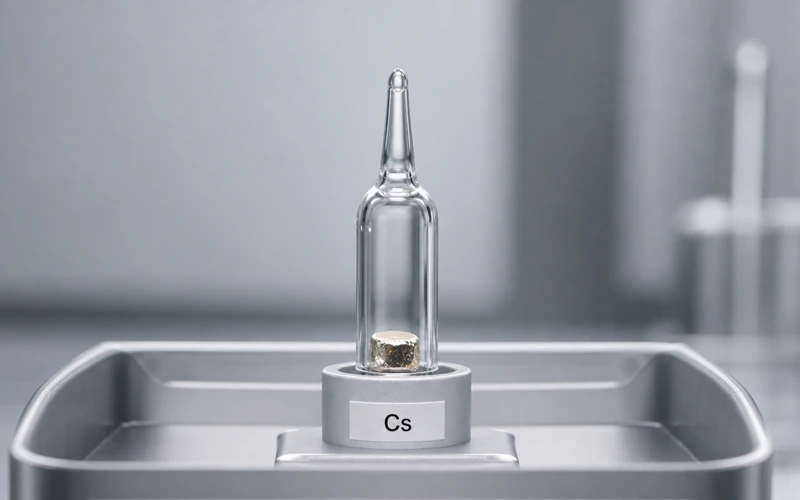
Cesium is considered the most reactive stable metal in the practical metal activity series. The element has a standard electrode potential of −3.03 volts, indicating its strong tendency to undergo oxidation and lose electrons.
Cesium’s reactivity results from its large atomic radius and single valence electron in the outermost shell. The electron experiences weak attraction to the nucleus due to shielding from inner electrons, allowing cesium to function as a powerful reducing agent in chemical reactions.
The element melts at 28.5°C, one of the lowest melting points among metals. Cesium requires controlled storage conditions, such as sealed containers or inert atmospheres, to prevent reactions with moisture and oxygen.
3. Rubidium
Rubidium occupies the third position in the reactivity series of metals with a standard electrode potential of −2.94 volts. The metal loses its single valence electron easily, making it one of the most effective reducing agents available.
Rubidium’s position in the activity series means it can displace less reactive metals from their compounds. Rubidium can act as a strong reducing agent and may displace less reactive metals from some compounds under suitable conditions.
4. Potassium
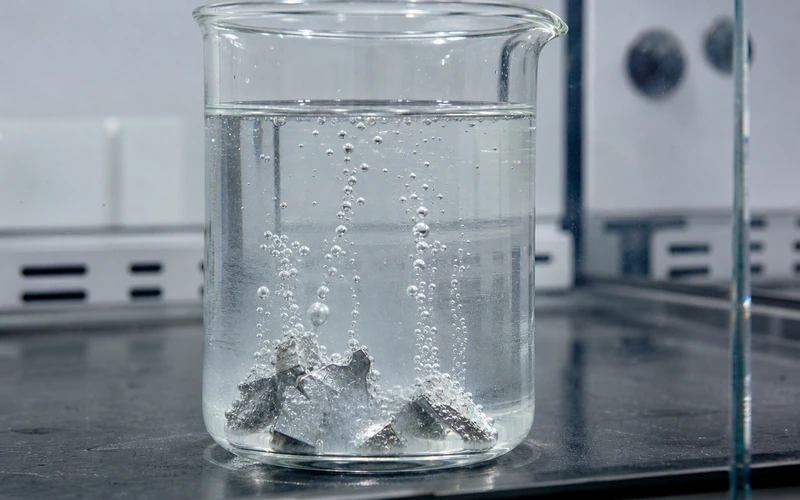
Potassium is one of the most reactive stable metals and reacts rapidly with water due to its ability to lose its outer electron easily. The metal reacts violently with water, producing potassium hydroxide and hydrogen gas while generating enough heat to ignite the hydrogen. Fresh cuts of the metal reveal a bright silvery surface that oxidizes within seconds, forming a dull gray coating.
As a strong reducing agent, potassium donates electrons readily in chemical reactions. The metal can displace less reactive elements like sodium and lithium from their compounds, though such reactions occur less commonly due to potassium’s own high reactivity and the similarity in reactivity among alkali metals.
5. Sodium
Sodium ranks fifth in the metal activity series with a standard electrode potential of −2.71 volts. The metal reacts vigorously with water at room temperature, producing sodium hydroxide and hydrogen gas through oxidation. Sodium reacts more controllably than potassium, making it easier to demonstrate in laboratory settings while still showing dramatic reactivity.
Sodium functions as a powerful reducing agent in industrial processes. The metal loses its single valence electron readily, allowing it to displace less reactive metals from their compounds. Chemical bonds in many metal salts break easily when sodium is present due to its strong tendency to donate electrons.
6. Lithium
Lithium is highly reactive, but its smaller atomic size makes its reactions different from heavier alkali metals such as sodium and potassium. This apparent contradiction occurs because the reactivity series considers practical reaction rates rather than just thermodynamic potential.
Lithium’s smaller atomic size and higher charge density create stronger chemical bonds in its compounds. The metal’s valence electron sits closer to the nucleus compared to other alkali metals, requiring more energy to remove despite favorable thermodynamic values.
How Do The Most Reactive Metals React With Water and Air?
The most reactive metals react violently with both water and air because they have one loosely bound electron in their outermost shell. These metals belong to the alkali metals group in the periodic table and have low ionization energy, which means they lose their outermost electrons easily.
Reactions with water and air:
| Metal | Reaction with Water | Reaction with Air |
| Francium | Expected to react extremely strongly, forms francium hydroxide and hydrogen gas | Ignites immediately, forms francium oxide |
| Cesium | Explodes violently, forms cesium hydroxide and hydrogen gas | Ignites spontaneously, forms cesium oxide |
| Rubidium | Explodes on contact, forms rubidium hydroxide and hydrogen gas | Catches fire immediately, forms rubidium oxide |
| Potassium | Reacts rapidly with water and may ignite released hydrogen gas, forms potassium hydroxide and hydrogen gas | Tarnishes instantly, forms potassium oxide |
| Sodium | Reacts vigorously with heat and flames, forms sodium hydroxide and hydrogen gas | Tarnishes quickly, forms sodium oxide |
| Lithium | Reacts steadily with fizzing, forms lithium hydroxide and hydrogen gas | Tarnishes slowly, forms lithium oxide |
The reactivity increases down the group because atomic radius gets larger and outermost electrons sit farther from the nucleus. This distance makes it easier for atoms to lose electrons and form positive ions.
How To Use And Store The Most Reactive Metals?
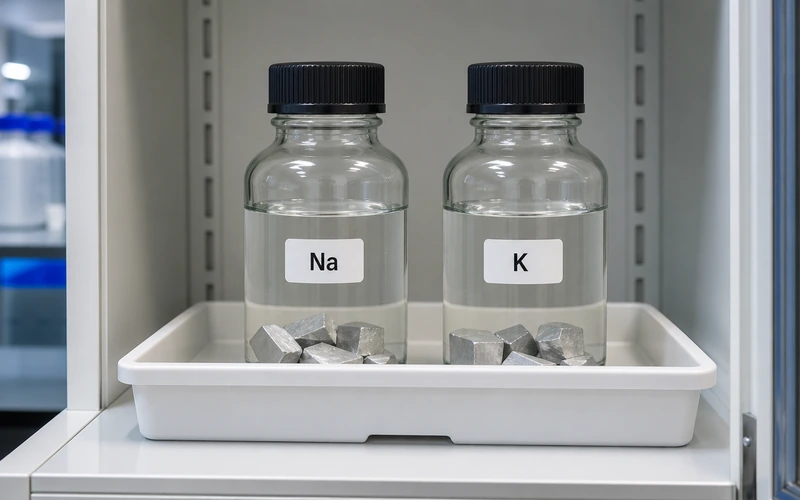
The most reactive metals require strict storage conditions because they react violently with air and water. These metals include the alkali metals (lithium, sodium, potassium, rubidium, and cesium) which have one outermost electron that is easily lost.
Storage requirements for highly reactive metals:
- Store alkali metals under mineral oil or kerosene to prevent contact with oxygen and moisture
- Keep containers sealed in inert atmospheres like argon gas for maximum protection
- Use dry, cool storage areas away from water sources and oxidizing agents
- Never touch these metals with bare hands due to burn risks from chemical reactions
- Store smaller quantities to reduce risk, as larger amounts generate more heat during reactions
Handling procedures for reactive metals:
- Wear protective equipment including gloves, goggles, and lab coats
- Use metal tongs or specialized tools, never bare hands
- Work in fume hoods or well-ventilated areas to manage reaction byproducts
- Keep fire extinguishers rated for metal fires nearby
- Cut only small pieces when needed, as fresh surfaces react immediately with air
FAQs
Which metal is considered the most reactive in chemistry?
Francium is considered the most reactive metal based on theory because it has a large atomic radius and low ionization energy. Cesium is the most reactive stable metal that scientists can study due to francium’s rarity and radioactivity.
Which metal is the most reactive among the first 20 elements?
Potassium is the most reactive metal among the first 20 elements. As a Group 1 metal, it loses electrons easily and reacts strongly with water, producing potassium hydroxide and hydrogen gas.
Which metal is at the top of the reactivity series?
Cesium is at the top of the practical reactivity series. Francium is predicted to be more reactive but is rarely included because it is radioactive and difficult to study.
Conclusion
Cesium stands as the most reactive metal that scientists can safely study, while francium remains the theoretical leader due to its position on the periodic table. Both metals share a common trait with other alkali metals: a single, loosely held outer electron that reacts fast with water and air. This reactivity pattern explains why alkali metals need special storage, such as mineral oil or sealed inert containers, and why handling them requires strict safety steps. Understanding where a metal sits on the reactivity series helps chemists, students, and industry professionals predict how that metal will behave in real-world conditions. For more background on metal properties, industrial metal materials, and related resources, visit SUMEC Metal.
Learn More About Our Products?
Contact Now