

90% of steel production capacity has achieved ultra-low emissions
On February 27, the Ministry of Ecology and Environment of China held its regular press conference for February. Li Tianwei, Director of the Department of Atmospheric Environment of the Ministry of Ecology and Environment, attended the press conference and introduced the relevant situation regarding the in-depth fight against air pollution and the comprehensive promotion of the construction of a beautiful blue sky. Pei Xiaofei, spokesperson for the Ministry of Ecology and Environment, presided over the press conference, reported on the recent progress of key ecological and environmental protection work, and jointly answered questions from reporters.
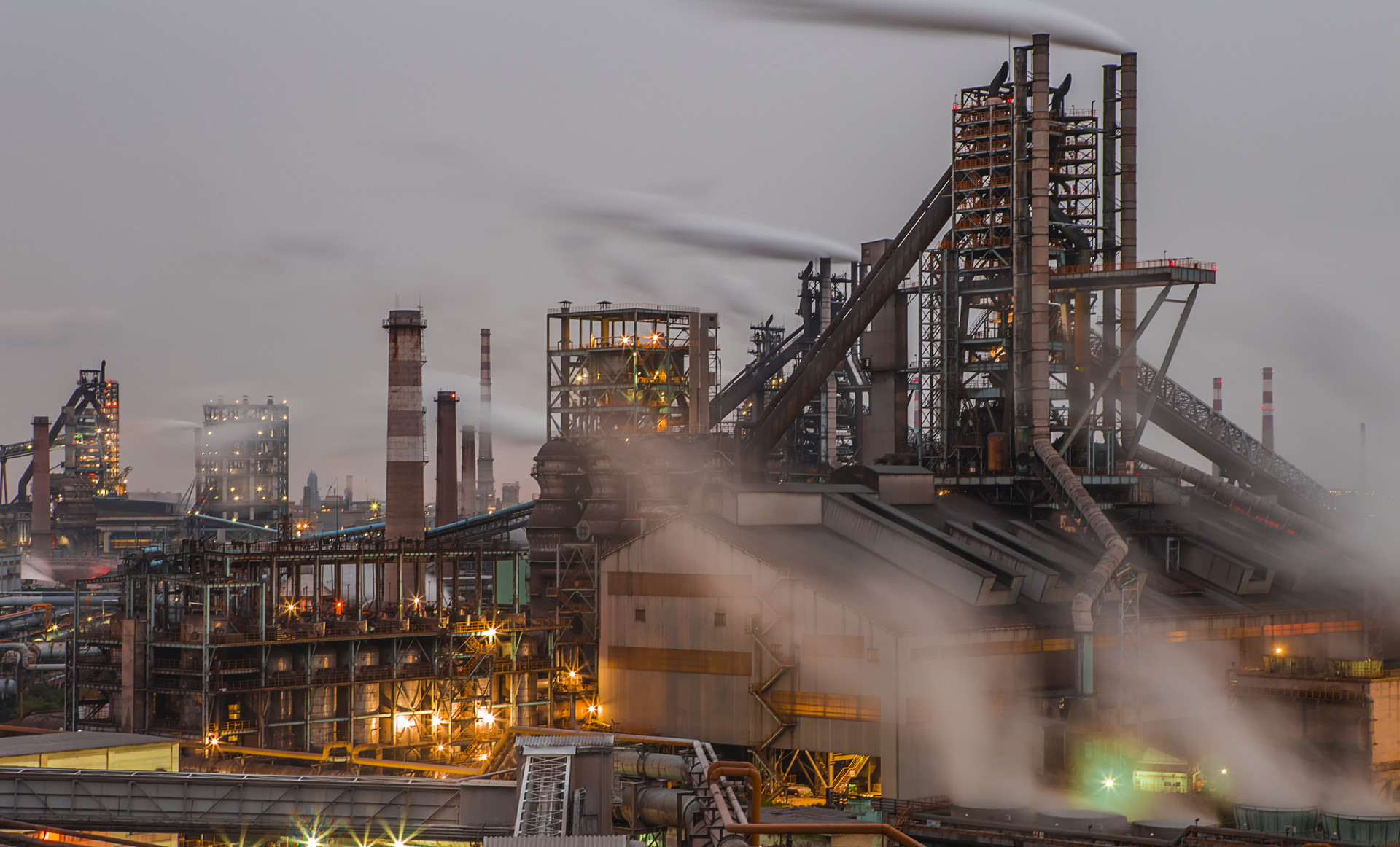
Director Li Tianwei pointed out that during the 14th Five-Year Plan period, ultra-low emission transformation of coal-fired power plants continued to advance, and the steel industry made comprehensive efforts. Currently, 95% of the country’s coal-fired power capacity and 90% of its steel production capacity have achieved ultra-low emissions, establishing the world’s largest clean coal-fired power system and steel production system. Ultra-low emission transformation in the steel industry has driven investment of over 400 billion yuan, promoting the development of emerging industries such as energy conservation and environmental protection, clean transportation, and new energy vehicles, especially creating broad application scenarios and opening up rapid development channels for new energy heavy trucks.
Li Tianwei stated that the root cause of air pollution lies in pollutant emissions exceeding the atmospheric environmental capacity. The anticipation and prayers of many of our colleagues in atmospheric science for favorable meteorological conditions, the helplessness and lamentations of some regions regarding the inherent disadvantages of their urban locations, and the rising anxiety about fluctuating air quality—all these essentially stem from the fact that pollutant emissions have not been truly reduced to the required level. The core of “human effort” lies in concretely implementing emission reduction measures.
First, we will focus on “large-scale.” Industries such as coal-fired power, steel, coking, and cement have large and high-intensity emissions from individual enterprises, and these are all high-altitude sources with a wide impact, making them the main battleground for emission reduction. Therefore, we will use ultra-low emission retrofitting as a starting point to promote in-depth governance in stages, by industry, and by region. Over the past five years, the promotion of ultra-low emission standards in coal-fired power generation has continued, and the steel industry has made comprehensive efforts. Currently, 95% of the nation’s coal-fired power capacity and 90% of its steel production capacity have achieved ultra-low emissions, establishing the world’s largest clean coal-fired power system and steel production system.
The second key focus is on “scattered” coal use. Various scattered and inefficient coal-fired power plants, although small in scale individually, are numerous and widespread, resulting in significant cumulative effects. Most of these plants emit low-altitude pollutants, directly impacting breathing comfort and air quality. Over the past five years, we have completed the remediation of 17 million scattered coal-fired power plants, bringing the cumulative total to 42 million, reducing coal consumption by over 80 million tons. We have intensified efforts to eliminate and comprehensively renovate inefficient boilers and kilns, eliminating approximately 30,000 coal-fired boilers. In key areas, 449 fuel-based gasifiers have been replaced with clean energy, continuously reducing the space for scattered and inefficient coal use.
The last “difficult challenge” refers to VOCs. VOCs governance involves a wide range of aspects, numerous stages, long processes, and diverse stakeholders, making it highly challenging. We focused on resolving prominent issues, identifying and addressing nearly 140,000 VOCs governance problems through a categorized approach, promoting comprehensive VOCs governance across the entire chain. For large emitters like petrochemical companies, we strengthened the construction of efficient treatment facilities and implemented full-process supervision, increasing the proportion of efficient treatment facilities by 9 percentage points. For small and medium-sized enterprises (SMEs), we focused on source substitution, centralized treatment, and promoting low-VOCs raw materials, constructing 142 new “green islands” to achieve centralized treatment and shared pollution control, effectively solving the pollution control challenges faced by SMEs.
The effectiveness of pollution control and emission reduction at pollution sources is both tangible and multifaceted. I think the first significant achievement is the remarkable improvement in air quality. Here, I’d like to give an example from Tangshan. Everyone is familiar with Tangshan; the ultra-low emission transformation of the steel industry has given the city a completely new look, solving its air quality management challenges. The steel industry is a pillar industry in Tangshan, with a crude steel production capacity of nearly 100 million tons. In recent years, Tangshan has adopted comprehensive layout adjustments, ultra-low emission upgrades, and clean transportation measures around the steel industry, achieving a “win-win” situation of improved industrial quality and efficiency and improved air quality. In 2025, Tangshan’s PM2.5 concentration is projected to be 34.1 micrograms per cubic meter, a 60% decrease from 85 micrograms per cubic meter in 2015; its GDP is projected to reach 1.05 trillion yuan in 2025, a 72% increase from 610.3 billion yuan in 2015, making it the only city in Hebei Province with a GDP exceeding one trillion yuan.
I believe the second achievement of pollution control is that emission reduction also acts as a “driving force” for the green transformation of industries. After ultra-low emission upgrades in key industries, pollutant emissions per unit of product have been reduced by 50%-90%, achieving world-leading emission performance. This has not only improved the quality of industry development but also freed up environmental capacity, laying a solid ecological foundation for the development of other real economies.
The third achievement is that emission reduction has become an “engine” for the development of new-quality productivity. Ultra-low emission upgrades in the steel industry have driven investment exceeding 400 billion yuan, promoting the development of emerging industries such as energy conservation and environmental protection, clean transportation, and new energy vehicles. In particular, it has created broad application scenarios and opened up rapid development channels for new energy heavy trucks. Last year, sales of new energy heavy trucks increased by 173% year-on-year, becoming a vivid example of how emission reduction empowers new-quality productivity. The improvement of air quality during the 15th Five-Year Plan period will still depend on emission reduction, and on whether these reductions can be truly implemented. Our future work will focus on three key words:
The first key word is “consolidation.” We will promote high-quality ultra-low emission transformation in the coking and cement industries, driving continuous reductions in pollution emissions from key industries; we will deepen the governance of scattered coal use and the rectification of boilers and kilns, strictly preventing a resurgence of scattered coal use.
The second key word is “improvement.” We will strive to optimize governance efficiency, carry out the rectification and upgrading of inefficient and ineffective facilities, strengthen comprehensive VOCs governance across all stages, promote the upgrading of traditional industrial clusters, and realize the transformation of governance facilities from “existence” to “quality.”The third key word is “strengthening supervision.” We must accelerate the application of digital and intelligent methods, improve the closed-loop management system for governance effectiveness, strengthen in-process and post-process supervision, strictly adhere to the bottom line of “genuine ultra-low emissions and genuine emission reductions,” severely investigate fraudulent practices, and ensure that all facilities are effectively implemented.