

Medium Heavy Plates Turn Hot as US Market Tightens and Asian Mills Hold Firm
The plate market is not behaving like a typical June. Anyone who has been in this business long enough knows that summer usually means slow trading, shrinking order books, and mills getting desperate to move tonnage. Not this year.
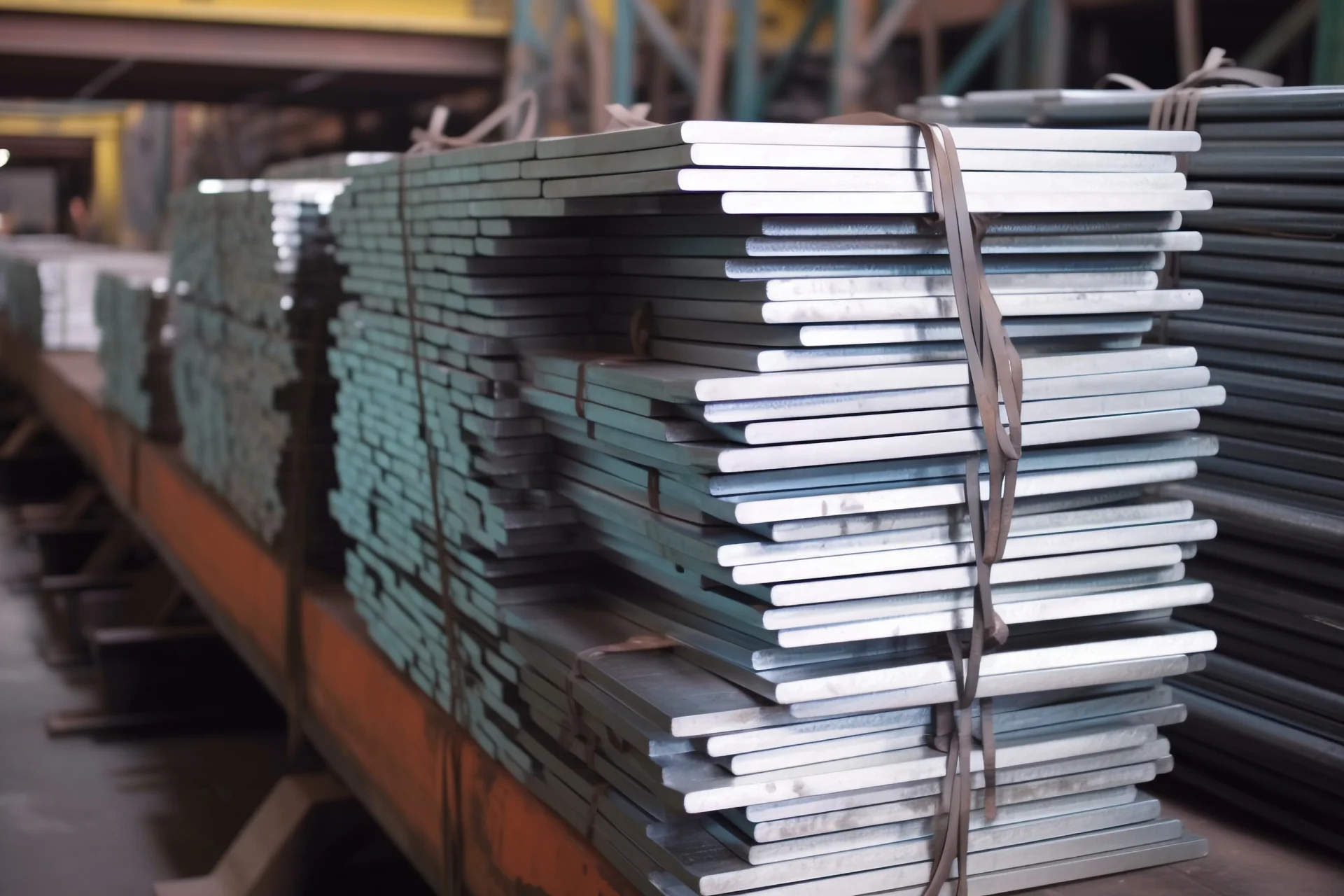
Steel Market Update talked to buyers across the United States this week. The feedback was striking. One Midwest distributor said the tightening in medium heavy plates is only getting started. He put it bluntly: “This is only the start of the market getting tight, has the chance of getting downright stupid. July is closed, August will close quickly, most mills have so many orders they don’t know what to do, and in some cases are walking back promised orders.“
That is not normal summer language. That is peak season language.
What is driving this?
Several factors are colliding at once. First, domestic mill capacity for medium heavy plates has not kept up with demand. An importer based in the Midwest told SMU that his business is booming. He credited increased demand from the energy industry plus mining and construction equipment sectors. ”We had a big increase and it’s finally sticking,” he said. “Business is booming and I think some mills are out to lunch. Availability on heavy plate remains limited.”
Second, the import situation is complicated. Tariffs and trade uncertainty have made buyers nervous about relying too heavily on offshore material. One service center associate admitted that even when imports are competitively priced, the risks are high. That has pushed more buyers back to domestic mills, which are already running at capacity.
The price movement reflects this pressure. In early June, SMU assessed spot prices for plate ranging from $1,220 to $1,300 per short ton, with an average transaction price of $1,260. Just a few weeks earlier in mid-May, the range was $1,210 to $1,280 with a $1,245 average. That is real upward movement in a short period.
Nucur’s surprising move
Not every mill is following the same strategy. Nucor surprised the market in May by keeping its plate prices flat while competitors like SSAB Americas and OSM pushed for increases. A service center source said he had not seen that kind of restraint from a mill in a supply-strained market in thirty years.
The thinking, according to people who follow Nucor closely, is that they are watching the import market carefully. If domestic prices rise too fast, foreign material becomes more attractive. By holding prices steady, Nucor might be trying to keep a lid on imports. Whether that strategy holds through the summer remains to be seen.
China’s steady hand
On the other side of the Pacific, the medium heavy plates market tells a different story. Chinese mills are operating at high utilization rates. According to data from Mysteel, medium plate inventories in commercial warehouses across 65 Chinese cities came in at 2.49 million tonnes as of May 28, down 1.4 percent from the previous week. That is a modest decline but not a dramatic one.
Prices in China are expected to stay mostly flat through early June. One analyst note from Mysteel pointed out that while trader inventory pressure is still manageable with stocks posting continuous declines, actual demand from the downstream sector remains low. That is creating some wariness in the market.
The monthly report for May showed Chinese medium plate prices averaging 3,591 yuan per tonne, up 145 yuan from April. That is about a 4 percent increase. But the outlook for June is cautious. June is a traditional demand offseason in China. Rainy season arrives in many parts of the country, outdoor construction slows down, and buyers pull back.
There are exceptions. Wind power and shipbuilding demand for plates in China remains strong. Those sectors are not following the seasonal pattern. One mill source said vessel plate orders have been solid, and offshore wind projects continue to pull material. That is providing a floor under prices even as construction demand softens.
The heavier grades problem
The tightness is not uniform across all plate products. Market sources consistently point to heavy gauges as the real bottleneck. One West Coast distributor said heavier plate supply is okay for now but could become a problem down the road. Lighter plates are more available, but even that is getting tighter as mills prioritize higher-margin grades.
Why the shortage of heavy plates? The answer has to do with rolling mill capabilities and lead times. Producing medium heavy plates in thicker gauges requires more mill time and more careful process control. When order books fill up, mills have to choose. They tend to favor the products with the best margins, which are not always the heaviest gauges.
A Midwest importer who brings in plate from Canada said his service center just raised its price sheet. They waited until they were confident customers could handle the increase. With mills consistently issuing price hikes and lead times holding steady, it was an opportunity to recover some margin that had been sacrificed earlier.
What buyers are doing?
The chatter from the market suggests that procurement strategies are shifting. Some buyers who held off placing orders in the spring are now scrambling. A few sources said they regret not building more inventory when prices were lower.
One East Coast distributor said mills are restricting who they sell to. Backlogs at some domestic producers stretch into August. That means anyone needing spot tonnage for a July delivery is going to have a hard time finding it.
The sentiment among buyers is mixed on where prices go from here. In a survey this week, most expected prices to continue rising. A few thought stability might be around the corner. Almost no one predicted a sharp drop.
Global picture
Looking beyond the US and China, the global medium heavy plates market sits at roughly $45 billion in annual value, according to market research. Projections put it near $66 billion by 2034, growing at about 4 percent per year. That is steady, not explosive, growth. But the distribution of that growth matters. Asia Pacific remains the largest consuming region, driven by infrastructure spending in China, India, and Southeast Asia.
Shipbuilding is a major driver. Offshore wind is another. Both require heavy plate grades that are not easily substituted with lighter materials. As the energy transition continues, those demand streams are likely to grow.