
Hot Work Tool Steel Market Is Growing Quietly, and 3D Printing Is Changing the Game
A supplier in Ohio told me last week that his hot work tool steel orders are up about 8 percent this year. Nothing dramatic. But steady. He said automotive die casting is still the biggest chunk. But he is seeing more inquiries from aerospace shops and additive manufacturing houses. That is a shift from two years ago when it was almost all automotive.
The numbers match what he is seeing. HTF Market Intelligence puts the global hot work tool steel market at about $1.5 billion in 2025. They expect it to hit $2.5 billion by 2033. That is a 7.4 percent compound annual growth rate . Not explosive. But consistent.
North America is still the biggest regional market. But Asia-Pacific is growing faster. A trader in Shanghai said Chinese mills are producing more high-grade hot work tool steel than they did five years ago. The quality gap with European and Japanese producers is narrowing. He said five years ago, most Chinese H13 was considered second-tier. Now some of it is competing head-to-head on performance.
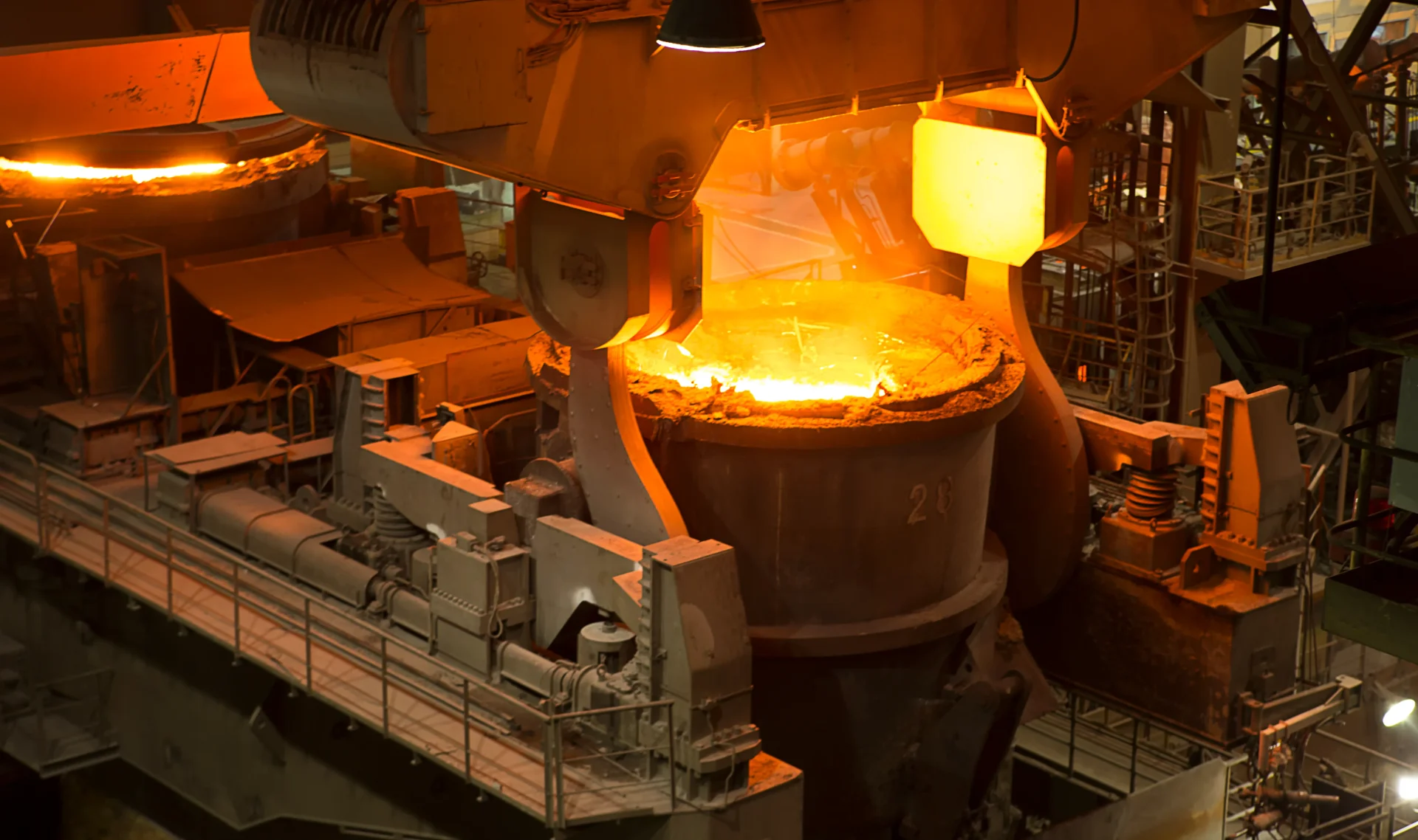
Hot work tool steel is the stuff that takes the heat. Die casting molds. Hot forging dies. Extrusion tooling. It has to hold its shape and hardness at temperatures that would soften regular steel. H13 is the workhorse grade. It can handle up to about 1,000 degrees Fahrenheit and still keep its toughness . That is why it is everywhere in high-volume manufacturing.
The broader tool steel market is also expanding. The Business Research Company says the whole category went from $6.81 billion in 2025 to $7.23 billion in 2026 . That is a 6.1 percent jump. They see $9.18 billion by 2030. The drivers are EV manufacturing, aerospace, defense, and automation.
Now here is the interesting part. Additive manufacturing is starting to show up in the hot work tool steel space. In October 2024, Sandvik launched a powder called Osprey HWTS 50. It is a hot work tool steel grade designed specifically for 3D printing . Die casting and forging applications are the targets. The advantage is you can make complex geometries that are impossible or very expensive with conventional machining.
A tooling engineer in Michigan told me his shop is running test pieces with the Sandvik powder. He said the cooling channels they can print inside the tool are way more efficient than drilled holes. The tool runs cooler, which means longer life between reworks. He is not ready to switch all his tooling yet. But he is watching closely.
Academic work is pushing the boundaries too. A study published in August 2026 looked at W360 hot work tool steel made by laser-directed energy deposition . That is another type of metal 3D printing. The researchers found the as-built material hit 628 HV hardness without cracking. Air quenching pushed it to 666 HV . But water quenching caused cracking. So process control matters.
Another study came out in the Journal of Materials Research and Technology. This one used a powder metallurgy approach. They produced a high-alloy hot work tool steel with 1,881 MPa strength and 22.5 Joules impact toughness . Those numbers are impressive. The researchers added trace nitrogen during atomization, which promoted fine precipitates and refined grain structure. After forging, porosity dropped below 0.03 percent .
That combination of high strength and high toughness is rare in tool steels. It opens up applications that were previously off limits.
Pricing varies widely. In China, as of July 2026, Fushun Special Steel’s ESR hot-rolled H13 in Φ30-130 mm was at 21,200 yuan per ton. Daye Special Steel’s similar product in Φ20-90 mm was at 23,600 yuan . The premium segment includes 3Cr2W8V, a tungsten-based grade, which trades around 100,000 yuan per ton . A buyer in Germany told me European prices are higher, but the gap is shrinking.
Sustainability is becoming a talking point. Some researchers are looking at using grinding chips and other recycled material in powder mixtures for laser powder bed fusion . Chemical homogeneity is a challenge. But the direction is clear. The industry wants to reduce waste and energy use.
For buyers, the market is stable but not soft. Prices are holding. Lead times are manageable but not short. The shift away from commodity buying is real. More procurement teams are asking for certified chemistry and stable delivery schedules. They care less about getting the lowest price per kilo and more about total cost over the tool’s life.
The automotive sector is still the dominant buyer. But aerospace and defense are growing faster. One procurement manager at a defense supplier told me his hot work tool steel spend is up 15 percent this year. Mostly for forgings and extrusions that go into airframe components.
So where is this all going? Steady growth. No boom. No bust. The real story is technology. Powder metallurgy. Additive manufacturing. Advanced heat treatment. These are making hot work tool steel stronger, tougher, and more sustainable. The companies that figure out how to use these new tools will have an edge.
The rest will keep competing on price. And that is getting harder every year.