

Hot Rolled Coil Demand Outlook 2026-2027: Steel Market Recovery Begins
Global steel demand is expected to hit 1.72 billion tonnes in 2026. That is up 0.3 percent from 2025. Not a big jump. But the direction matters more than the size. For 2027, they are calling for 1.76 billion tonnes. That is 2.2 percent growth.
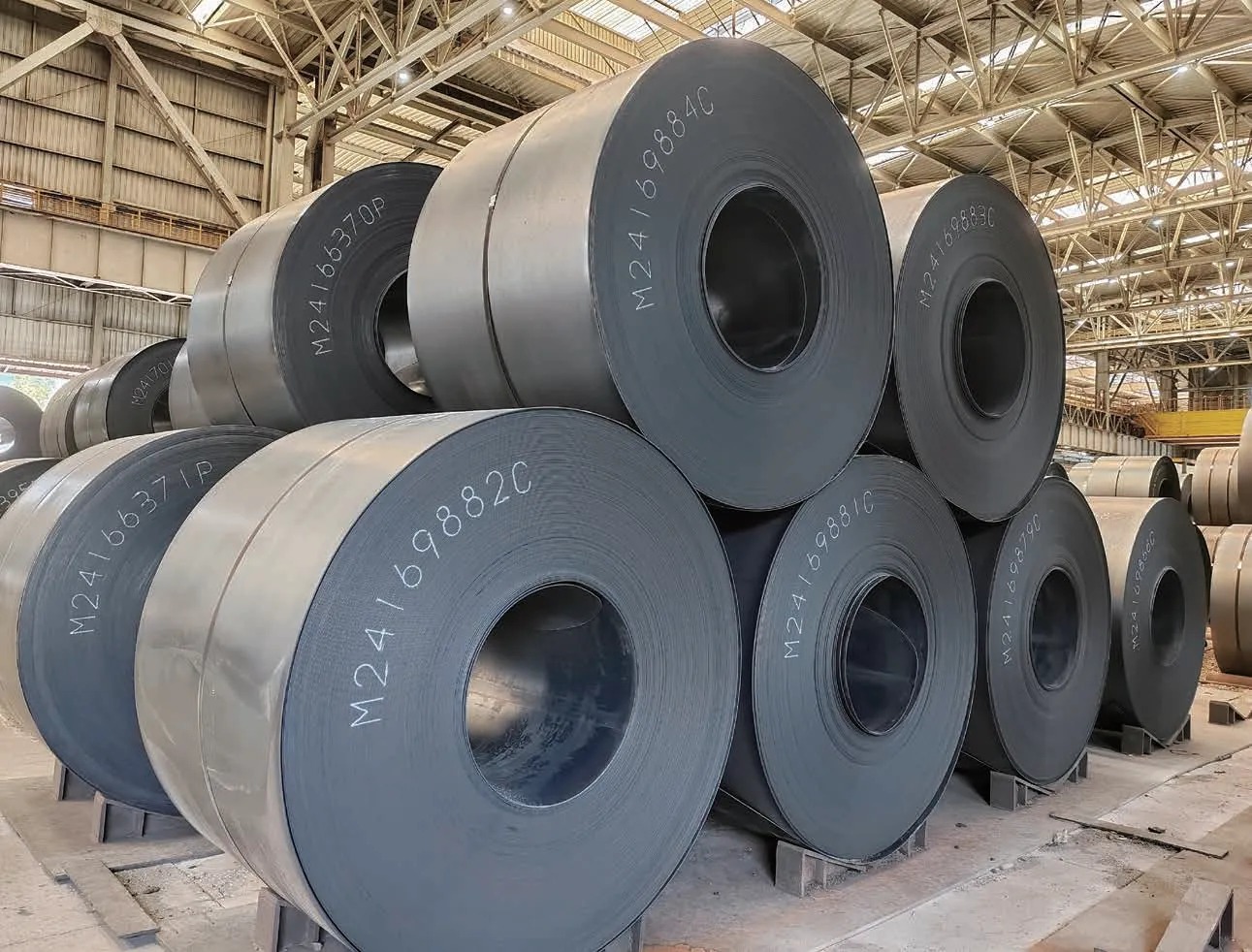
Now look at Hot Rolled Coil. HRC is everywhere. Cars, pipes, storage tanks, shipping containers, building frames. When HRC moves, the whole flat steel market follows. A procurement guy I know in Ohio told me last month: “We stopped hedging HRC in 2024 because prices were just drifting down. Now we are watching every week again.”
So what is actually happening with Hot Rolled Coil demand? Let me break it down by region.
China first
The housing market there is still weak. Everyone knows that. But the rate of decline is slowing. Worldsteel says Chinese steel demand will shrink only 1.5 percent in 2026. Compare that to 2024 when it was falling much faster. Infrastructure spending is picking up. Not huge. But enough to put a floor under domestic HRC consumption. By 2027, they expect China to basically plateau.
A trader in Shanghai told me: “We are not celebrating. But we are not panicking either. That is progress.”
India is the real story
India keeps growing. 7.4 percent steel demand growth in 2026. Then 9.2 percent in 2027. Those are real numbers. A rail network expansion. New automotive plants. Ports. Highways. For Hot Rolled Coil suppliers, India is the bright spot. No way around it.
I talked to a distributor in Mumbai two weeks ago. He said HRC imports from South Korea and Japan are booked solid through August. Spot availability is tight. Prices are firm.
Europe
This is where things get interesting. EU steel demand is forecast at 1.3 percent growth for 2026 and 3.0 percent for 2027. Infrastructure money is finally flowing. Defense spending is up. Household incomes are recovering slowly.
But here is the catch. CBAM – the Carbon Border Adjustment Mechanism – is now live. Chinese and Turkish mills have to buy certificates for their embedded carbon. That adds 25 to 35 euros per tonne. A German purchasing manager told me last week: “We used to compare three or four HRC offers. Now we are signing six-month contracts just to lock in volumes.”
US Bank analysts put out a note in early May. They said European HRC prices have gone up roughly 100 euros per tonne since January. Current spot prices are near 700 euros. That is up from about 660 euros in Q1 2026.
The United States
Different story but similar outcome. Domestic HRC started 2026 at around $1,055 per tonne. That was the highest level since April 2025. CRU Research’s Josh Spoores spoke at the Tampa Steel Conference in February. He said US HRC prices will rise year-on-year in 2026. But he also warned about volatility. Import flows are recovering. New domestic capacity is coming online. That creates price swings.
Spoores said something worth remembering. He told the audience to use 2026 to get positioned for 2027. His forecast shows stronger growth across manufacturing, construction, and automotive starting next year. Not a boom. A steady upturn.
The wildcard nobody can ignore
Middle East conflict. It keeps dragging on. Shipping rates are elevated. Delivery lead times are stretched. MEPS International tracks this stuff closely. They say Asian HRC exporters are facing higher barriers getting into Europe, especially with the EU and UK raising above-quota tariffs to 50 percent starting July 1. The current rate is 25 percent. That is a big jump.
Worldsteel actually revised their 2026 forecast down from 1.3 percent growth to 0.3 percent. Their assumption is that the Middle East situation resolves by June. If it does not, expect another revision.
Supply side
Hot Rolled Coil supply is tightening in certain places. In China, slab exports are strong. Why? Iranian supplies dropped off because of the conflict. So Chinese slab is filling that gap. That means less slab available for domestic HRC production. Fastmarkets assessed Eastern China HRC at 3,280 to 3,300 yuan per tonne in mid-April. That is about 474 to 475 US dollars.
In Europe, import supply dropped sharply. Uncertainty around CBAM. Uncertainty around trade measures. Mills like ArcelorMittal have pushed through price increases. They are running limited capacity. Some restocking is expected in the second half of 2026. But no one knows how CBAM costs will finally shake out.
Market size numbers
Depends which report you read. The Business Research Company put the Hot Rolled Coil market at 198.67 billion in 2025. They project 207.56 billion in 2026. That is 4.5 percent growth. By 2030, they say $244.3 billion.
Bizwit Research Consulting has a different number. They value the global HRC steel market at 355.22 billion in 2025. Their projection goes to 653.62 billion by 2036. That is a 5.70 percent CAGR. Different scopes, different methodologies. But both point the same direction: up.
What end users should watch
Construction and infrastructure are still the biggest buyers of Hot Rolled Coil. Urban population growth. Government spending on roads, bridges, rail, utilities. That is steady demand.
Automotive is the faster-growing segment. Electric vehicles need lighter but stronger steel. HRC fits that requirement. Oil and gas pipelines. Shipbuilding. Heavy engineering. All of them are buying.
One last thing
A procurement director at a European automotive supplier told me something interesting last month. He said: “We kept less than two weeks of steel on hand for three years. Now we are building to 45 days. The holding cost is nothing compared to a line shutdown.”
That sums up the market right now. The recovery in Hot Rolled Coil demand is not dramatic. But the psychology has shifted. People are planning for higher prices and tighter availability in 2027. Whether that actually happens depends on China, India, the Middle East, and CBAM. That is a lot of moving pieces. But the direction of travel is clear enough.