

Global Billet Markets Diverge as Asia Holds Firm and India Softens
The global billet market in late September 2026 is showing clear regional divergence. Asian export offers remain firm on cost support, Indian domestic prices continue to slide on weak demand, and logistics bottlenecks in the Black Sea region keep constraining Russian suppliers’ export capabilities.
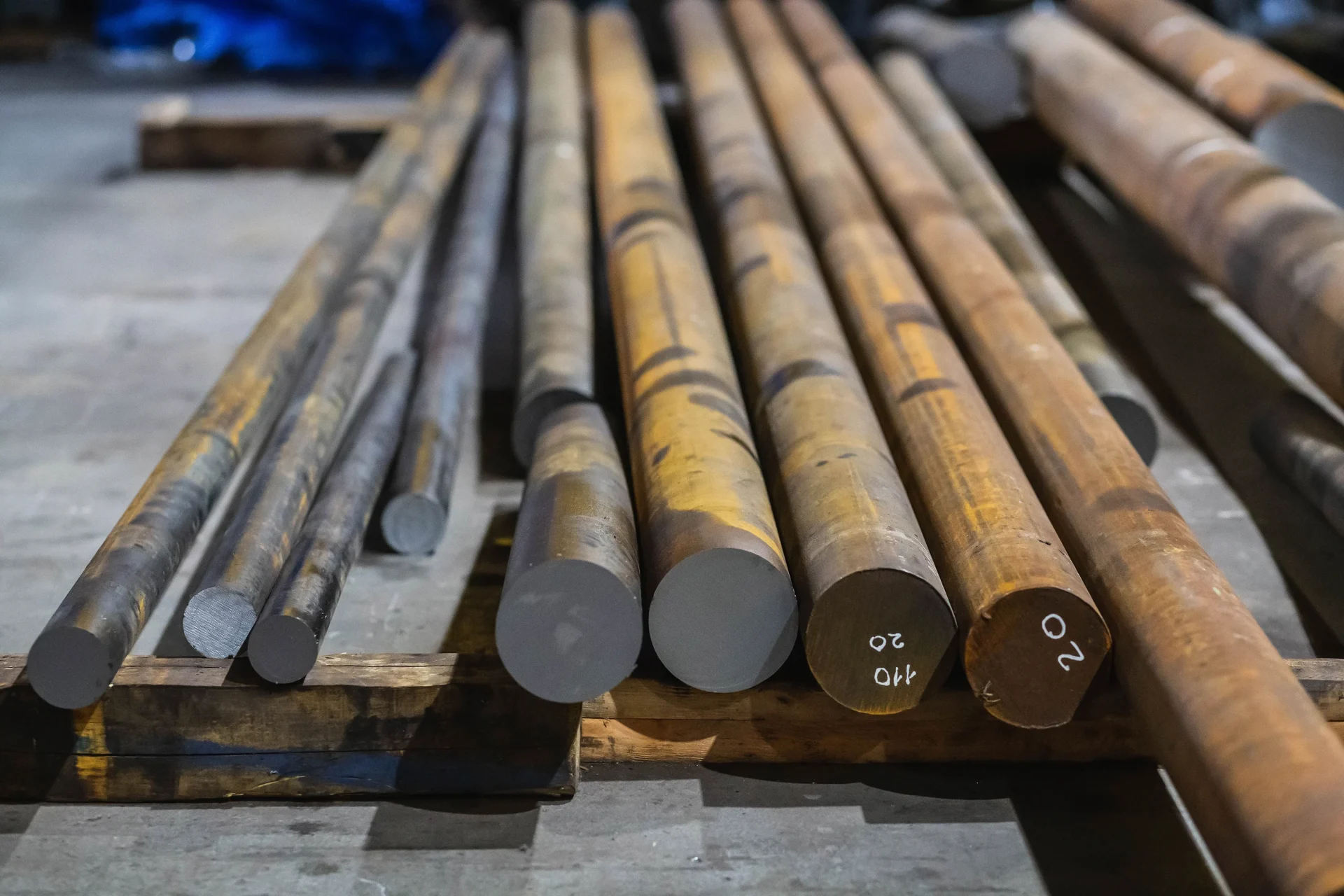
Chinese billet prices edged higher over the past week. On September 21, the Tangshan Q235 150mm square billet was assessed at RMB 3,010/t ($449/t), up RMB 10/t day-on-day. The price support came mainly from the fifth round of coke price hikes and a gradual decline in social inventories that limited selling pressure. SHFE rebar futures rose RMB 41/t to RMB 3,117/t in tandem.
However, actual trading sentiment in the Tangshan market is far from heated. During September 14-20, Tangshan billet prices fluctuated within a narrow band, closing at RMB 3,000/t (including 13% VAT), unchanged week-on-week. Daily semis usage among 34 local re-rollers averaged 42,400 t/d over September 10-16, surging 25.4% week-on-week. The increase was mainly driven by re-rollers resuming production ahead of end-user restocking before the Mid-Autumn Festival and National Day holidays. But analysts noted the increase is expected to be short-lived, as re-rollers are still suffering negative margins on product sales and autumn construction project starts are proving delayed.
Tangshan billet export offers remained at $463/t FOB, with rising freight costs and higher mill base prices supporting export levels. Chinese 3SP billet offers to Taiwan stood at $490-495/t CFR, against bids of $482-485/t CFR.
In sharp contrast to China, Indian billet prices have come under sustained pressure over the past week. On September 23, BigMint’s India billet index fell by INR 500/t to INR 43,500/t exw-Raipur, with buyers staying on the sidelines amid weak demand and expectations of further price corrections.
Indian domestic finished steel prices weakened in tandem. Rebar prices in Raipur fell by INR 700/t day-on-day, while wire rod declined by INR 500/t. Sponge iron prices also dropped by INR 350/t. Market participants reported that persistent weakness in finished and semi-finished steel sales at higher offer levels prompted several producers to lower offers sharply or provide discounts to accelerate material movement.
A market participant in India noted that construction activity was supposed to pick up after the monsoon season, but the recovery this year has been notably weaker than expected. Buyers are generally adopting a “buy only what is needed” approach, avoiding inventory building. Prices are expected to remain under pressure this week.
The Russian billet export market continues to be severely constrained by logistics bottlenecks. Operations at Novorossiysk, the main Black Sea export gateway, remain restricted, forcing suppliers to seek alternative routes. Russian billet FOB Black Sea was assessed at $470-475/t, up from $465-468/t a week earlier, though the increase reflects cost-push factors rather than demand pull.
The Baltic route has emerged as an alternative, but available port and vessel capacity remains limited, with other cargoes competing heavily for shipping space. Murmansk-Marmara freight is estimated at around $50/t, but the port currently prioritizes other cargoes like scrap, making it difficult to become a major billet export corridor in the near term. The Astrakhan-Iran route has also become less competitive due to reduced vessel availability and higher freight costs.
A Baltic-origin supplier source noted that around 300,000 t of billet from India, China, and Malaysia are currently in transit to Turkiye, which could limit Turkish mills’ scrap buying in the coming weeks. Russian billet offers to Turkiye stood at $515-520/t CFR Zonguldak/Bartin and $520-525/t CFR Marmara.
In Turkiye, imported scrap prices climbed to an almost three-month high. US-origin HMS 80:20 CFR Turkiye reached $392/t, up $10/t week-on-week, supported by uncertainty over Black Sea metallics supply. Turkish long-steel producer Ekinciler reported strong billet shipments in August, with shipment value reaching $25 million, its highest monthly level in recent years; cumulative billet shipment value reached $117 million in 2026.
In the Middle East, leading Saudi mills kept September rebar prices at SAR 2,650-2,700/t ($689-702/t) DAP, while second-tier mills raised offers by SAR 50-100/t. Tighter billet availability and higher logistics costs supported prices, but subdued end-user demand limited further gains.
The global billet market is expected to maintain its regional divergence in the near term. Asian markets are supported by costs, limiting downside, but weak demand caps upside potential. The Indian market may remain under pressure until demand visibly recovers. Black Sea logistics bottlenecks are unlikely to be resolved quickly, and Russian suppliers’ export capacity will remain constrained. In Turkiye, scrap cost support provides a floor for billet prices, but whether end-user demand follows through remains the key variable. For billet buyers, the current market offers a window for need-based procurement, but over-betting on significant price declines is not advisable, as cost-side support remains effective in most regions.