

Schedule 40 vs Schedule 80 Pipe: Comparing Thickness, Pressure, and Use
Schedule 40 and Schedule 80 steel pipe share the same outside diameter at any given nominal pipe size (NPS) but differ in wall thickness—Schedule 80 walls run roughly 40–50% thicker, giving it a higher pressure rating, smaller inside diameter, greater weight, and higher cost. Schedule 40 suits standard pressure and flow; Schedule 80 fits high-pressure, high-temperature, and corrosive service.
Drawing on ASME B36.10M dimensional standards, ASTM A53/A106 pressure data, and our team’s experience supplying steel pipe to industrial projects across 120+ countries, this guide compares wall thickness, diameter, pressure, weight, threading, welding, and cost—then shows when each schedule is the right specification for your piping system.
What Is Schedule 40 Pipe?
Schedule 40 pipe is a standard wall thickness classification used in the pipe industry. The term “schedule” refers to a pipe wall thickness designation system established by the American National Standards Institute (ANSI) and the American Society of Mechanical Engineers (ASME). The schedule number indicates how thick the pipe walls are for a given nominal pipe size (NPS).
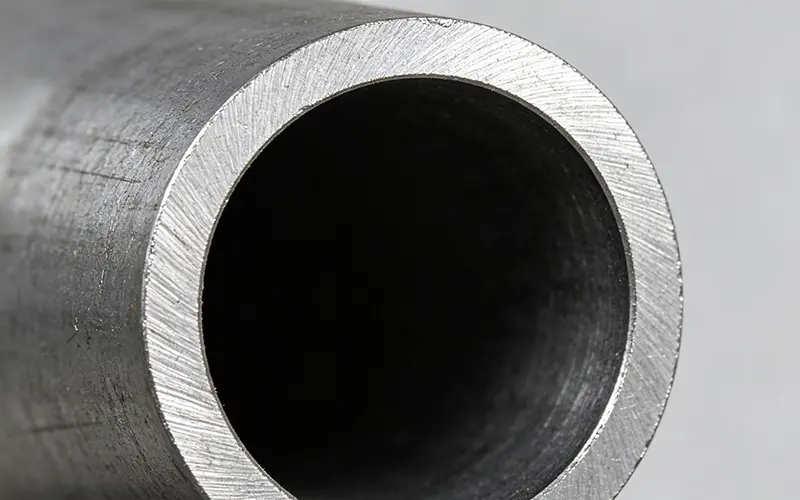
Key characteristics of Schedule 40 pipe include:
- Standard wall thickness for general industrial and commercial use
- Lower cost compared to higher schedule numbers
- Lighter weight than Schedule 80 or higher schedules
- Widely produced and stocked to common international standards
What Is Schedule 80 Pipe?
Schedule 80 pipe is a heavy-duty pipe classification. This design makes Schedule 80 suitable for high-pressure applications, corrosive environments, and situations requiring greater mechanical strength. The schedule numbers system allows engineers to select the right pipe based on pressure requirements and safety factors.
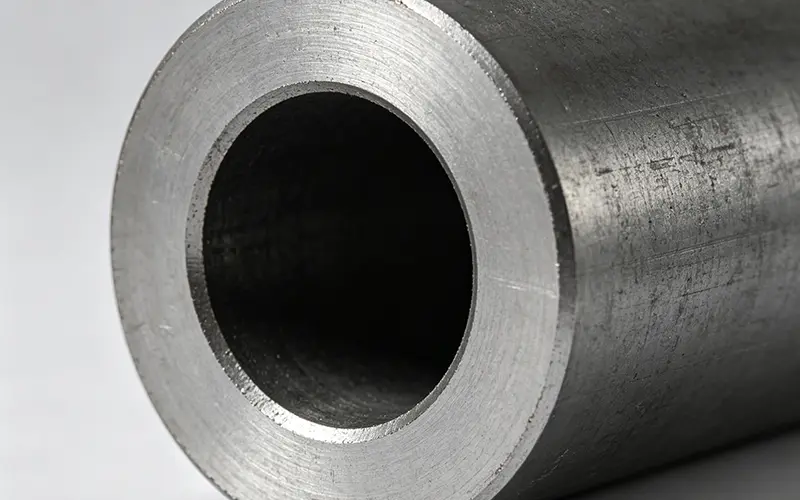
Key Characteristics:
- Thicker walls: Schedule 80 has approximately 40–50% thicker walls than Schedule 40
- Higher pressure rating: Can handle significantly more internal pressure
- Smaller inside diameter (ID): The thicker walls reduce the inner diameter compared to Schedule 40
- Same outside diameter (OD): For any given nominal pipe size, the OD remains constant across schedules
The pipe scheduling system follows standards outlined in ASME B36.10M for pipe dimensions and ASME B31 for pressure ratings. Schedule 80 pipe maintains the same outside diameter as Schedule 40 but increases the pipe wall thickness, which reduces the internal bore.
What Are The Key Differences: Schedule 40 vs Schedule 80
Schedule 40 and Schedule 80 pipes differ primarily in wall thickness, which affects their weight, strength, pressure capacity, and price. Both schedules share the same outside diameter for a given nominal pipe size, but Schedule 80 has thicker walls that reduce the inside diameter and increase durability.
Wall Thickness
The pipe wall thickness is the main difference between Schedule 40 and Schedule 80. Schedule 80 pipe has walls that are roughly 40-50% thicker than Schedule 40 for the same nominal pipe size. For example, a 2-inch nominal pipe size in Schedule 40 has a wall thickness of 0.154 inches, while the same size in Schedule 80 measures 0.218 inches.
This increased thickness gives Schedule 80 greater mechanical strength. The pipe can handle more impact and stress without cracking or breaking. Schedule 40 works well for most standard applications where extreme conditions are not expected.
Outside And Inside Diameter
Both Schedule 40 and Schedule 80 pipes have identical outside diameters for any given nominal pipe size. A 1-inch Schedule 40 pipe and a 1-inch Schedule 80 pipe both measure the same on the outside. This allows fittings and connections designed for one schedule to physically fit the other.
The inside diameter tells a different story. Because Schedule 80 has thicker walls, its internal bore is smaller. A 2-inch Schedule 40 pipe has an inside diameter of 2.067 inches, while a 2-inch Schedule 80 pipe measures only 1.939 inches inside.
This reduced inside diameter affects flow rate through the pipe. Schedule 80 will move less fluid per minute than Schedule 40 of the same nominal size. It also creates more pressure drop over distance because the fluid has less space to travel through.
Pressure Rating
Schedule 80 pipe handles significantly higher working pressure than Schedule 40. The maximum pressure rating depends on the pipe material, temperature, and nominal pipe size. For ASTM A53 carbon steel at ambient temperature, a 1-inch Schedule 40 pipe handles roughly 750 psi, while Schedule 80 handles around 1,000 psi. Allowable working pressure drops as operating temperature rises.
Weight
Schedule 80 pipe weighs considerably more than Schedule 40 due to its thicker walls. The weight per foot increases by 30-60% depending on the nominal pipe size. A 2-inch Schedule 40 steel pipe weighs 3.65 pounds per foot, while the same size in Schedule 80 weighs 5.02 pounds per foot.
This extra weight affects handling and installation. Workers need more effort to move, cut, and position Schedule 80 pipe. Support spacing must be closer together to prevent sagging. The additional weight also impacts shipping costs and structural load calculations.
Threading Compatibility
Threaded connections work differently between Schedule 40 and Schedule 80. Both schedules can be threaded, but the thicker walls of Schedule 80 provide better thread engagement. The threads cut deeper into the material without weakening the pipe as much.
Schedule 40 threaded pipe loses more of its wall thickness to the threading process. This reduces its pressure rating at threaded connections compared to non-threaded sections. Schedule 80 maintains better structural integrity even after threading.
Welding Between Schedules
Welding Schedule 40 to Schedule 80 requires special attention to the wall thickness difference. The joint creates an uneven transition that can concentrate stress. Welders must use proper techniques to blend the different thicknesses and prevent weak spots.
Because both schedules share the same outside diameter, they can be butt-welded, but the bore and wall-thickness mismatch requires proper joint preparation—an internal taper or bevel—performed to the relevant ASME welding procedure.
Cost
Schedule 80 pipe costs 40-60% more than Schedule 40 for the same nominal pipe size. The material costs reflect the additional raw material in the thicker walls.
Lifecycle cost includes more than just the initial purchase. Schedule 80 lasts longer in harsh conditions and handles higher pressures, potentially reducing replacement costs. Installation labor costs increase for Schedule 80 due to its heavier weight and more difficult cutting.
For many residential and light commercial projects, Schedule 40 offers the best value. The lower material costs and easier installation save money without sacrificing necessary performance. Schedule 80 makes financial sense when the application demands higher pressure rating or increased durability.
How To Selecting the Right Schedule for Your Application
Choosing between Schedule 40 and Schedule 80 depends on the specific demands of the project.
Consider the following factors when making a selection:
- Pressure handling: Systems approaching the Schedule 40 rating, or needing a margin above it, typically require Schedule 80
- Impact resistance: Areas with potential physical damage benefit from Schedule 80’s thicker walls
- Corrosion resistance: Applications with corrosive materials may need the extra corrosion allowance of Schedule 80
- Installation: Schedule 40 is lighter and easier to install, reducing labor costs
- Maintenance: Schedule 80 often requires less frequent replacement in harsh conditions
Lifecycle cost matters more than upfront pricing. Schedule 40 saves money initially but may need earlier replacement. Schedule 80 delivers better longevity in challenging environments. The right choice balances pressure requirements, environmental conditions, and budget constraints for the specific application.
When Should You Use Schedule 40 Pipe?
Schedule 40 pipe works best for standard residential and light commercial applications where pressure demands stay moderate. It handles low-to-medium-pressure fluid transport, water and utility lines, and general process piping without issues.
Common applications include:
- Water and utility distribution lines
- Low-pressure process and fluid transport
- Structural and mechanical applications
- Drainage and waste lines
- General industrial piping systems
The thinner walls of Schedule 40 provide adequate pressure capacity for most standard projects while keeping material costs lower. Installation moves faster because the pipe weighs less than Schedule 80, making it easier to cut, transport, and position.
Schedule 40 offers solid corrosion resistance for standard water applications. The material grade performs well in typical pH ranges and typical industrial and commercial settings. Maintenance requirements stay minimal when the pipe operates within its rated pressure range.
Procurement costs favor Schedule 40 by 40-60% compared to Schedule 80. This price difference adds up quickly on larger projects. The lifecycle cost remains competitive because the pipe delivers reliable longevity in appropriate applications.
Choose Schedule 40 when:
- Working pressure stays below the pipe’s rating
- Installation runs through protected interior spaces
- Impact resistance needs are minimal
- Budget constraints matter
- Maximum flow capacity is important
When Should You Use Schedule 80 Pipe?
Schedule 80 is the right choice when a system’s demands exceed what a standard wall can safely handle. Its thicker wall delivers higher pressure capacity, better corrosion allowance, and greater impact resistance than Schedule 40.
It is best suited to:
- High-pressure systems – where operating pressure exceeds Schedule 40’s rating.
- Corrosive or aggressive media – the extra wall acts as a corrosion allowance, holding its pressure capacity longer in harsh service.
- High-temperature applications – thicker walls retain more allowable pressure as temperature rises.
- High-impact areas – where pipes risk being struck or bumped during operation and maintenance.
Schedule 80 costs more in material, procurement, and installation due to the heavier wall. However, lower maintenance and longer service life often offset that premium, so engineers should weigh upfront cost against the system’s actual pressure, temperature, and corrosion demands.
FAQs
Do Schedule 40 and Schedule 80 pipes use the same fittings?
Yes. Schedule 40 and Schedule 80 pipe share the same outside diameter for any given nominal size, so they are compatible with the same fittings. However, the inside diameter differs, which can affect flow transitions at connection points and should be accounted for in system design.
Can you thread Schedule 40 steel pipe?
Schedule 40 can be threaded in larger nominal sizes, but it is marginal for smaller diameters—typically 2″ and below—where the wall may be too thin after thread cutting to maintain safe pressure ratings. Schedule 80 is the recommended choice for any threaded connection requiring reliable mechanical strength.
What is the difference between Schedule 40 and Schedule 40S?
Schedule 40 applies to carbon and alloy steel pipe under ASME B36.10M. Schedule 40S applies to stainless steel pipe under ASME B36.19M. The dimensions are identical for most sizes, but the two standards govern different materials and are not interchangeable in engineering specifications.
Does temperature affect the pressure rating of Schedule 40 and Schedule 80 pipe?
Yes. Both schedules carry their rated pressure at ambient temperature, but allowable working pressure decreases as operating temperature rises. This reduction is more pronounced in Schedule 40 due to its thinner wall, which is why Schedule 80 is typically specified for elevated-temperature applications such as steam lines.
Learn More About Our Products?
Contact Now