
The Anatomy of a Structural Beam: I-Beams, H-Beams, and W-Beams Explained
Table of Contents
- Introduction
- I-Beams: Classic Load-Bearing Structures with Narrow Flanges
- Core Structural Characteristics
- Advantages and Limitations of Structural Design
- Typical Application Scenarios
- H-Beams: Versatile Structures with Equal-Width Flanges
- Core Structural Characteristics
- Advantages and Limitations of Structural Design
- Typical Application Scenarios
- W-Beams (Wide-Flange Beams): Reinforced Structures for Heavy Loads
- Core Structural Characteristics
- Advantages and Limitations of Structural Design
- Typical Application Scenarios
- Comparison of Core Structural Differences Among the Three
- Cross-Sectional Shape and Size Ratio
- Mechanical Performance Orientation
- Differences in Manufacturing Processes
- Conclusion
1. Introduction
In the fields of construction and industrial manufacturing, section steel is the “load-bearing backbone” for structural stability. I-Beams, H-Beams, and W-Beams are widely used in factory frames, bridge building, and heavy machinery making due to their great mechanical properties. For example, a 10,000-square-meter factory might use hundreds of I-Beams and H-Beams to support its roof and equipment.
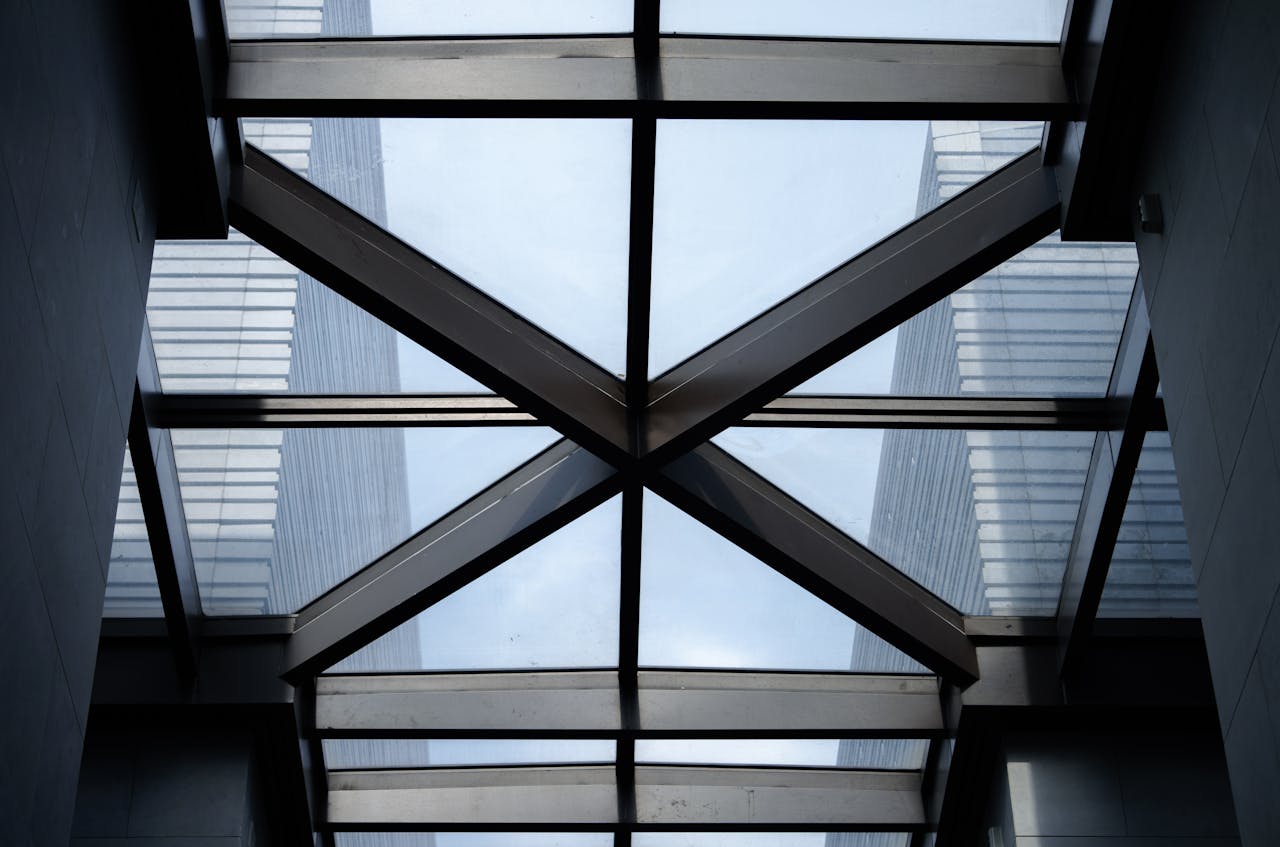
Their structural design directly decides load-bearing efficiency, application scope, and safety. A wrong choice of beam type could lead to structure deformation or even accidents. Though they all look like “beams”, they have big differences in cross-sectional shape and size ratio.
This article will focus on structural beams, including I-beams, H-beams, and W-beams, to help you understand the differences and applications of each in load-bearing structures.2. I-Beams: Classic Load-Bearing Structures with Narrow Flanges
(1) Core Structural Characteristics
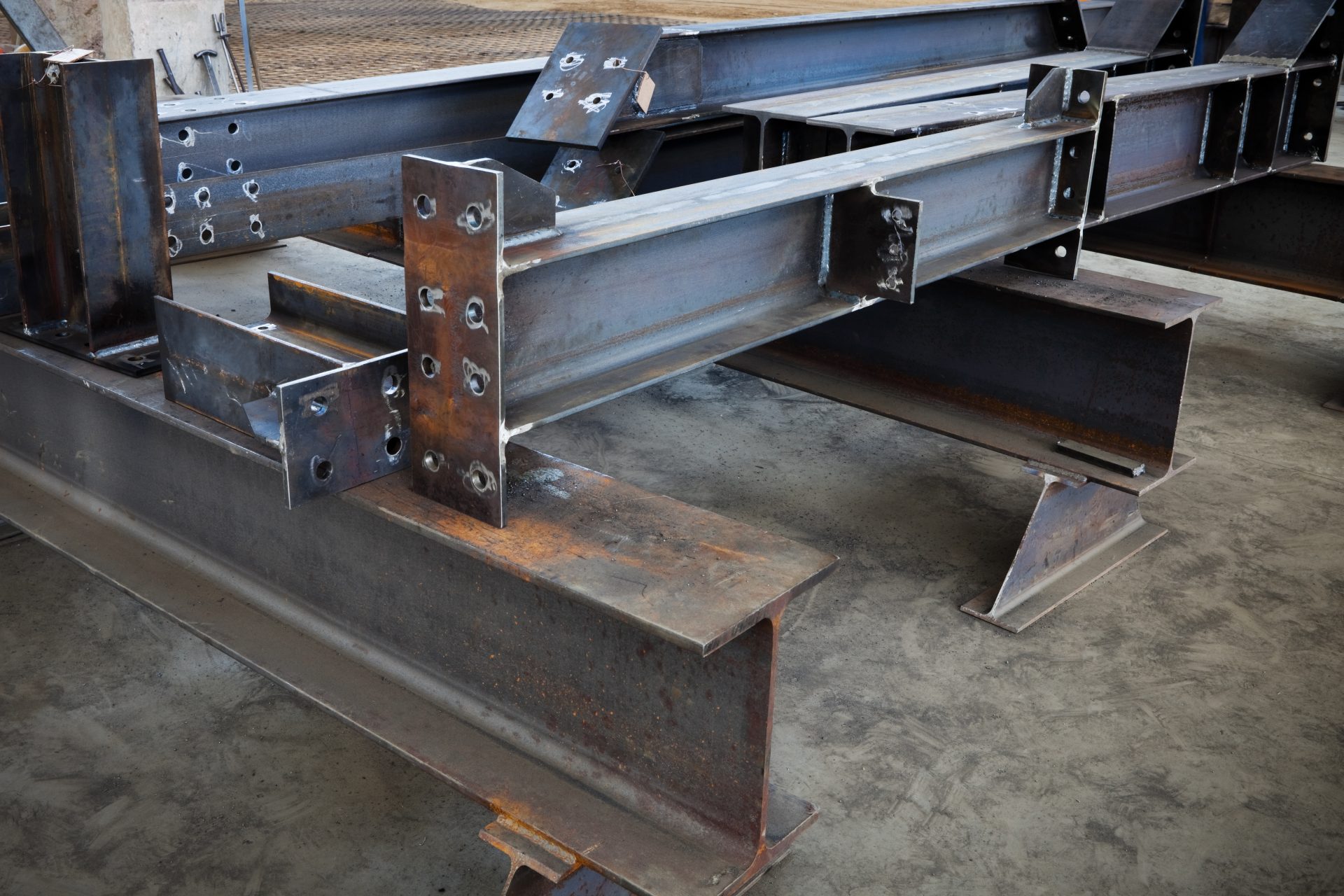
I-Beams have a standard “I” shape, made of two parallel flanges (top and bottom) and a vertical web in the middle. The ratio of flange width to web height is usually less than 1, making them “vertically slender”—like a 1-meter-tall I-Beam might have flanges only 10 centimeters wide.
The web is thin, often 5-8 millimeters thick for small I-Beams, and the flange thickness is even. This design lets the material focus on vertical bending resistance, as most of the weight is concentrated in the flanges.
Most I-Beams use Q235 or Q355 steel, as required by China’s national standard GB/T 706-2016. Q235 steel has a yield strength of 235MPa, suitable for light loads, while Q355’s 355MPa yield strength works for medium-load scenarios.
For example, in a 15-story residential building, Q355 I-Beams are often used as floor beams because they can bear the weight of floors, furniture, and people without bending.
(2) Advantages and Limitations of Structural Design
I-Beams excel at vertical bending under uniform loads—like the even weight of a concrete floor. Their simple hot-rolling production process also makes them cost-effective.
The World Steel Association’s 2024 report says I-Beams cost 15%-20% less than H-Beams with the same load-bearing capacity. A 100-meter-long I-Beam batch might save 5,000-10,000 compared to H-Beams.
However, their narrow flanges cause weak lateral stability. If a strong wind pushes against an I-Beam-supported wall, the beam might tilt. They also have poor torsional resistance—twisting forces can easily bend them.
They are prone to stress concentration at the flange-web connection. After long-term use, small cracks might appear here, so they aren’t suitable for large-span or heavy-load scenarios like 50-meter-long bridge main beams.
(3) Typical Application Scenarios
I-Beams work well for medium spans (usually 6-12 meters) and uniform loads.
- In buildings, they are used as floor beams in 10-20 story residential and office buildings. For example, a 12-story apartment building might use 200 I-Beams to support its 11 floors.
- In industry, they serve as small equipment supports—like the stands for 500kg electric motors—and conveyor line guide rail bases. The frames for automated production line belts, which move light parts like plastic bottles, also rely on I-Beams.
They are also used in simple steel structures, such as the frames of small warehouses or outdoor canopies, where loads are light and spans are short.
3. H-Beams: Versatile Structures with Equal-Width Flanges
(1) Core Structural Characteristics
H-Beams have a “regular H” shape, with the flange width to web height ratio close to 1—like a 1-meter-tall H-Beam might have 90-centimeter-wide flanges, making the cross-section nearly square.
The flanges and web connect at arc transitions (usually 5-10 millimeter radius) to reduce stress concentration. This curved part prevents cracks from forming at the connection.
Both the web and flanges have even thickness. The web is often 8-12 millimeters thick, and the flanges 10-15 millimeters thick, so the moment of inertia is balanced horizontally and vertically.
They use materials like S355JR steel (per European Standard EN 10025-2) with a tensile strength of 470-630MPa. For wet environments like coastal areas, 304 stainless steel H-Beams are used to resist rust.
In a coastal factory, 304 stainless steel H-Beams can last 20-30 years without rusting, while ordinary steel would corrode in 5-10 years.
(2) Advantages and Limitations of Structural Design
H-Beams have excellent bidirectional bending resistance—they can bear both vertical loads (like roof weight) and horizontal loads (like wind pressure). Their lateral stability and torsional resistance are 30%-40% better than I-Beams.
They are easy to weld and assemble. Workers can connect two H-Beams with simple arc welding, which takes less time than connecting I-Beams.
Data from the American Institute of Steel Construction (AISC) shows H-Beam projects have 25%-30% higher on-site assembly efficiency. A 5,000-square-meter factory using H-Beams can finish assembly 2-3 weeks faster than using I-Beams.
But they are slightly less efficient in vertical bending than I-Beams of the same weight. A 1-ton H-Beam can bear 10%-15% less vertical load than a 1-ton I-Beam.
They also cost more to produce—hot-rolled H-Beams are 15%-20% more expensive than I-Beams, and welded H-Beams even more due to extra labor.
(3) Typical Application Scenarios
H-Beams are ideal for large-span (12-30 meters) and complex load projects.
- In construction, they are main beams for factories over 30 meters span—like a 40-meter-wide auto parts factory might use 50 H-Beams as roof main beams. They are also frames for steel structure houses. A 3-story steel house can use 20-30 H-Beams to support its walls and roof, as they can bear both vertical and horizontal loads.
- In industry, they are used for heavy equipment bases—like the 10-ton machine tools in a metal factory—and container skeletons. Port crane supports, especially the columns for container terminal cranes that lift 20-ton containers, also use H-Beams.
They are even used in small bridges (10-20 meters long) because of their balanced load-bearing ability.
4. W-Beams (Wide-Flange Beams): Reinforced Structures for Heavy Loads
(1) Core Structural Characteristics
W-Beams look like “widened I-Beams” with a flange width to web height ratio over 1.5—even up to 2 for large models. A 1-meter-tall W-Beam might have 1.8-meter-wide flanges, appearing “flat and wide”.
Their flanges are thicker, especially near the web—15-25 millimeters thick at the connection, tapering to 10-15 millimeters at the edge. This design boosts load-bearing and shear resistance.
The web is also thicker than that of I-Beams and H-Beams, usually 10-18 millimeters, to prevent bending under heavy loads.
They mainly use high-strength steel like ASTM A992 (per American Society for Testing and Materials), with a yield strength of at least 345MPa. For ultra-heavy loads, ASTM A572 Gr.65 steel (450MPa yield strength) is used.
A W-Beam made of ASTM A572 Gr.65 can bear 20%-30% more load than one made of ASTM A992.
(2) Advantages and Limitations of Structural Design
W-Beams have strong bending and shear resistance for heavy loads and large spans. They can bear concentrated loads—like a 50-ton crane on a factory floor—without deformation.
The International Association for Bridge and Structural Engineering (IABSE) found they reduce auxiliary supports by over 30% in bridges over 50 meters span. A 60-meter bridge using W-Beams might need only 10 auxiliary supports, while an H-Beam bridge would need 15.
Their stable structure also makes them durable. In heavy-use scenarios, W-Beams can last 30-50 years, longer than I-Beams (20-30 years) and H-Beams (25-35 years).
But their thick flanges make them heavy—5-8 tons per piece for large models. This requires special transport trucks that can carry up to 10 tons, instead of ordinary 5-ton trucks.
They increase transportation and installation costs by 25%-30% compared to H-Beams (per Heavy Transport Association data). A 100 W-Beam batch might cost 20,000-30,000 more in transport and installation.
They aren’t suitable for space-constrained areas—like small workshops with low ceilings—because their wide flanges take up more space.
(3) Typical Application Scenarios
W-Beams are for ultra-heavy loads and large spans (30-100 meters).
- In construction, they are core tube frames for super high-rises over 200 meters—like a 300-meter skyscraper might use 100 W-Beams to resist wind and earthquake loads. They are also main beams for large stadiums, such as a 50,000-seat football stadium’s roof, which needs to bear the weight of seats, lights, and rain.
- In heavy engineering, they are used for cross-sea bridge main trusses—like a 80-meter cross-river bridge’s main load-bearing part—and offshore oil platform supports. These platforms need to bear waves and wind in the ocean.
Heavy machinery frames, such as the bodies of 100-ton excavators, also use W-Beams because they can handle the machine’s weight and working vibrations.
5. Comparison of Core Structural Differences Among the Three
(1) Cross-Sectional Shape and Size Ratio
- I-Beams: Narrow flanges, high web (ratio <1), vertically slender. A 200mm-tall I-Beam has flanges around 100mm wide.
- H-Beams: Equal-width flanges (ratio ≈1), nearly symmetrical cross-section. A 200mm-tall H-Beam has flanges around 180mm wide.
- W-Beams: Wide, thick flanges (ratio >1.5), flat and wide. A 200mm-tall W-Beam has flanges around 300mm wide.
These differences determine their mechanical performance focus—vertical for I-Beams, balanced for H-Beams, and heavy-load for W-Beams.
For example, a 200mm-tall I-Beam is good for vertical floor loads, while a 200mm-tall W-Beam is better for wide-span roof supports.
(2) Mechanical Performance Orientation
- I-Beams: Prioritize vertical bending, weak in torsion. A 1-meter-long I-Beam can bear 5 tons of vertical load but only 1 ton of torsional load.
- H-Beams: Balanced bidirectional performance, versatile for complex loads. A 1-meter-long H-Beam can bear 4.5 tons of vertical load and 3 tons of torsional load.
- W-Beams: Prioritize strength, best for heavy loads. A 1-meter-long W-Beam can bear 8 tons of vertical load and 5 tons of torsional load.
German Federal Institute for Materials Research (BAM) tests show H-Beams have 40%-50% higher torsional strength than I-Beams, and W-Beams are 30%-40% stronger than H-Beams in overall load-bearing.
In a torsion test, an I-Beam bends 10 degrees under 1 ton of torque, while an H-Beam bends only 6 degrees, and a W-Beam bends 3 degrees.
(3) Differences in Manufacturing Processes
- I-Beams: One-time hot-rolling, simple and efficient for mass production. A factory can produce 1,000 I-Beams per day with one hot-rolling line. The process heats steel to 1,200-1,300℃, then pushes it through I-shaped molds to form the shape. No extra cutting or welding is needed.
- H-Beams: Hot-rolled (standard sizes) or welded (custom sizes), flexible. Hot-rolled H-Beams are made like I-Beams, while welded ones are cut from steel plates and welded together. A welded H-Beam can be made in any size—like a 5-meter-tall custom H-Beam for a special machine—while hot-rolled ones only come in standard sizes.
- W-Beams: Mainly hot-rolled, requiring equipment with ±0.5mm precision (per Japan Iron and Steel Federation reports). This high precision ensures the flanges and web are even, avoiding weak spots.
Their production equipment costs more—with 50% higher investment than I-Beam lines. A W-Beam hot-rolling line might cost 10 million, while an I-Beam line costs 6.7 million.
6. Conclusion
I-Beams, H-Beams, and W-Beams are made for different load needs.
I-Beams work well and don’t cost much for common vertical loads. They are used in small buildings and light industry. Their span is usually 6-12 meters, and each beam can hold 1-5 tons.
H-Beams are good for many uses. They handle complex two-way loads. They are used in large factories, steel houses, and small bridges. Their span is 12-30 meters, and each beam can hold 3-10 tons.
W-Beams are for very heavy loads and long spans. They are used in super tall buildings (over 200 meters), large stadiums, and heavy engineering work. Their span is 30-100 meters, and each beam can hold 10-50 tons.
Engineers need to know the differences between these beams. They should look at the cross-sectional shape, mechanical performance, and how the beams are made. This helps them pick the right steel for their projects.
Picking the right beam does two important things. First, it keeps the structure safe. Second, it saves money. For example, using an I-Beam instead of a W-Beam for a small warehouse can cut material costs by 30%-40%.In the future, steel materials will get better. These beams will become stronger and lighter. They will fit more engineering needs. At the same time, they will be more friendly to the environment.
Learn More About Our Products?
Contact Now