
Technological breakthroughs in titanium alloys
Titanium alloys, with their unique advantages of high strength, lightweight, corrosion resistance, and high temperature resistance, are known as “space metals” and “ocean metals,” and are widely used in aerospace, humanoid robots, high-end manufacturing, medical, and other cutting-edge fields. International research teams achieved technological innovations, domestic industries accelerated patent commercialization, downstream application scenarios continued to expand, and market demand steadily increased, resulting in a high-quality development trend for the industry as a whole, making it one of the core materials supporting the transformation and upgrading of high-end manufacturing.
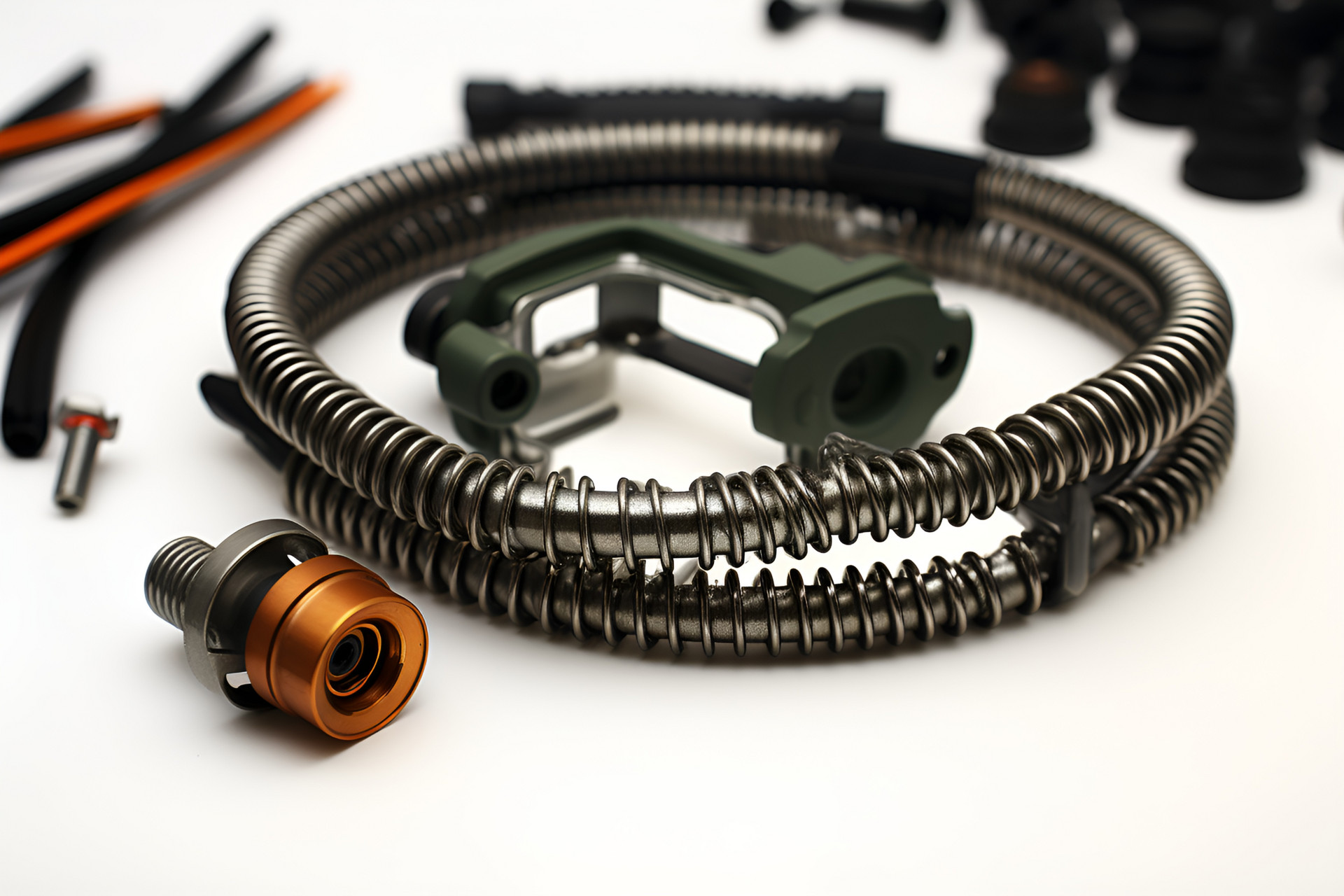
Globally, titanium alloy manufacturing technology continues to break through, effectively addressing the pain points of traditional processes and driving a qualitative leap in product performance. Recently, an international research team led by Imperial College London and Hong Kong Polytechnic University achieved a major breakthrough in the field of titanium alloy manufacturing, and their research results were published in the internationally renowned academic journal *Materials and Design*. The team’s additive-forging hybrid manufacturing strategy successfully enabled Ti-6Al-4V titanium alloys to surpass traditional forgings in tensile and fatigue properties, completely solving the key problem of “excessive strength but insufficient toughness” in additively manufactured (3D printed) titanium alloys.
This technological breakthrough is significant. The Ti-6Al-4V titanium alloy prepared through the hybrid process exhibits a 75% increase in tensile ductility, from 6.8% to 11.9%, and its fatigue performance is also significantly better than traditional forgings. Simultaneously, the team achieved controllable optimization of the titanium alloy’s microstructure by precisely controlling the forging temperature and holding time, resulting in a substantial improvement in material property uniformity. Currently, the team has successfully used this technology to prepare scaled-down prototypes of aero-engine blades, fully meeting the stringent requirements of high-end equipment manufacturing for structural integrity and performance stability, providing a new technological solution for the aerospace field.
In the domestic market, the titanium alloy industry is accelerating patent commercialization, focusing on high-temperature lightweight materials, and continuously improving the level of domestic production. On January 20th, Xi’an City launched its first “Hardcore Patent Transformation Express” event, focusing on γ-TiAl high-temperature lightweight titanium alloy materials. The event aimed to build a bridge between universities and enterprises, promoting deep integration of the industrial and innovation chains.
This technology can be widely applied in aerospace, military, high-end racing, and extreme service conditions such as 3D printing and high-temperature molten salt pump energy storage. Several companies expressed clear intentions to cooperate at the event, laying a solid foundation for the industrialization of the technology. Furthermore, leading domestic companies such as Western Superconducting Technologies are also continuously exerting efforts to promote the domestic substitution of titanium alloy materials in high-end fields.
The continued expansion of downstream applications has become the core driving force behind the growth of the titanium alloy industry, with particularly strong demand in humanoid robots and aerospace. According to a report released by Market Research Future 2025, the global market size for titanium alloys used in humanoid robots will surge from RMB 1.28 billion in 2024 to RMB 18.7 billion in 2030, representing a CAGR of 49.3%. With the continued efforts of humanoid robot companies such as Boston Dynamics and Tesla, titanium alloys, with their advantages of lightweight and high strength, have become the preferred material for core components such as robot joints and fuselage frames.
The aerospace field, as a traditional core application of titanium alloys, continues to experience strong demand. With the recovery of the global aerospace industry and the development of new-generation aircraft, the demand for high-end titanium alloys in aircraft engine blades and aerospace structural components is constantly rising. The breakthrough in additive-forging hybrid manufacturing technology further adapts to the stringent high-performance requirements of the aerospace field. It will further deepen the application of titanium alloys in this area.
Market data shows that the global titanium alloy market continues to expand, projected to exceed $30 billion by 2026, and is expected to maintain a compound annual growth rate of over 8% in the coming years. The high-end titanium alloy market is growing even faster, leading to increasingly fierce competition between international giants and leading domestic companies. Looking ahead to beyond, the global titanium alloy industry will continue its growth momentum, with technological innovation deepening and application scenarios expanding. Demand from fields such as humanoid robots, aerospace, and high-end manufacturing will continue to be released. For enterprises, only by focusing on core technology research and development, promoting the industrialization of technologies, and accurately connecting with downstream demand can they seize opportunities in the fierce market competition and drive the titanium alloy industry to achieve higher-quality development.