

Steel Bars Enter a New Era
Recently, Fangda Dazhou Iron and Steel made a major announcement that its independently developed HRB600 Φ12mm-50mm high-strength steel bars have officially passed the national industrial product production license review, marking the company as the first enterprise in western China with large-scale production capacity for full-specification HRB600 construction steel . This achievement has filled the gap in the localized supply of high-strength steel bars in the western region and provided a solid material guarantee for high-end engineering construction.
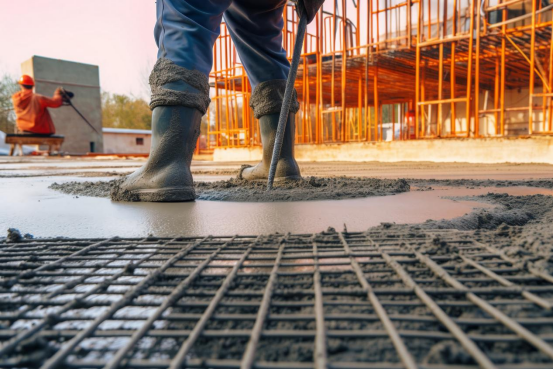
The yield strength of HRB600 steel bars reaches 600 MPa, which is 50% higher than that of the widely used HRB400 products. The R&D process has overcome three major technical challenges: component design, rolling process, and thermal stress control. By adopting microalloying technology, adding vanadium, titanium and other elements to the steel to form nano-scale precipitated phases, the strength and toughness of the steel are significantly improved; the low-temperature rolling and controlled rolling and cooling technology are used to precisely control the austenite grain size, achieving a perfect balance between strength and plasticity .
The application of HRB600 steel bars brings remarkable economic and environmental benefits to engineering projects. Taking high-rise buildings as an example, the use of HRB600 can reduce steel bar consumption by 15%-20%, lower the structural self-weight, and improve seismic performance; its corrosion resistance is increased by 30%, reducing later maintenance costs, and the full life cycle cost is reduced by 25%. In terms of green production, the energy consumption per ton of HRB600 is 8% lower than that of HRB400, which strongly supports the realization of the “dual carbon” goals .
In early January 2026, the National Technical Committee for Standardization of Steel for Reinforced Concrete held a meeting in Kunming, which reviewed and approved four national standards including Green Product Evaluation – 스틸 바 and Steel Bars for Reinforced Concrete – Quality Evaluation Plan . The introduction of these standards has established clear norms for the green production, quality evaluation, and application of steel bars, and has become an important starting point for guiding the high-quality development of the industry.
Among them, the Green Product Evaluation – 스틸 바 standard focuses on the whole life cycle of steel bars, covering indicators such as raw material utilization rate, energy consumption in the production process, carbon emissions, and recyclability. The implementation of the standard will help eliminate backward production capacity and promote steel bar enterprises to accelerate the transformation of green production processes. The Steel Bars for Reinforced Concrete – Quality Evaluation Plan further improves the quality supervision system of steel bars, clarifies the testing methods and acceptance criteria for key performance indicators, and effectively guarantees the engineering safety .
Industry insiders pointed out that with the implementation of the new national standards, green certification will become a necessary condition for steel bar products to enter the high-end market. Especially in the fields of national key infrastructure and green buildings, the proportion of green certified steel bars in procurement will be significantly increased, which will force enterprises to accelerate technological transformation and upgrade the level of green manufacturing.
According to the Global Steel Bar Data Panoramic Research Report 2026, the global apparent consumption of steel bars is expected to reach 5.8 billion tons by the end of 2025, with a market scale of nearly 450 billion US dollars . The market demand structure is undergoing profound changes: the proportion of demand in the traditional real estate field has dropped to about 45%, while the demand for steel bars from emerging fields such as large-scale public transportation networks, renewable energy bases, and data centers is growing rapidly.
These emerging application scenarios put forward higher requirements for the performance of steel bars. High-strength steel bars with a strength level of 600 MPa and above have become the preferred materials for high-rise buildings, large bridges, and marine engineering due to their excellent mechanical properties. It is predicted that the penetration rate of high-strength steel bars in the global major markets will exceed 35% in 2026 . In the European market, affected by the carbon border adjustment mechanism (CBAM), the procurement proportion of green steel bars with environmental product declarations (EPD) will reach 20%, which has become a new growth point for the industry .
In terms of international trade, China’s steel bar exports hit a new high in 2025, with annual exports reaching 119.02 million tons, a year-on-year increase of 7.5% . Driven by the export volume, the futures price of rebar has approached a five-month high. Industry analysts believe that with the continuous improvement of the quality and grade of domestic steel bar products, the export structure will gradually shift from low-end products to high-value-added products such as high-strength steel bars and green steel bars, which will further enhance the international competitiveness of China’s steel bar industry.
Under the dual drive of policy and market, the steel bar industry is accelerating the transformation from “scale expansion” to “quality improvement”. On the one hand, the research and development of higher strength grade steel bars and special performance steel bars will become the focus of enterprise innovation; on the other hand, the application of digital technologies such as digital twins and the Internet of Things in the production and processing of steel bars will help improve production efficiency and product quality stability.For steel bar enterprises, grasping the opportunities of high-strength and green development is the key to winning in the future competition. By strengthening technological R&D, improving green production capacity, and actively responding to the new national standards, enterprises can not only meet the market demand but also contribute to the high-quality development of the national construction industry.