
Mild Steel vs Carbon Steel: What is the Difference?
“Mild steel” and “carbon steel” are frequently used in the metalworking and construction industry. However, quite a few of us tend to mix them up. For the engineers or fabricators who want to select the right material for their projects, this guide aims to break down the differences, properties, and ideal applications of each.
What is mild steel?
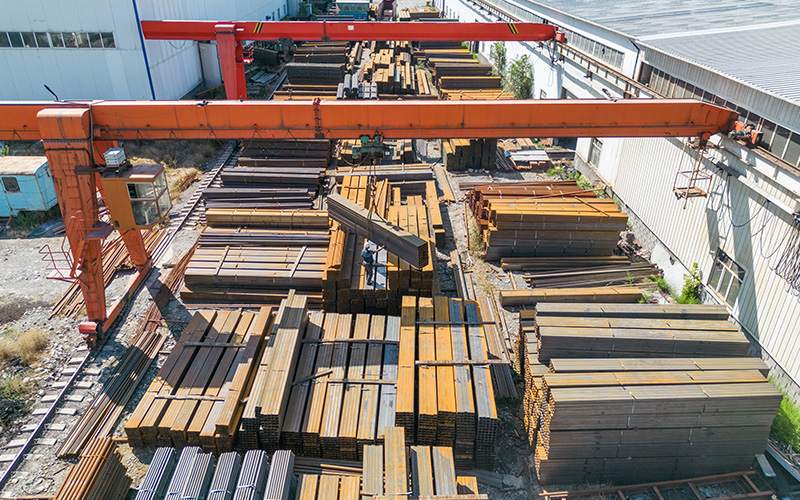
Mild steel is the most common type of carbon steel. It features a relatively low carbon content, roughly ranging between 0.05% and 0.25%. The low carbon concentration makes it exceptionally ductile, malleable, and easy to drill, machine and fabricate. Additionally, mild steel is more affordable and more accessible to target customers due to its simple composition and well-established production process. For these reasons, mild steel is a good choice for various applications.
What is carbon steel?
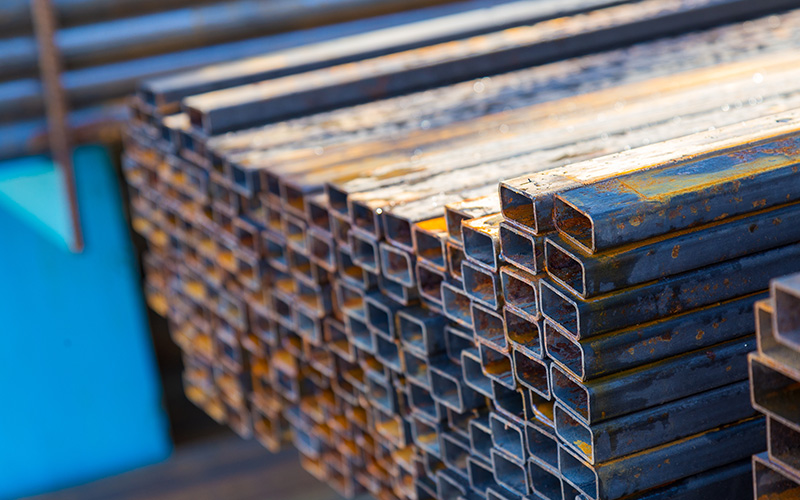
Carbon steel is a broad term for steels which have carbon as their primary composition. It can be categorized as low-carbon steel (also referred as mild steel), medium-carbon steel, or high-carbon steel, according to their different carbon content. Normally, carbon steel pieces often appear in different colors, such as dark gray, silvery-gray, orange and blue.
Carbon steel is a fundamental material with many advantages. It has high strength and hardness, can undergo heat treatment, and offers excellent wear resistance. As a result, it is widely used across different sectors. For instance, it is often utilized as structural components, machinery parts, tools, and other industrial equipment.
Primary differences between mild steel and carbon steel
In this guide, we will compare mild steel and carbon steel across four different dimensions: composition, properties, cost, and applications. Hopefully, readers will gain a better understanding of the distinctions between them. The details are listed below.
Composition
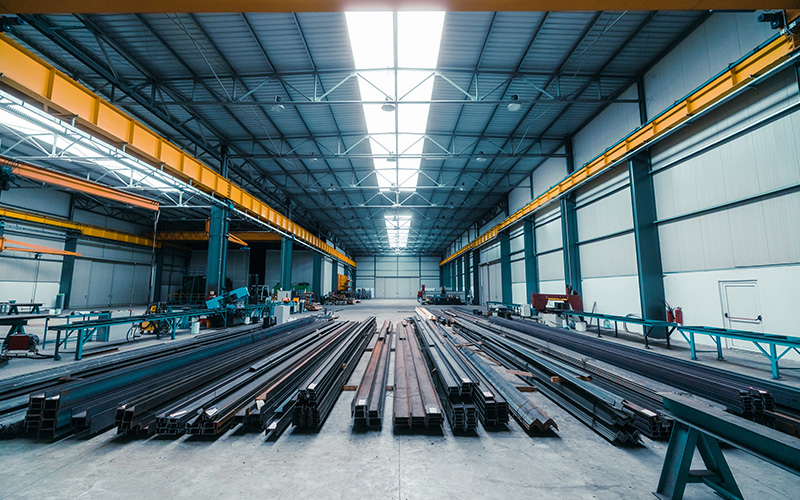
The defining difference between mild steel and carbon steel lies in their carbon content. Mild Steel has a very low carbon content, ranging from 0.05% to 0.25%. Its chemical composition is relatively simple, primarily consisting of iron, with controlled, small amounts of carbon and manganese. Carbon Steel, on the other hand, has a significantly higher carbon content, ranging from 0.25% to 2.0%. This higher carbon content is the main contributor to its improved mechanical properties. The distinct composition of these two types of steel results in a series of differences in their properties, costs, and applications.
Properties
The variance in carbon content results in a clear trade-off between strength and workability.
- Mild SteelMild steel offers high ductility and malleability, making it easy to shape and form. It also has excellent weldability and good machinability. So it can significantly facilitate various production processes. Additionally, mild steel has high impact strength, which means it is less likely to brittle. However, mild steel has relatively low tensile strength and hardness compared to other types of steel. It also has poor wear resistance, and that’s why it needs protective coatings to prevent corrosion.
- Carbon SteelCarbon steels with relatively high carbon content have higher strength and hardness, as well as superior wear resistance. And through heat treatments such as quenching and tempering, these properties can be further enhanced. On the downside, medium and high carbon steels have lower ductility, meaning they are less flexible. Besides, they also have poor weldability, so they require pre-heating and specialized techniques. Furthermore, these steels are more brittle and harder to machine, which can complicate their processing.
Preço
Mild steel is typically less expensive than higher carbon steels. The price disparity is due to their manufacturing processes. Generally, higher carbon steels require more specialized production and processing techniques. Throughout the production process, precise control over the carbon content is necessary, and special heat-treatment processes are also crucial to attain the desired properties. These additional steps in production and processing contribute to the higher cost of higher carbon steels.
Uses
The applications of mild steel and carbon steel directly reflect their properties. Mild steel is used to produce construction beams, car bodies, and general fabrication due to its ductility, ease of forming, weldability, and cost-effectiveness. Higher carbon steel is used for more demanding items. For example, cutting tools, springs, and railway tracks, as it offers increased strength, hardness, and wear resistance.
When to choose mild steel?
It depends on your needs. Simply put, if you care more about malleability rather than durability, mild steel is the ideal choice. Mild steel has good flexibility so that it can maintain structural integrity and ensure complex designs of the final product at the same time. Additionally, it is compatible with all kinds of welding techniques, making it popular among engineers who need to join multiple pieces together. Moreover, for projects operating under tight budgets, mild steel can also be seen as a practical choice as it is less expensive but of essential performance characteristics.
When to choose higher carbon steel?
When your project focuses on hardness and strength, higher carbon steels are an excellent choice as they can bear greater forces and loads. Additionally, you are supposed to choose higher carbon steels if you want superior resistance to abrasive wear, erosion, and galling. (e.g. cutting edges and high-strength springs) Furthermore, if you want to preserve a very sharp edge over long time periods, you’d better choose higher carbon steels. (e.g. knives and other cutting tools)
FAQ
Does carbon steel rust?
Yes. All carbon steels, whose primary constitute are iron,are likely to rust. This is because carbon steels lack enough chromium to create the protective coatings which characterizes stainless steel. In this case, carbon steels need protective passive layer such as oil or paint to prevent corrosion.
Is carbon steel malleable ductile or brittle?
Whether carbon steel malleable, ductile or brittle depends entirely on the amount of carbon content. Mild steel, with carbon content ranging from 0.05% to 0.25% is highly malleable and ductile. Moreover, it can be easily shaped or drawn into wire without breaking.
High carbon steel, with a carbon content of up to 2%, on the other hand, is much stronger and more brittle. This means it can be difficult to bend or press, but it can fracture more easily under sharp impact or stress.
Is mild steel better than carbon steel?
This is not a question of which one is better, but rather which one is more suitable for the specific application. Mild steel is better for fabrication, welding, and cost- affective projects where high strength is not critical.
By contrast,higher carbon steels are better for applications requiring durability, wear resistance, and the ability to hold an edge or be heat-treated. The “best” choice depends on the detailed requirements of the specific project.
Saber mais sobre os nossos produtos?
Contactar agora