
A Buyer’s Guide to Structural Steel: Angle Iron, Channel, & Structural Beam
Many steel buyers often have such doubts when purchasing in heavy industries like construction, machinery manufacturing, and bridge construction: Angle Iron, Channel, and Structural Beam all look like steel, but what scenarios are they each suitable for? Which one should be prioritized when purchasing? Why are they often used together in projects?
This article will start from the actual needs of buyers, explain the core characteristics, helping you understand how to choose and match them, so that your purchase can better meet project needs and avoid waste from wrong choices.
- What is Angle Iron?
- What is Channel?
- What is a Structural Beam?
- How to Distinguish Angle Iron, Channel, and Structural Beam in Procurement?
- Avoid Quality Risks and Cost Overruns from the Source
- Three Optimization Directions for Steel Procurement
- FAQs
What is Angle Iron?
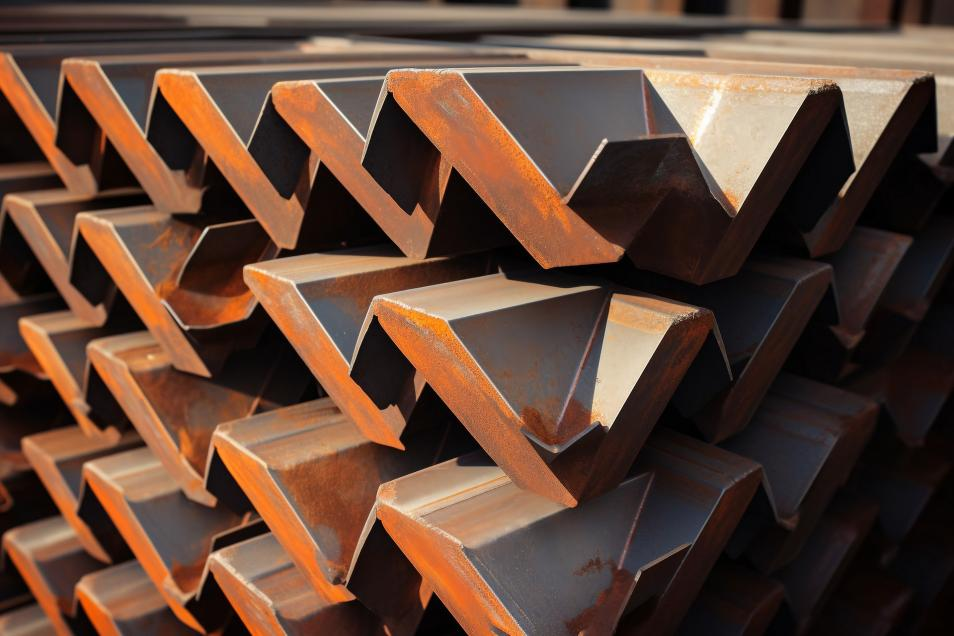
Angle Iron, is a hot-rolled or welded structural steel with an L-shaped cross-section. Its core feature is that two sides form a right-angle cross-section perpendicular to each other. It is mainly used for support, connection, and light load-bearing structures in fields like construction and machinery manufacturing, and is one of the most widely used profiles in the heavy industry.
I. Core Definition and Cross-Section Features of Angle Iron
The essence of Angle Iron is “a long strip of steel with a right-angle L-shaped cross-section”. Its cross-section consists of two sides with the same length or different lengths. The connection between the two sides is a circular arc transition or a right-angle transition. Its overall structure is simple and easy to connect with other components.
II. Main Classification Methods of Angle Iron
Angle Iron is classified based on clear technical standards and application needs, mainly into three categories. Different categories have significant differences in performance and use.
1. By Cross-Section Shape: Equal-Angle Iron and Unequal-Angle Iron
- Equal-Angle Iron: It has two sides of equal width and a symmetrical L-shaped cross-section. It is the most common type in the market, accounting for more than 70% of the total usage of Angle Iron (data source: *China Steel Structure Industry Development Report 2023*).
- Unequal-Angle Iron: It has two sides of different widths and an asymmetrical L-shaped cross-section.
2. By Material: Carbon Steel and High-Strength Low-Alloy Steel
- Carbon Steel Angle Iron: It is mainly of Q235 series (Q235A, Q235B). Its tensile strength is 375-500MPa, and its yield strength is ≥235MPa (according to GB/T 700-2006 *Carbon Structural Steel*).
- High-Strength Low-Alloy Steel Angle Iron: It is mainly of Q355 series. Its yield strength is ≥355MPa, and its tensile strength is 470-630MPa, which is more than 40% higher than that of Q235 steel (cited from *Application Guide for High-Strength Low-Alloy Structural Steel*).
3. By Production Process: Hot-Rolled Angle Iron and Welded Angle Iron
- Hot-Rolled Angle Iron: The metal grains in the cross-section are closely bonded, and their overall mechanical properties are uniform. It is the mainstream product in the market and can be directly used in force-bearing structures without additional processing.
- Welded Angle Iron: It is formed by welding two steel plates into an L-shaped cross-section. It is only used for special specifications or customized needs.
III.Core Mechanical Properties and Advantages of Angle Iron
The mechanical properties of Angle Iron are determined by its cross-sectional shape and material. Its core advantages focus on two aspects: “bending and torsion resistance” and “connection flexibility”, with specific manifestations as follows:
1. Excellent Torsion Resistance and Two-Way Bending Resistance
The L-shaped cross-section of Angle Iron distributes materials in two vertical directions. Compared with flat steel, its section moment of inertia is higher in both directions.
2. High Connection Convenience and Good Construction Efficiency
The two right-angle sides of Angle Iron can be directly connected to other components through bolts or welding, without additional processing of complex interfaces. In addition, on-site construction only requires conventional welding equipment or bolt tools, which can shorten the structure installation period by about 20%.
IV.Typical Application Scenarios of Angle Iron
With balanced performance and moderate cost, Angle Iron is widely used in multiple heavy industries such as construction, machinery, and transportation. The specific scenarios and examples are as follows:
1. Construction Engineering: Auxiliary Load-Bearing and Structural Connection
In the construction field, Angle Iron is mainly used as an “auxiliary structural component”.
2. Machinery Manufacturing: Equipment Brackets and Chassis Frames
In the machinery manufacturing field, Angle Iron is used to bear equipment weight or fix components.
3. Transportation and Infrastructure: Auxiliary Support Structures
In transportation and infrastructure projects, Angle Iron is used for non-main load-bearing auxiliary structures.
V. Key Points for Purchasing Angle Iron
When purchasing Angle Iron, you need to focus on three goals:
1. Prioritize Hot-Rolled Process and Check Surface Quality
Hot-rolled Angle Iron is the first choice for structural steel. When purchasing, you need to check whether there are defects such as cracks, scars, and folds on the surface (according to Article 6.3 of GB/T 706-2016).
2. Confirm Weight Calculation Method to Control Cost
Angle Iron is usually priced by “ton price”. You need to clarify whether it is “theoretical weight” or “actual weighed weight”. For bulk purchases (≥50 tons), it is recommended to use the actual weighed weight to avoid cost overruns caused by the deviation between theoretical weight and actual weight (usually ±2%).
3. Request Quality Certificate to Ensure Compliance
Formal suppliers must give a Product Quality Certificate. This certificate needs to include two things: a report on what the product is made of (material composition) and a report on its mechanical performance tests (like tensile strength and yield strength).
To sum up, Angle Iron is a type of structural steel. It has an L-shaped cross-section, works well in different mechanical aspects, and is easy to connect. Its main advantages are:
- Good resistance to bending and twisting
- Faster construction speed
- High material usage rate (less waste)
When you buy it, remember to:
- Clearly confirm its specifications and standards
- Prefer products made by the hot-rolled process
- Ask about how its weight is calculated
- Get the quality certificate
Doing this will make sure the Angle Iron meets your project’s needs—both for structural safety and controlling costs.
What is Channel?
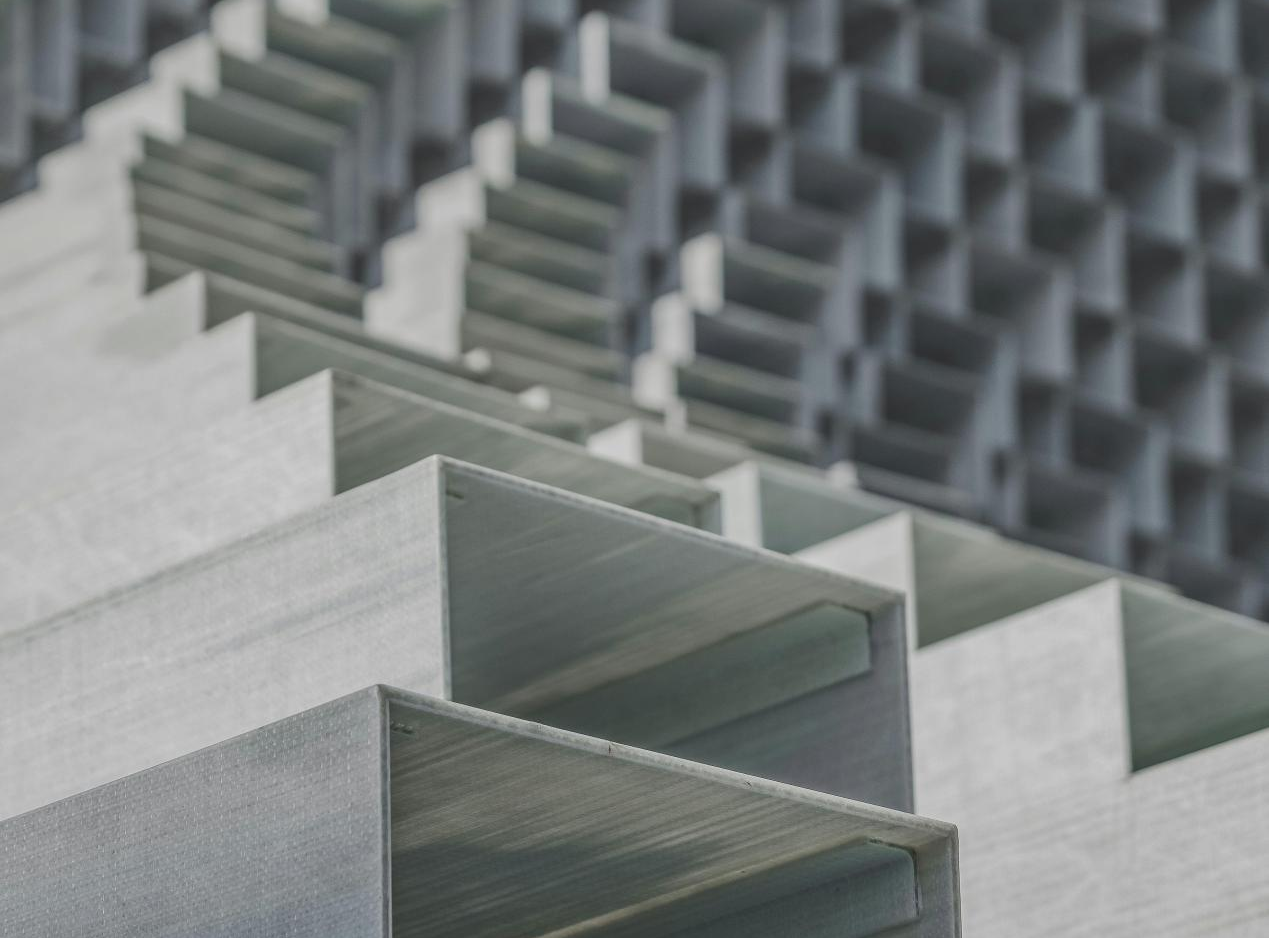
Channel is a hot-rolled or welded structural steel with a “[“-shaped cross-section. It belongs to the category of profiles and is mainly used to bear vertical loads and provide stable support. It is one of the core materials for medium load-bearing structures in fields like construction, machinery manufacturing, and transportation.
I.Core Structure and Mechanical Properties of Channel
The cross-section of the Channel consists of four parts: web, flange, inner flange arc, and web arc. This structure determines its unique mechanical properties. Its most prominent advantage is high bending strength in the vertical direction. The “groove-shaped” structure formed by the web and flanges can effectively disperse vertical loads, so its section moment of inertia performs well in the vertical direction, which can reduce the deformation of the structure under force.
In terms of material, the production of Channel must strictly follow national standards. Currently, the mainstream materials in China are Q235B carbon steel and Q355B high-strength low-alloy steel.
II.Main Application Scenarios of Channel
With high vertical bending strength and convenient installation, Channel is widely used in medium load-bearing structures and auxiliary load-bearing scenarios. The specific fields are as follows:
1. Construction Engineering Field: Core Material for Door/Window Lintels, Balcony Load-Bearing Beams, and Curtain Wall Keels
In civil buildings, [12#-16# Channel] is often used as door/window lintels with a span of 2-3 meters. It can effectively bear the weight of the upper wall and avoid door/window deformation. In curtain wall projects, [8#-10# Channel] can be used as vertical keels, and it cooperates with Angle Iron connectors to fix glass or stone panels, balancing load-bearing and stability.
2. Machinery Manufacturing Field: Used for Equipment Bases, Frames, and Conveying Equipment Rails
For example, the bases of small and medium-sized machine tools are mostly welded with [14#-18# Channel]. The lateral stability of the Channel ensures the stability of the equipment during operation. The rail brackets of belt conveyors usually use [10#-12# Channel]. Its groove-shaped structure can conveniently fix the rails and bear the weight of the conveyed materials at the same time.
3. Transportation Equipment Field: Load-Bearing Component for Light Vehicle Chassis and Trailer Frames
The chassis of electric trucks and small trailers are often spliced with [16#-20a# Channel]. It uses its vertical bending strength to bear the weight of the carriage and goods, and simplifies the chassis welding process to reduce manufacturing costs.
III.Quality Judgment and Purchasing Key Points of Channel
When purchasing Channel, you need to focus on the production process, surface quality, and dimension tolerance to ensure it meets the engineering design requirements:
- Production process: Prioritize hot-rolled Channel. It is formed by one-time hot rolling, so the web and flanges are closely bonded, and its overall mechanical properties are better than welded Channel. It meets the process requirements of GB/T 707-2016 *Hot-Rolled Channels*.
- Dimension tolerance: Use a caliper to measure the actual height, leg width, and web thickness. The deviation must be within the range allowed by the national standard. Excessive dimension deviation will cause installation difficulties and affect the force balance of the structure.
In summary, Channel is a structural steel with a unique cross-sectional structure and mechanical properties suitable for medium load-bearing. Its specifications are standardized, and its application scenarios are clear. When purchasing and using, you must strictly follow national standards and select appropriate specifications and materials according to the load requirements of specific projects to ensure structural safety and cost optimization.
What is a Structural Beam?
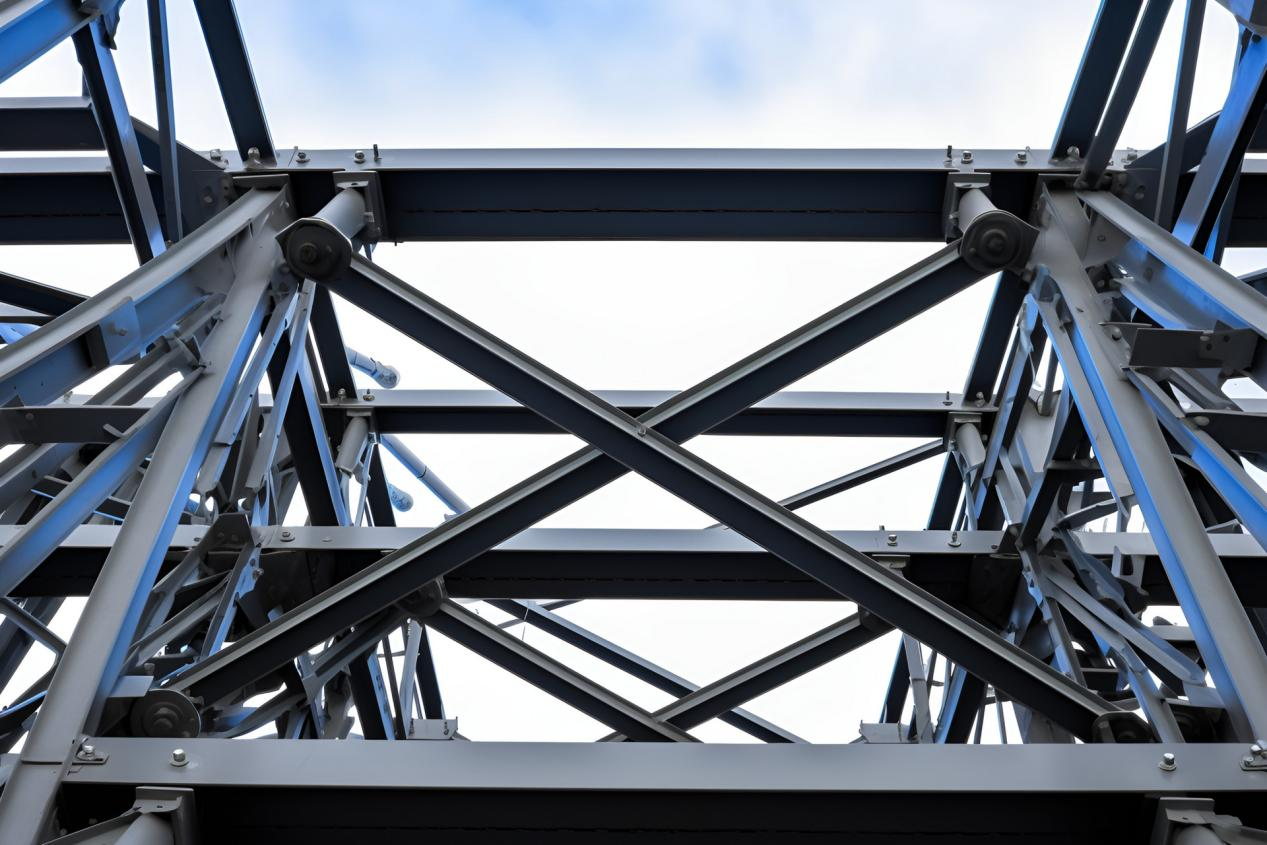
Structural Beam is a key structural component made of steel as the core raw material through processes like hot rolling and welding. It is mainly used in projects such as construction, bridges, and machinery manufacturing to bear horizontal loads and transmit forces. It can stably transmit the floor load, roof load, or external impact load it bears to load-bearing structures such as columns and supports. It is a core component in the steel structure system to achieve effective force transmission and structural stability.
I.Core Composition and Material Requirements of Structural Beam
The material of the Structural Beam must meet both mechanical property and engineering standard requirements. It saves more materials than Q235B under the same load and is widely used in heavy-load scenarios such as high-rise steel structures and large-span factories (cited from GB/T 1591-2018 *High-Strength Low-Alloy Structural Steel*).
The cross-sectional shape of the Structural Beam is designed according to force requirements, with the core goal of improving mechanical efficiency by optimizing the cross-sectional shape. Its cross-section must include three parts: “tension zone”, “compression zone”, and “web”. The tension zone and compression zone bear the main bending moment, while the web resists shear force. Common cross-sectional types are designed around this core logic.
II.Common Types and Mechanical Properties of Structural Beam
According to cross-sectional shape and processing technology, Structural Beam can be divided into two categories: hot-rolled section beam and welded composite beam.
1. Hot-Rolled Section Beam
A hot-rolled section beam is a standardized product formed by one-time hot rolling in steel mills. It does not require on-site secondary welding, with high cross-sectional dimension accuracy and uniform mechanical properties.
- H-beam: It has an “H”-shaped cross-section, with parallel inner and outer sides of the flanges and uniform web thickness. Its section moment of inertia is much higher than other profiles of the same weight.
- I-beam (I-shaped steel beam): It has an “I”-shaped cross-section, with inclined slopes on the outer sides of the flanges and a thin web. Compared with an H-beam of the same height, its flange width is narrower and its moment of inertia is lower. It is suitable for secondary beams or light load-bearing scenarios with small spans.
2. Welded Composite Beam
A welded composite beam is a beam with a specific cross-section formed by welding steel plates . It is suitable for large-span and heavy-load scenarios that cannot be met by hot-rolled section steel.
- Welded H-beam: When the load or span exceeds the specification range of hot-rolled H-beam, thick steel plates can be used for welding.
- Box beam: It has a “box”-shaped cross-section formed by welding four steel plates. It has the best torsion resistance and lateral stability and is suitable for scenarios such as bridges and crane beams that need to bear torque or two-way loads.
3. Core Functions and Application Scenarios of Structural Beam
- Construction engineering: In high-rise steel structure residential buildings, H-beams are used as floor main beams, with a spacing of usually 3-4 meters. They form a floor frame with secondary beams, and each main beam can bear a linear load of about 5kN/m.
- Bridge engineering: Large-span highway bridges and railway bridges mostly use Structural Beams. For example, the main span of a river-crossing bridge uses “welded H-beam composite beams”.
- Machinery manufacturing: In the frames of heavy equipment, Structural Beam is used as the load-bearing skeleton, which requires high precision and stability.
III. Selection and Quality Control Points of Structural Beam
When choosing a Structural Beam, you must strictly follow two main rules: “match the load it needs to bear” and “choose the most cost-effective option”. Also, checking its quality needs to cover every step—from how it’s made, to buying it, to accepting it.
1. How to choose it
First, figure out the cross-section (the shape you see when you cut the beam) you need. To do this, use two things:
- The bending force and shearing force calculated for the structure
- The Code for Design of Steel Structures (a professional standard)
2. How to check its quality
When buying:
- Ask for the “Quality Certificate” from the steel factory. Check if the material and mechanical performance meet the required standards.
After delivery:
- Look at the surface: Make sure there are no cracks, scars, or scratches deeper than 0.5mm.
- Check key cross-section sizes (take samples to test). For example, if it’s an H-beam, the thickness of its “flanges” (the two horizontal parts on top and bottom) can only be off by ±0.7mm. This follows the rules in GB/T 11263-2017.
How to Distinguish Angle Iron, Channel, and Structural Beam in Procurement?
In heavy industries like construction, machinery manufacturing, and bridge construction, Angle Iron, Channel, and Structural Beam are core steel categories that support project structural safety and construction efficiency. According to data from *China Steel Structure Industry Development Report 2023*, the three together account for 68% of the total structural steel procurement in the heavy industry. Their procurement decisions directly affect 30%-40% of the project’s total cost and 15%-20% of the construction period.
| Product Type | Cross-Section Feature | Mechanical Advantage | Main Application Scenarios |
| Angle Iron | L-shaped (two right-angle sides) | Good bending and torsion resistance; convenient connection | Auxiliary structures: tower supports, equipment brackets, truss connectors, warehouse shelves |
| Channel | [-shaped (single-sided open groove) | High vertical bending strength; good lateral stability | Medium load-bearing structures: door/window lintels, light vehicle chassis, machinery bases, curtain wall keels |
| Structural Beam (H-beam) | H-shaped (parallel inner/outer flange sides) | Optimal overall mechanical properties; strong bending and compression resistance; large section moment of inertia | Main load-bearing structures: building columns/main beams, large bridges, heavy equipment platforms, heavy factory structures |
Avoid Quality Risks and Cost Overruns from the Start
When buying steel, you need to set up a clear, number-based check system. Focus on five key things: material standards, size specs, production quality, choosing suppliers, and cost & logistics. This is how you make sure you buy good steel and don’t spend too much.
1. Material and Standards
First, use your project’s design drawings to confirm two things: the steel’s grade and the standard it follows. If your project is for export or funded by foreign companies, you must confirm international standards too.
For example, the American standard ASTM A572 Gr.50 has different rules for chemical makeup than China’s Q355B standard. If you mix them up, the steel won’t pass local checks—and your project will be delayed.
2. Size Specs
You must carefully check the size of the steel profiles. Even small differences in cross-section size or wall thickness can seriously affect how much weight the steel can hold.
Take the Chinese standard GB/T 11263-2017 (for hot-rolled H-beams and split T-beams) as an example: For an H-beam labeled H300×300×10×15, the web (the vertical middle part) thickness can only be off by ±1.0mm, and the flange (the horizontal top/bottom parts) thickness can only be off by ±1.2mm.
3. Choosing Suppliers
Pick how you buy steel—directly from a steel mill or from a trader—based on how much you need to buy:
- If you need a small amount, or need multiple types of steel (like Angle Iron, Channel, and Structural Beam together), choose a big trader (such as SUMEC). They let you mix different steel types in one order, have lower minimum order requirements, and even offer processing and delivery services.
4. Cost and Logistics
Don’t just look at the “price per ton”—use a full-cost calculation: price per ton + extra fees + shipping costs. This way, you won’t end up spending more than planned.
Most steel profiles are priced by the ton, but you need to watch the difference between “theoretical weight” (calculated on paper) and “actual weight” (weighed in real life). If you buy a large amount (100 tons or more), always use the actual weight.
Keep Up with Market Trends: 3 Ways to Make Your Steel Buying More Competitive
1. Go Green and Low-Carbon
The Steel Industry Green and Low-Carbon Development Action Plan (2024-2026) says using high-strength steel (like Q355B) can cut steel use by 15%-20%. This matches the trend of saving energy and reducing pollution.
2. Digital Buying
You can do bidding and buy steel on professional online platforms—like China Oriental Steel Online or Shanghai Steel Link. You can also use supply chain management software to make the whole buying process digital (no more paperwork hassle).
3. One-Stop Services
Prioritize suppliers that offer “one-stop” help. These services include everything: supplying the steel + processing it + shipping it + financial support. This saves you time—you won’t have to work with multiple companies for different steps.
FAQs
What full-process system do steel buyers need to set up when buying angle iron, channel, and structural beam? And what specific steps can they take to cut costs, control risks, boost efficiency, and get extra benefits?
Buyers need to set up a full-process system called “feature matching – quantitative control – practical implementation – trend adaptation”. Here are the specific steps:
- Match profiles to their use scenarios correctly. This can cut wrong selection costs by 20%-30%.
- Control materials, specifications, and processes with clear numbers. This can get rid of over 90% of quality risks.
- Use the 5-step implementation method. This can make procurement efficiency 30% higher.
- Keep up with market trends. This can help get green subsidies and efficiency gains.
To make buying angle iron, channel, and structural beam better, what old procurement model do buyers need to change? And what new model should they use instead?
Buyers need to change their procurement model from “simple material purchase” to “supply chain value management”.
What main goals do steel buyers need to reach in the end when buying angle iron, channel, and structural beam?
In the end, they need to reach these goals: the project’s structure is safe, costs are under control, and efficiency is as good as possible.
Saber mais sobre os nossos produtos?
Contactar agora