

Copper-to-Gold Ratio Hits 40-Year Low; Copper Price Could Rise by Up to 60%!
Known as “Dr. Copper,” this commodity is one of the most sensitive raw materials to global economic conditions, industrial activity, and technological development. Driven by the dual forces of the energy transition and digital infrastructure construction, the medium-to long-term fundamentals of cobre are undergoing a paradigm shift from cyclical to structural.
On the demand side, a long-term strong trend is being driven by three major engines: electric vehicles, artificial intelligence data centers, and power grid upgrades. On the supply side, constraints include declining ore grades, long investment cycles, and low inventories. As a result, the market’s discount on supply elasticity and premium on resource scarcity are both rising simultaneously.
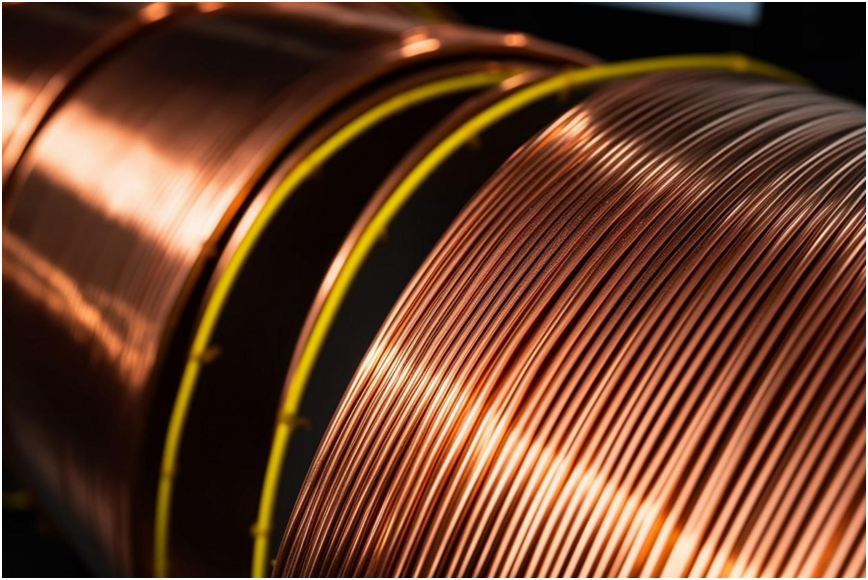
Meanwhile, gold and silver—metals combining financial and industrial attributes—have formed a closer linkage with copper amid asset reallocation and manufacturing expansion.
From Cyclical to Structural: The Underlying Narrative of Copper Is Changing
Over the past decade, copper prices have often been seen as a barometer of global economic health. However, since 2025, the upward trend in cobre prices has stemmed not only from recovery trades but also from a mix of structural deficits and asset repricing.
Many institutions reported in 2025–2026 that copper supply and demand became tighter earlier than expected.Copper prices hit record highs and stayed high with large fluctuations.This is not just a short-term economic cycle.It shows a long-term, cross-industry structural change.
Key Drivers of This Shift
1. Inelastic Supply
- Declining ore grades & long development cycles:
The average copper grade at major global mines has fallen below 0.6%, nearly halved from pre-2025 levels. Producing the same metal volume requires processing more ore, raising costs and environmental pressures. Developing a new mine typically takes 7–10 years from discovery and approval to production, causing supply to lag sharply behind price signals.
- Falling discovery rates & tight inventories:
New copper mine discoveries have dropped by roughly 70% since the 1990s. Visible global exchange inventories remain low, so any disruption at mines, port congestion, or smelting volatility can push prices higher.
- Structural deficit estimates:
As of late November 2025, one institutional outlook estimated a global refined copper deficit of about 330,000 tonnes for 2026. By late February 2026, updated models narrowed the deficit to around 130,000 tonnes—still a shortage, albeit smaller.
These slow-moving supply factors are unlikely to reverse within 1–2 years, meaning any marginal acceleration in demand could have a non-linear impact on prices and treatment/refining charges (TC/RC).
2. Structural New Themes on the Demand Side
Copper has evolved from a traditional construction-cycle metal to a critical raw material for the energy and digital economy, supported by electric vehicles, AI data centers, and grid upgrades.
- Electric vehicles:
EVs use 3–4 times more copper than conventional gasoline cars. Electrification is no longer a cyclically sensitive sector but a long-term trend shaped by policy, supply chains, and consumer choices.
- AI data centers:
AI development is getting stronger. It increases the need for electricity and computing power.A single large AI data center may use 40,000 to 50,000 tonnes of copper at first.Its daily operations need more copper for replacement and expansion.This “physicalization of computing power” promotes investment in power distribution and grids.It also supports copper consumption.
- Power grids & renewables:
Wind power, solar power, energy storage and grid modernization all depend on cobre. Copper has high conductivity, durability and recyclability.By 2030, investment in grids and renewable energy is expected to make up more than 60% of China’s increased copper demand.This will also have an impact on the whole world.
Demand from EVs, AI, and grids features long duration, large scale, and irreplaceability. Even with short-term volatility in individual subsectors, the combined effect of the three engines sustains medium- to long-term demand.
3. Geopolitical Uncertainty
Geopolitical risks affect copper and precious metals through:
Disruptions to mining and smelting (shutdowns, maintenance, logistics halts);
Shifts in trade flows and regional price spreads (tariffs, quotas, compliance barriers);
Amplified spot premiums and term structure changes under tight inventories.
Against deglobalization, strategic premiums on hard assets are rising, and structural allocations to metals and energy in investment portfolios are increasing.
Precious Metals and Copper Linkage: Copper-to-Gold Ratio Hits 40-Year Extreme Low
Gold prices repeatedly approached or set record highs in 2025–2026, reflecting its monetary and fiat-alternative attributes.
The copper-to-gold ratio is a classic indicator comparing cyclical assets to safe havens. Its recent decline mainly reflects a pickup in safe-haven demand, not a rejection of copper’s long-term fundamentals.
After the 2008 financial crisis, the ratio trended downward, falling to 2.49 by the end of 2025—near two standard deviations below the 40-year average.
Price Upside Scenarios
- A 13% rise in copper would return it to previous highs.
- If the ratio rebounds to its mean minus one standard deviation (assuming gold prices stay flat), copper could reach $20,600 per tonne—an increase of more than 60% from current levels.
If gold continues to hit new highs, copper’s catch-up potential becomes even larger.
Copper Prices and Risks in 2026–2030: Seeking Opportunities in High Volatility
As of February 2026, the annual cobre deficit estimate may be revised downward due to inventory and trade flow adjustments in some regions. However, the overall picture of shortage remains intact.
Over the next 12–24 months:
- Supply-side slow variables are hard to reverse.
- The three demand engines remain powerful.
Copper prices are more likely to rise amid high-range volatility than to trend linearly upward.
Three Major Trends Ahead
1.Higher copper intensity per unit GDP:
Electrification, building efficiency retrofits, and data center expansion will lift copper intensity, forming a floor for long-term demand.
2.Lagged supply investment creates persistent elasticity gaps:
Even if current prices incentivize new investment, converting it to usable supply will take years, making markets sensitive to any supply disruption.
3.Increased structural allocation to hard assets:
In a deglobalizing, definancializing capital environment, institutional portfolios are likely to raise steady allocations to energy and metals, lifting long-term commodity risk premiums.
Conclusión
Supply constraints and investment bottlenecks will keep cobre in a tight balance for the next 3–5 years. On the demand side, long-term growth driven by electric vehicles, AI, and grid upgrades provides cross-cyclical support.
Short-term volatility mostly stems from high-range repricing of inventories, logistics, and policy milestones. The medium- to long-term trend still favors the relative strength of hard assets.
For professional investors, the key is not to chase every price spike, but to position for the long term around deterministic structural themes.