

Alloy Steel Explained: How Chromium, Molybdenum, and Manganese Change Steel Properties
- Introduction
- What Is Alloy Steel?
- Types of Alloy Steel
- Key Alloying Elements: Cr, Mo, Mn (Effects & Real-World Applications)
4.1 Chromium (Cr): The Rust & Wear Fighter for Alloy Steels
4.2 Molybdenum (Mo): The High-Temp Strength Booster
4.3 Manganese (Mn): The Strength & Flexibility Balancer
4.4 A Quick Note on Other Alloying Elements - Buyer’s Guide: How to Choose the Right Alloy Steel
Introduction
The American Iron and Steel Institute (AISI), a leading U.S. steel authority, defines alloy steels as metals made from iron plus 1.0% to 50% other alloying elements. Plain carbon steel relies only on carbon, but adding alloy elements can greatly expand steel’s abilities.
Among these alloying elements, chromium (Cr), molybdenum (Mo), and manganese (Mn) are the most important—AISI reports that these three elements are used in over 70% of industrial alloy steels worldwide. They fix things plain carbon steel can’t do: Cr stops rust, Mo keeps strength when it’s hot, and Mn makes steel stronger without losing flexibility.
This guide explains what alloy steel is and the main types, and then dives deep into how Cr, Mo, and Mn enhance the properties of alloy steels. It helps engineers, material buyers, and project leaders understand these key elements and select the right alloy steel.
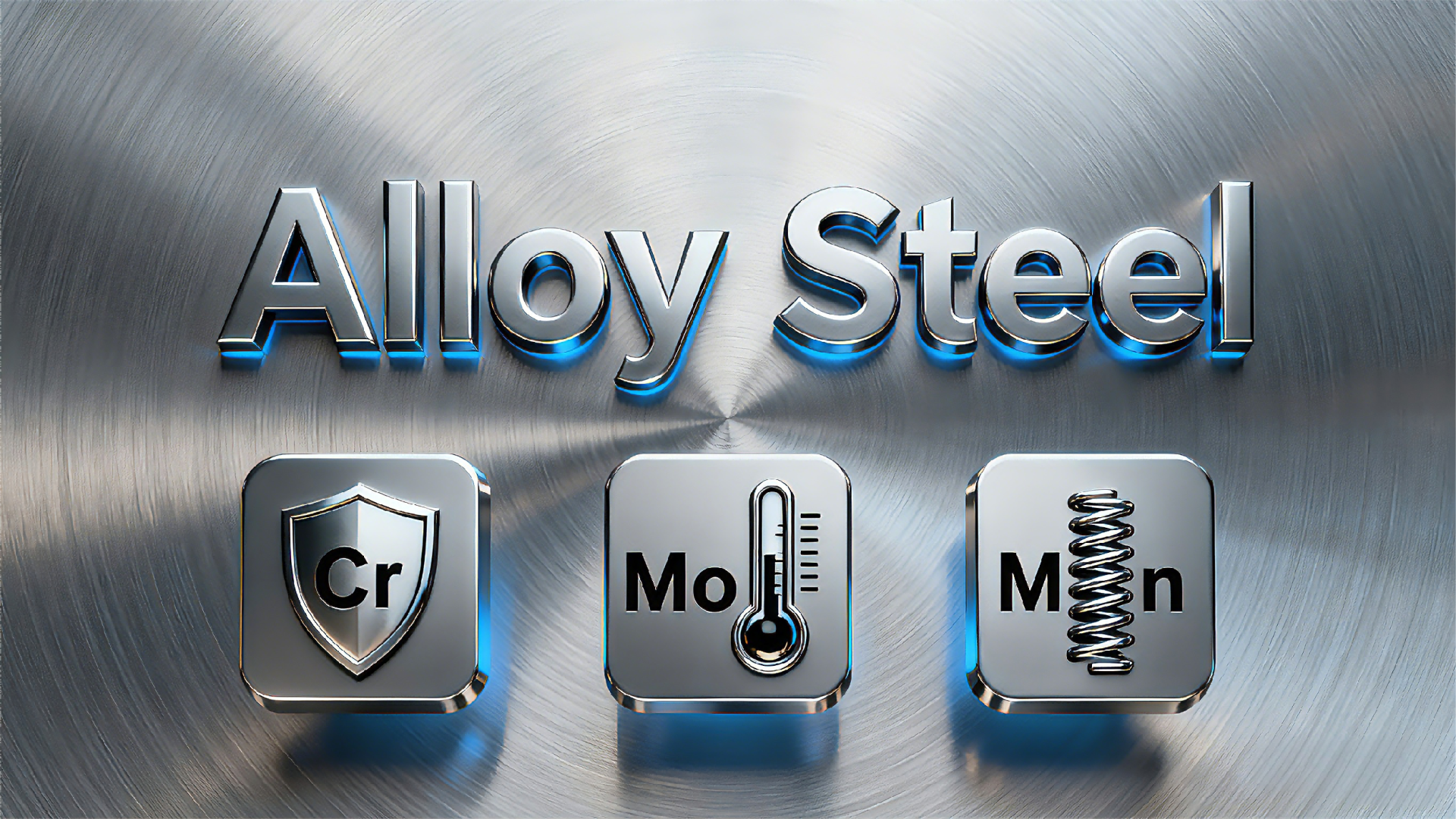
What Is Acero aleado?
Alloy steel is the steel that has been mixed with a variety of elements, in addition to carbon, to improve its mechanical properties or resist corrosion. According to the American Society for Testing and Materials (ASTM), the alloying elements may include manganese, chromium, molybdenum, nickel, and others. AISI states that these added elements comprise 1.0% to 50% of the steel’s weight, and among them, chromium (Cr), molybdenum (Mo), and manganese (Mn) take up over 70% of industrial alloy steels.
While plain carbon steel derives its strength solely from carbon, it rusts easily, softens when heated, and can fracture if bent excessively; alloying elements can mitigate these effects. Alloy steel fixes those limits; these elements alter its properties to improve functionality, such as increased strength, hardness, and resistance to wear and corrosion. For example, adding Cr helps the steel resist rust. Adding Mo helps it remain strong even at extremely high temperatures (over 538°C/1,000°F). Adding Mn makes it stronger without making it stiff.
Types of Acero aleado
Alloy steel occurs in different forms that show variation in use. These forms differ in the elements that provide particular features and in the levels that these elements occur. The main types appear in the following description.
- Low-alloy steel contains small levels of elements that provide features. The total level is less than 5%. This form is not difficult to work with and does not require high cost. It shows a balance of features that include strength and resistance to wear and to damage from use in different conditions. Low-alloy steel finds use in parts that form structures, in parts that form machines, and in containers that hold material under pressure.
- High-alloy steel contains higher levels of elements that provide features. The level is more than 5%. This form shows strength that is greater than other forms. It also shows resistance to damage from heat and from conditions that produce wear. High-alloy steel finds use in situations that require these features. These situations include work in aerospace, in processes involving reactions between materials, and in systems that produce power.
- High-strength low-alloy steel, which uses the form HSLA, contains small levels of elements such as chromium, vanadium, or nickel. These elements allow the steel to show strength that is greater than steel that contains carbon as the main element providing features. HSLA steel shows a relationship between strength and weight that is favorable. It also shows resistance to damage from conditions that occur over time. These features lead to use in vehicles, in construction of structures, and in systems that move materials. The use involves parts that require high strength but that also require low weight.
- Tool steel contains elements such as tungsten, molybdenum, vanadium, and cobalt. These elements occur with chromium in most cases. Tool steel shows resistance to wear and shows the feature of being hard. It can also withstand high temperatures. These features occur without loss of strength that high temperatures often produce. Tool steel finds use in making tools, in making forms that shape material, and in making equipment that cuts material.
Key Alloying Elements: Cr, Mo, Mn
Alloy steels obtain properties from different elements that combine in specific forms. Chromium (Cr), molybdenum (Mo), and manganese (Mn) provide the main effects in these materials. These elements allow particular improvements in steel that relate to different uses in practice. Each element shows specific effects.
Chromium (Cr): The Rust & Wear Fighter for Alloy Steels
Chromium provides the main effect of resisting rusting in alloy steels. This element forms a thin layer on the surface when added to steel. The layer blocks water and air from contact with the steel. Steel does not show rust easily as a result. Chromium also allows steel to become harder. It allows steel to resist wear. Steel that contains this element can resist friction without damage occurring.
In real life, chromium is widely used in stainless steel. Stainless steel that contains at least 10.5% chromium allows the production of kitchen sinks, food-processing machines, and medical instruments. These items require resistance to rusting. Chromium also appears in steel used for automotive components like exhaust systems and Industrial parts that face wear.
Molybdenum (Mo): The High-Temp Strength Booster
The primary role of molybdenum is to maintain strength in alloy steel at high temperatures. Plain carbon steel that contains no other elements shows softening and strength reduction when the temperature increases above 538°C (1,000°F). The addition of molybdenum prevents this reduction. It also increases hardness and improves corrosion resistance under challenging conditions, such as acidic environments or saltwater.
Real-world uses of molybdenum include parts for turbines in plants that produce power. These parts operate at very high temperatures and require maintenance of strength. Molybdenum is also added to steel for pipelines that transport oil and gas also receives molybdenum. These pipelines experience high pressure and materials that cause corrosion. Tools designed for high performance, such as bits that drill through metal with high hardness, also contain molybdenum.
Manganese (Mn): The Strength & Flexibility Balancer
Manganese is great at making alloy steels stronger without losing flexibility. It helps steel handle more force without breaking. It also makes steel easier to shape and form into different parts during manufacturing. Manganese can even reduce the bad effects of impurities, like sulfur, in steel.
Manganese is often added to low-alloy steels and HSLA steels. These particular forms of steel provide the basis for building beams, frames for cars, and the main structure of trucks. The parts require strength, but also require the property that allows some degree of bending without breaking. Manganese also finds use in steel for railroad tracks. These tracks experience substantial loads and pressure that occur repeatedly. The tracks, therefore, require both strength and the ability to show some flexibility, and manganese provides these particular properties in the steel.
A Quick Note on Other Alloying Elements
In addition to Cr, Mo, and Mn, there are some other common alloying elements used in alloy steels. Each element adds specific benefits to meet different industrial needs. Below is a simple chart that shows what those elements do and where they’re used.
| Alloying Element | Common Symbol | Main Effects on Alloy Steel | Real-World Applications |
| Nickel | Ni | -Makes steel stronger and tougher -Helps steel stay tough in very cold temperatures -Boosts corrosion resistance when mixed with Cr |
– Ship hulls (handles cold ocean water) – Cryogenic tanks (stores super-cold liquids like liquid nitrogen – Stainless steel blends (adds extra rust resistance) |
| Vanadium | V | -Makes steel harder and more wear-resistant -Stops steel from softening at moderate high temperatures -Improves the steel’s ability to be shaped |
– High-speed drill bits (handles heat from cutting metal) – Construction rebar (needs extra strength for buildings) – Automotive gears (resists wear from constant movement) |
| Tungsten | W | -Lets steel keep strength at extremely high temperatures (over 1,000°C/1,832°F) -Makes steel very hard and resistant to wear |
– Cutting tools for metalworking (handles intense heat) – Turbine blades in jet engines (works in hot engine cores) – Mold dies for glass manufacturing (resists high heat) |
| Silicon | Si | -Helps steel resist oxidation (rust from high heat) -Makes steel stiffer and more magnetic -Lowers the cost of making alloy steel |
– Electrical transformers (needs magnetic properties) – Industrial furnace parts (resists heat and oxidation) – Low-cost structural steels (adds basic strength) |
Buyer’s Guide: How to Choose the Right Acero aleado
- Clear your application needs: Confirm key requirements, including needed strength, rust resistance, heat resistance, and working temperature.
- Check element content and qualifications: Make sure the percentage of alloying elements meets your needs, and confirm the alloy steels you buy comply with ASTM or AISI standards and are fully qualified.
- Balance cost and performance: No need to choose overly high-grade alloys. Select the most cost-effective one that meets your actual requirements.
- Consult professional steel suppliers: If you are still unsure about how to choose, ask the reliable, experienced team for help. SUMEC Metal is always ready to serve you!
Más información sobre nuestros productos
Contacto